
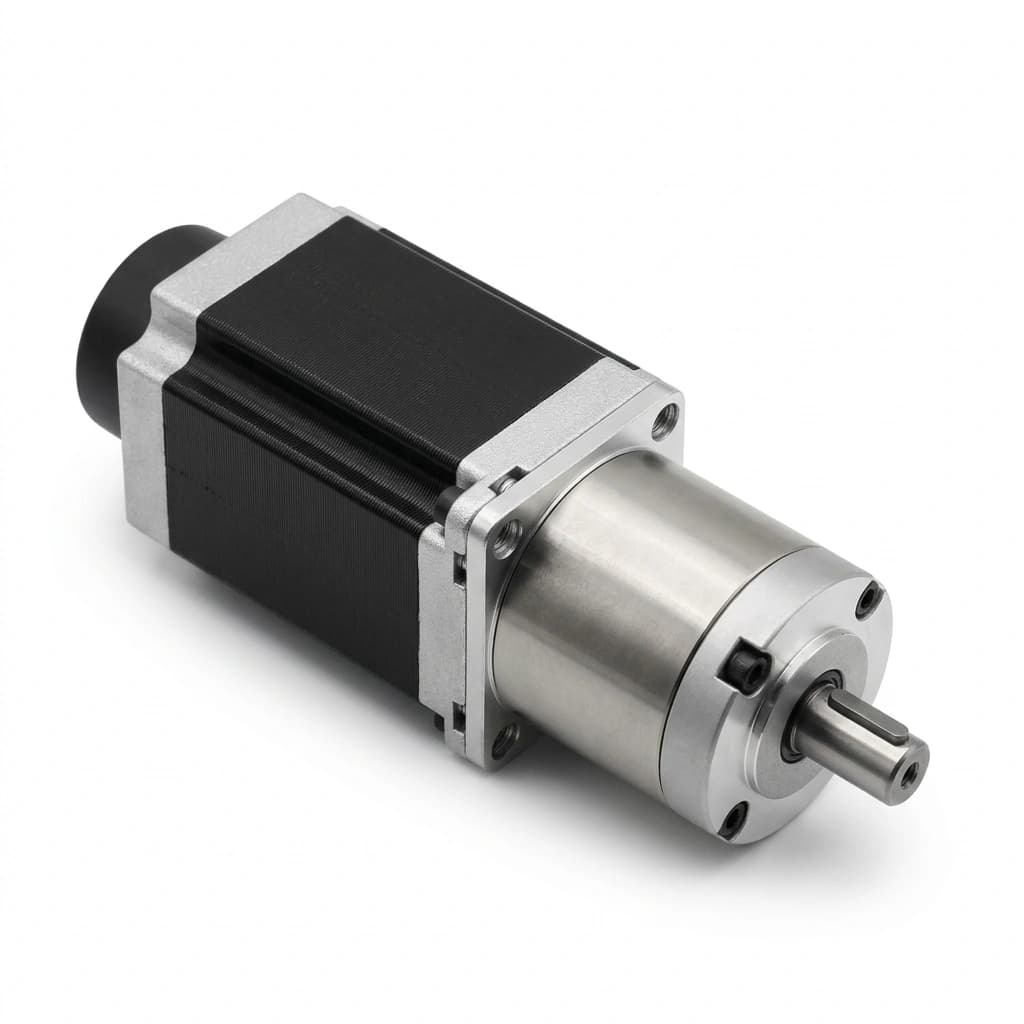
Geared NEMA Stepper Motors: Planetary vs. Spur Gearbox Selection for OEMs
Compare planetary and spur gearboxes for NEMA stepper motors. Learn how to evaluate torque multiplication, backlash, and BOM costs for 2026 OEM automation projects.
"Why spec a massive NEMA 34 stepper when a geared NEMA 23 does the same job with lower inertia and better resolution?"
For OEMs designing automation equipment in 2026, combining a NEMA stepper motor with a gearbox is the definitive solution for applications requiring high torque at low speeds. However, the decision usually comes down to selecting the right gearhead technology: Planetary or Spur.
Specifying the wrong gearbox can lead to unacceptable backlash in precision CNCs, or unnecessary BOM costs in simple conveyor applications. This guide breaks down the engineering boundaries and procurement tradeoffs for global buyers and machine builders.
Selection scope, reviewed 2026-07-26: This guide covers global OEM sourcing for hybrid NEMA 17, NEMA 23, and NEMA 34 stepper axes where the output shaft needs low-speed torque, finer positioning resolution, or lower reflected inertia. It is not a substitute for supplier speed-torque curves, gearbox life calculations, application-specific duty-cycle testing, or certified safety validation.
The Engineering Reality: Torque Multiplication and Inertia Matching
Stepper motors natively excel at holding position, but their torque drops rapidly as speed increases. They also struggle when the load's inertia is vastly higher than the rotor's inertia, leading to resonance and lost steps.
A gearbox solves both problems simultaneously. By reducing the speed, it multiplies the output torque. More importantly, a gearbox reduces the reflected load inertia by the square of the gear ratio. For example, a 10:1 planetary gearbox makes the load appear 100 times lighter to the motor, allowing a small NEMA 17 to precisely index heavy rotary tables that would otherwise require a massive NEMA 34.
Cost, Performance, and Specifications Matrix (2026 Baselines)
When making procurement decisions, consider the total system footprint and required precision. Treat these as 2026 RFQ planning ranges; volume and exact gear ratios will move the final quote.
| Parameter | Spur Gearbox Stepper | Planetary Gearbox Stepper | Why it matters for OEMs |
|---|---|---|---|
| BOM Cost Base | Low ($) | Medium to High ($$) | Affects volume production budget. |
| Torque Density | Moderate | Very High | Planetary handles higher peak loads in a smaller NEMA frame. |
| Backlash (Precision) | 1° to 3° (High) | 0.1° to 0.5° (Low) | Critical for CNC and precision dispensing. |
| Form Factor | Offset shaft common | Inline with motor shaft | Inline planetary saves space in tight machine envelopes. |
| Efficiency | ~90% per stage | ~85% per stage | Affects motor heat and power supply sizing. |
| Radial Load Capacity | Lower | Higher | Important if belts/pulleys are mounted directly on the output shaft. |
| Noise Level | Higher at high speed | Generally lower | Acoustic requirements for lab/medical devices. |
OEM Selection Checklist: Gearbox and Motor Sizing
Before approving the BOM for a geared stepper, run your application through this validation checklist:
- Define the Backlash Tolerance: Can the application tolerate 1-3 degrees of backlash (Spur), or is < 15 arc-minutes required (Planetary)?
- Calculate the Inertia Ratio: Ensure the reflected load inertia matches the motor's rotor inertia within a 10:1 ratio for stable microstepping.
- Check Radial and Axial Loads: Will a pulley or gear be mounted directly to the shaft? Verify the gearbox output bearing ratings.
- Verify Space Constraints: Does the design require an inline shaft (Planetary), or can it accommodate an offset output shaft (Spur)?
- Review Duty Cycle and Heat: Geared steppers running continuously at high speeds can overheat the gearbox lubrication. Verify duty cycle limits with the supplier.
- Specify Input Voltage & Driver: Ensure the driver can supply adequate voltage to overcome the motor's back-EMF at the required geared-up motor speed.
If you are preparing an RFQ, ask each supplier to return the selected gear ratio, allowable radial/axial load, rated output torque, backlash class, lubrication and duty-cycle limits, and matching driver voltage/current assumptions in the same quote table.
Sourcing Boundaries: When NOT to Use a Geared Stepper
While geared steppers are powerful, they are not universally applicable.
- High-Speed Requirements: If the final output shaft needs to spin faster than 200-300 RPM, the input motor speed (motor speed = output speed × gear ratio) might exceed the stepper's physical limits, causing massive torque drop-off and stalling. An AC Servo or BLDC motor is better suited here.
- Zero-Backlash Absolute Precision: Even the best planetary gearboxes have a small amount of backlash. If your application demands absolute zero backlash (e.g., high-end optics), consider a harmonic drive (strain wave gear) stepper instead.
Frequently Asked Questions (FAQ)
Can I attach a gearbox to any NEMA 17 or NEMA 23 stepper?
While it is mechanically possible to attach a gearbox to a standard motor using an adapter plate, OEMs should source pre-assembled geared steppers. Factory-integrated units guarantee proper pinion alignment, optimal lubrication, and sealed ingress protection, reducing early bearing failures.
Why do planetary gearboxes have slightly lower efficiency than spur gears?
Planetary gearsets have multiple planet gears meshing simultaneously with the sun gear and the outer ring gear. This increased surface contact provides massive torque multiplication, load sharing, and lower backlash, but the added friction inherently lowers the mechanical efficiency per stage compared to a simple spur gear pair.
How does a gearbox affect stepper motor resonance?
A gearbox significantly alters the reflected inertia of the load by the square of the gear ratio. This often helps resolve low-speed resonance issues by allowing the motor to spin faster (operating outside its primary low-speed resonance zone) while moving the final load slowly and smoothly.
Sources and References
Checked 2026-07-26. These sources support screening logic and RFQ preparation; final sizing still requires supplier curves, gearbox life data, and load-case validation.
- Oriental Motor: Stepper Motor Gearheads - gearhead accuracy, backlash, and stepper-specific gearhead considerations. orientalmotor.com
- Oriental Motor: Speed-Torque Curves for Stepper Motors - why motor torque, voltage, and driver selection must be checked at the geared-up motor speed. orientalmotor.com
- Machine Design: Planetary gears: A review of basic design criteria and new options for sizing - planetary gearhead torque capacity, backlash rating, and selection considerations. machinedesign.com
- Haydon Kerk Pittman: Selecting the Right Gearbox for your Application - practical comparison of spur and planetary gearbox tradeoffs for speed, noise, and torque transmission. haydonkerkpittman.com
Next Steps for Your Engineering Project
If your current automation project is struggling with torque limitations or inertia mismatch, switching to a geared NEMA stepper could be the most cost-effective solution.
Review our standard NEMA stepper motor categories and stepper drivers and controllers, or contact our engineering team directly at [email protected] to discuss custom gearbox integration, exact ratio requirements, and volume RFQ pricing.
Author

Categories
More Posts
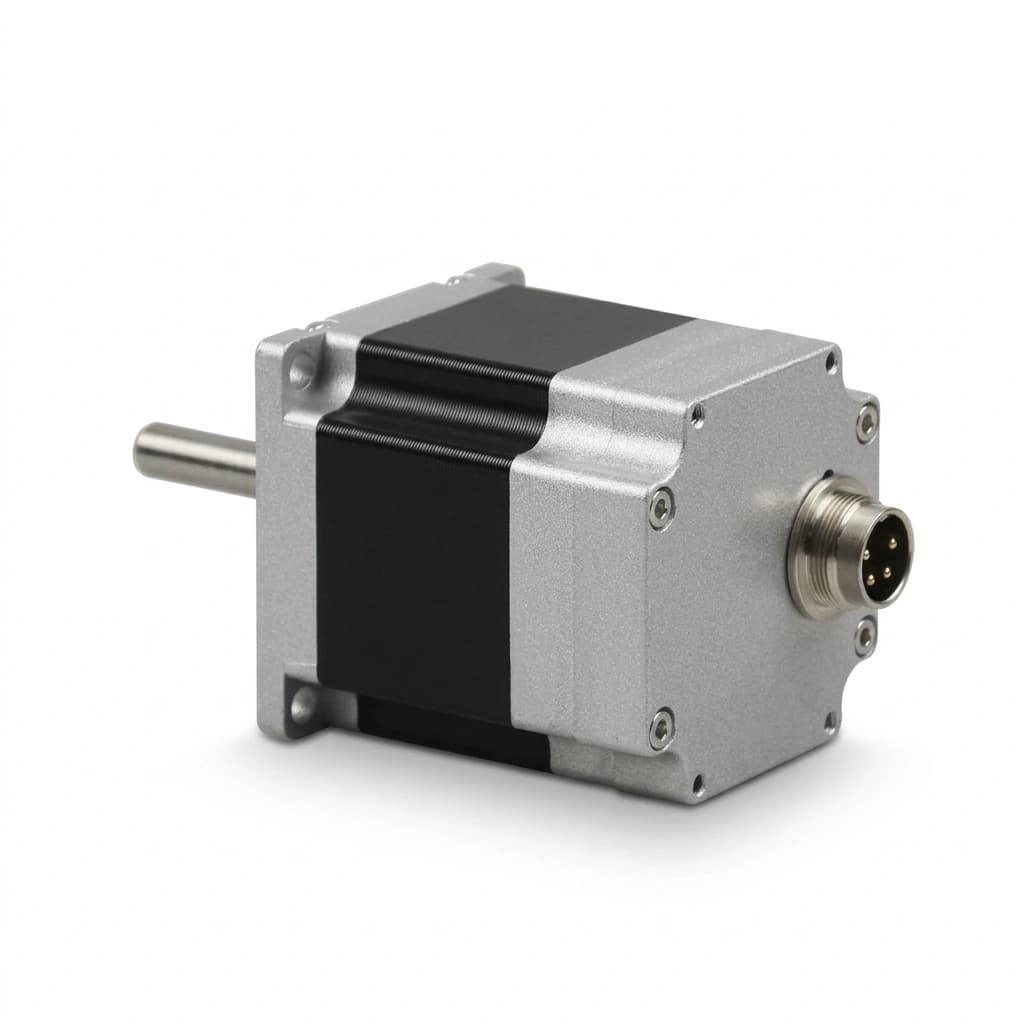
IP65 vs IP67 Waterproof Stepper Motors: OEM Selection Guide
How to specify waterproof NEMA stepper motors for harsh environments without overpaying. Covers shaft seals, thermal derating, and cable traps.
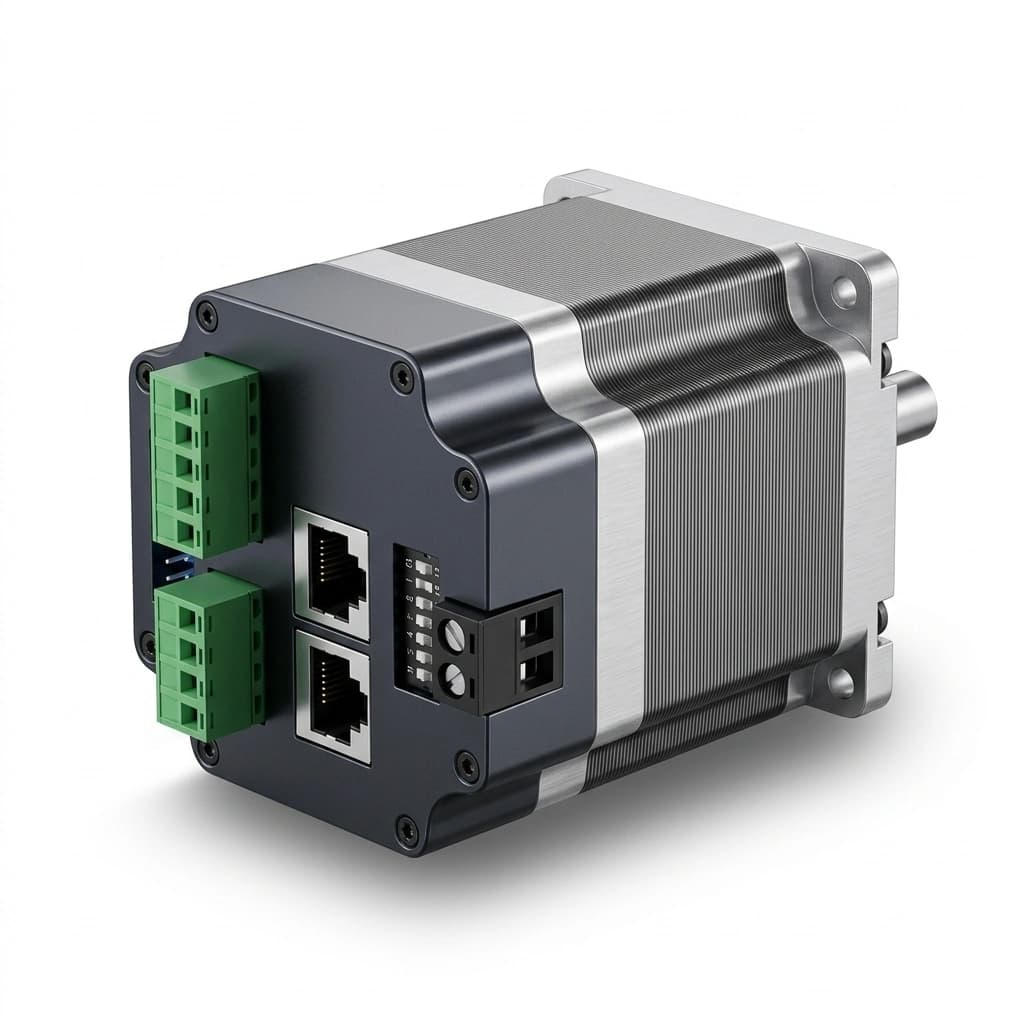
Integrated NEMA Stepper Motors vs Discrete Systems: OEM Sourcing Guide
Compare integrated stepper motors against discrete motor-drive systems. Analyze BOM costs, wiring labor, EMI reduction, and thermal boundaries for OEM machine builders.
Stepper Motor Thermal Management for OEM Machine Builders
How to calculate thermal limits, prevent winding failures, and design cooling systems for stepper motors in enclosed industrial machines. Includes derating tables and validation protocols.