
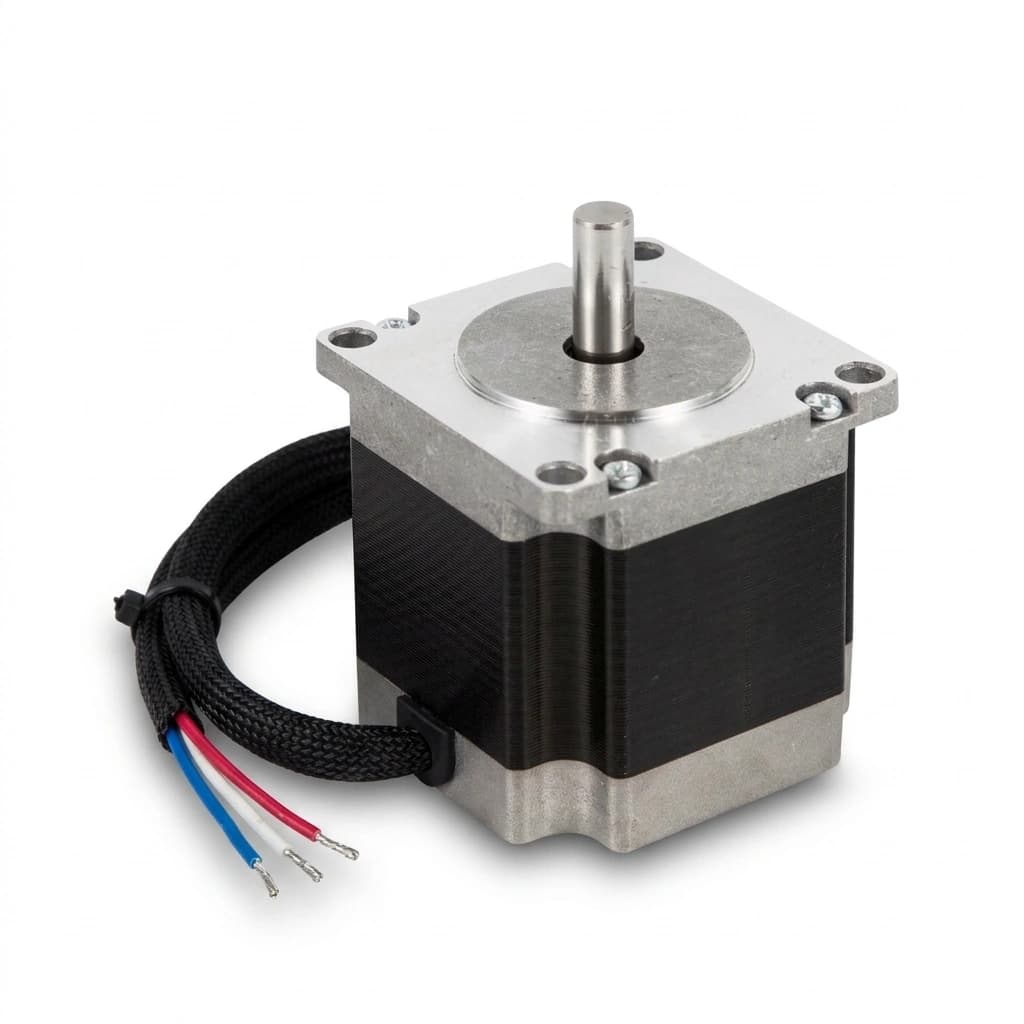
Stepper Motor Thermal Management for OEM Machine Builders
How to calculate thermal limits, prevent winding failures, and design cooling systems for stepper motors in enclosed industrial machines. Includes derating tables and validation protocols.
I see it happen all the time: a prototype runs perfectly on the test bench in an air-conditioned lab, but fails two months after being installed inside a sealed CNC cabinet on a factory floor in Thailand.
Stepper motors generate more heat than most OEM engineers expect. Unlike servo systems that only draw current on demand, stepper motors draw near-maximum current at standstill to maintain holding torque. If you don't design for this heat, your windings will melt, your magnets will degrade, and the motor will die prematurely.
In my 10+ years of failure analysis, over 60% of field failures are ultimately traced back to poor thermal management. Let's fix that before you go to mass production.
Why stepper motors run hot: the physics
A stepper motor's dominant heat source is resistive loss in the windings:
P_copper = I² × R_winding × number_of_phases
At standstill (holding position), the motor draws its full rated current through both phases. This is the worst-case thermal condition — not high-speed motion.
Additional heat sources:
| Heat source | Contribution | When it dominates |
|---|---|---|
| Copper loss (I²R) | 70–85% of total | Always, especially at standstill |
| Iron core loss (eddy current + hysteresis) | 10–20% | Higher speeds and higher frequencies |
| Friction and windage | 2–5% | Very high speeds only |
Temperature limits and insulation classes
Most industrial stepper motors use Class B insulation with a maximum winding temperature of 130 °C.
| Measurement point | Maximum safe temperature | Typical monitoring method |
|---|---|---|
| Winding (internal) | 130 °C (Class B) | Resistance measurement or embedded thermistor |
| Motor case (external) | 80–90 °C | Infrared thermometer or contact thermocouple |
| Motor shaft | 70–80 °C | Contact measurement |
Important: The case temperature is typically 30–50 °C lower than the internal winding temperature. A motor case at 85 °C may have winding temperatures approaching 120–130 °C — close to the damage threshold.
What happens when thermal limits are exceeded
- Insulation breakdown → inter-turn short circuit → permanent motor failure
- Magnet demagnetization → irreversible torque loss (typically starts above 120–150 °C for ferrite, 80–100 °C for NdFeB at operating point)
- Bearing grease degradation → increased friction and noise → reduced service life
Thermal calculation for OEM engineers
Step 1: estimate power dissipation
For a 2-phase motor at standstill:
P_total ≈ 2 × I_rated² × R_phase
Example: A NEMA 23 motor with 2.8 A rated current and 0.9 Ω phase resistance:
P_total = 2 × 2.8² × 0.9 = 14.1 W
This 14.1 W must be conducted away from the motor continuously. In an enclosed panel at 40 °C ambient, this is non-trivial.
NEMA 23 Thermal Estimator
Dial in your machine parameters to see if your motor will survive on the factory floor.
Time spent holding position (where steppers generate the most heat)
Est. Case Temperature
Step 2: estimate steady-state temperature rise
Most motor datasheets include thermal resistance (°C/W). If not available, use these typical values:
| Motor frame | Typical thermal resistance (case to ambient) | Notes |
|---|---|---|
| NEMA 17 | 8–14 °C/W | Depends on stack length |
| NEMA 23 | 4–8 °C/W | Lower for long-stack models |
| NEMA 34 | 2–4 °C/W | Larger surface area helps |
Temperature rise estimate:
T_case = T_ambient + (P_total × R_thermal)
For the NEMA 23 example above at 40 °C ambient and 6 °C/W thermal resistance:
T_case = 40 + (14.1 × 6) = 124.6 °C
This exceeds safe limits. The motor needs either current reduction, cooling assistance, or duty cycle management.
Five strategies to control motor temperature
Strategy 1: reduce operating current (most effective)
If your application does not need full holding torque:
| Current setting (% of rated) | Power dissipation (% of max) | Temperature impact |
|---|---|---|
| 100% | 100% | Maximum heat |
| 85% | 72% | Significant reduction |
| 70% | 49% | Nearly half the heat |
| 50% | 25% | Dramatic reduction |
Power scales with current squared. A 30% current reduction cuts heat generation by more than half.
Action: Set driver current to the minimum level that still provides adequate torque margin. Start at 70% during commissioning.
Strategy 2: enable idle current reduction
All modern stepper drivers (DM542/556/860) include an auto-idle-current feature that reduces current by ~50% when the motor is stationary for more than 0.5–1.0 seconds.
This is critical for machines with long dwell periods (e.g., indexing tables, dispensing stations).
Action: Always enable this feature. There is no valid reason to disable it in production.
Strategy 3: improve conductive cooling through mounting
The motor mounting interface is the primary heat path. A motor bolted to a thin aluminum bracket in free air cools very differently from one mounted to a massive steel machine frame.
Design guidelines:
- Mount the motor flange to a metal surface with at least 10× the motor flange area
- Use thermal interface material (thermal pad or grease) if the mounting surface is machined with visible toolmarks
- Avoid plastic or rubber isolators between motor and frame unless vibration requirements demand it
Strategy 4: add forced convection
When conductive cooling is insufficient:
| Cooling method | Typical effect | Application |
|---|---|---|
| Small axial fan on motor rear | Reduces case temp by 15–25 °C | Most enclosed machines |
| Panel exhaust fan (enclosure-level) | Reduces ambient by 5–15 °C | Multi-axis enclosed systems |
| Heat sink on motor body | Reduces case temp by 10–20 °C | Confined spaces with limited airflow |
| Liquid cooling jacket | Reduces case temp by 30–50 °C | High-duty medical/semiconductor equipment |
Strategy 5: optimize motion profile
Aggressive acceleration profiles draw peak current and generate maximum heat during ramp-up. If the application allows:
- Use S-curve or trapezoidal acceleration with moderate jerk limits
- Avoid unnecessary rapid direction reversals
- Insert brief dwell periods in the motion cycle to allow cooling
Case Study Spotlight
The 15% duty cycle fix: A labeling machine manufacturer was experiencing premature bearing grease failure. Their NEMA 34 motors were running at 90°C. Instead of adding $40 cooling fans, we reprogrammed their PLC to insert a 400ms idle period between labeling cycles, allowing the driver's auto-idle reduction to engage. The motor case temperature dropped to 65°C immediately. Cost to fix: $0.
Ambient temperature derating table
When the machine operates above 25 °C ambient, the motor's allowable continuous current must be derated:
| Ambient temperature | Maximum recommended current (% of rated) |
|---|---|
| 25 °C | 100% |
| 35 °C | 90% |
| 40 °C | 85% |
| 45 °C | 80% |
| 50 °C | 70% |
| 55 °C | 60% |
These values assume no forced cooling and standard mounting. Forced air can recover 10–15 percentage points.
Thermal validation protocol for OEM machines
Before production release, every motor installation should pass this test:
- Set up worst-case conditions: maximum load, maximum ambient temperature, maximum duty cycle.
- Run continuously for 60 minutes (minimum 30 minutes for initial screening).
- Measure motor case temperature at 10-minute intervals until steady state (temperature change < 2 °C between intervals).
- Pass criterion: Motor case temperature ≤ 80 °C at rated ambient.
- Record and document: Include motor model, current setting, ambient temperature, and final case temperature in the validation report.
If the motor fails, reduce current, add cooling, or upgrade to a larger frame before releasing to production.
Thermal failure troubleshooting matrix
| Symptom | Likely cause | Corrective action |
|---|---|---|
| Motor case > 90 °C after 30 min | Current too high or insufficient cooling | Reduce current or add forced air |
| Intermittent step loss after warm-up | Magnet demagnetization at operating temp | Validate at worst-case ambient, consider upgrading motor |
| Motor makes grinding noise after extended run | Bearing grease breakdown | Check bearing rated temp, consider sealed bearings |
| Driver thermal shutdown | Insufficient driver ventilation | Add heat sink or fan to driver, check enclosure airflow |
| Odor or discoloration on motor case | Winding insulation beginning to fail | Replace motor immediately, redesign thermal path |
Buyer FAQ
What case temperature should I target for maximum motor life?
Keep case temperature below 70 °C for maximum service life. Every 10 °C increase above this roughly halves insulation life expectancy.
Can I use a bigger motor at lower current instead of adding cooling?
Yes, this is often the most reliable solution. A NEMA 34 at 50% current dissipates less heat than a NEMA 23 at 100% current, while providing similar or better torque. The cost increase is usually less than the cost of adding cooling hardware.
Should I spec temperature sensors on the motor for production machines?
For machines running 8+ hours per day in production environments, embedding a thermistor (NTC 10K) on the motor winding is strongly recommended. It adds less than $1.50 to the motor BOM but enables automatic thermal protection in the control system.
How does duty cycle affect thermal design?
A motor running 50% of the time at full current and 50% idle (with idle current reduction) dissipates roughly 35–40% of the heat compared to continuous full-current operation. Define your actual duty cycle before thermal sizing.
For motor selection with thermal optimization, send your application duty cycle and ambient conditions to [email protected]. We can provide thermal-validated motor recommendations with derating data.
For ultra-low-speed telescope-drive applications, combine this thermal checklist with our 1 10th RPM stepper motor telescope drive calculator and decision guide to validate pulse, torque reserve, backlash gates, and sidereal/solar mode boundaries in one workflow.
Author

Categories
More Posts
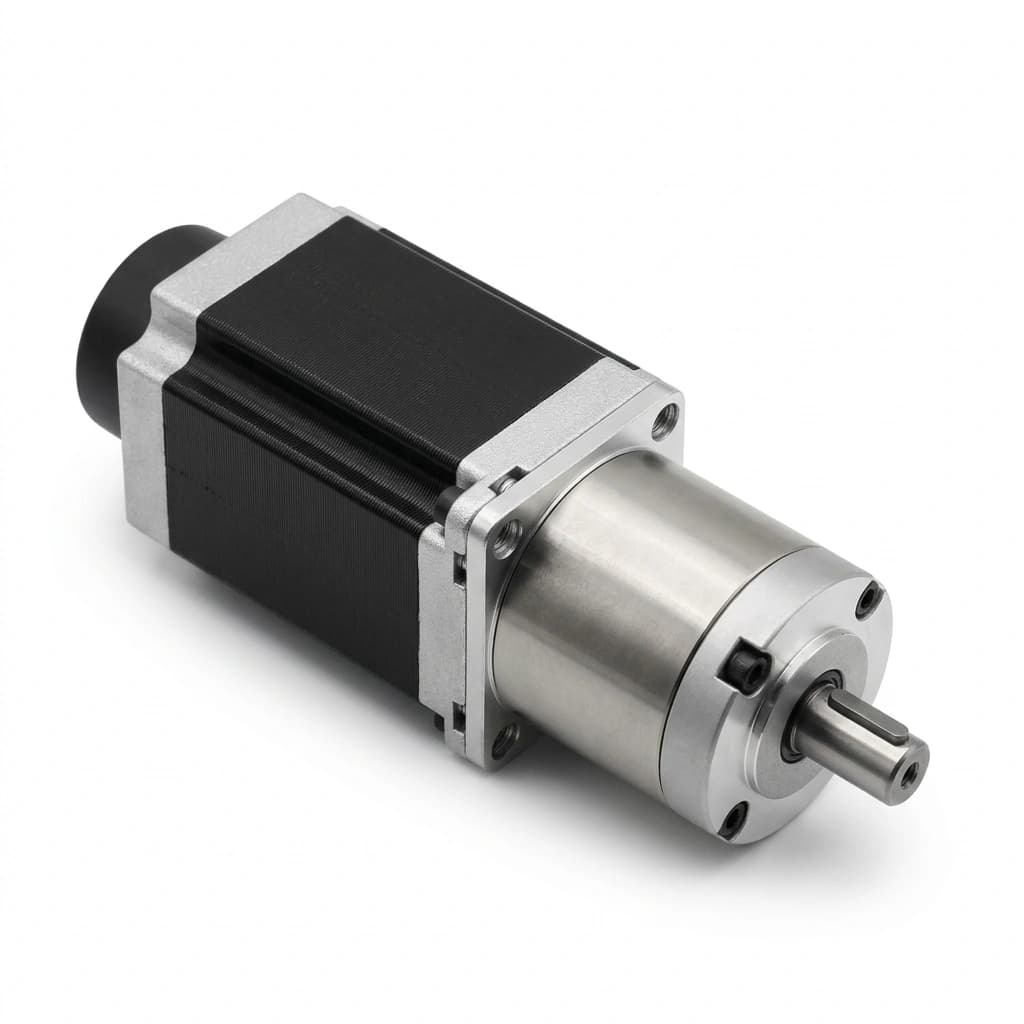
Geared NEMA Stepper Motors: Planetary vs. Spur Gearbox Selection for OEMs
Compare planetary and spur gearboxes for NEMA stepper motors. Learn how to evaluate torque multiplication, backlash, and BOM costs for 2026 OEM automation projects.
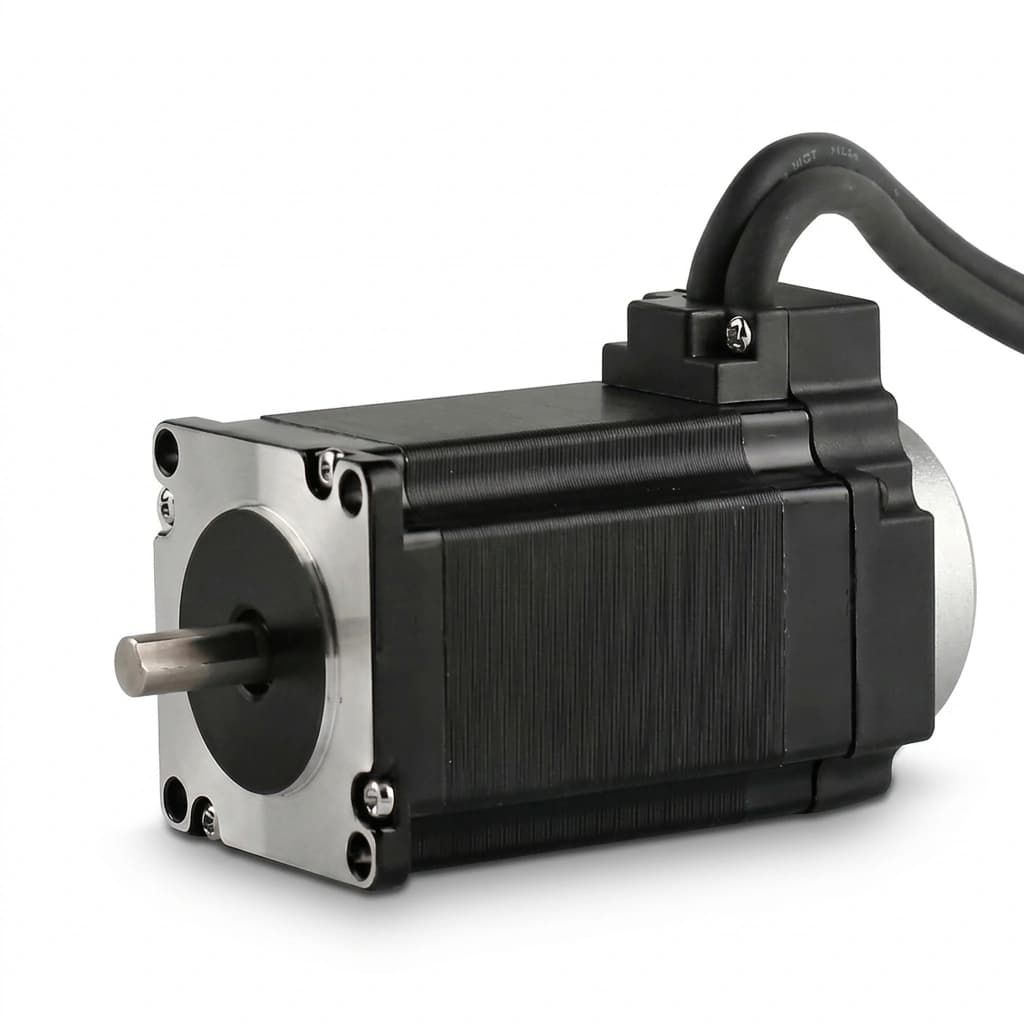
Stepper Motor vs Servo Motor: An OEM Buyer's Decision Framework
When to use stepper motors vs servo motors in industrial machines. Includes cost models, performance comparison data, and a structured decision tree for OEM procurement teams.
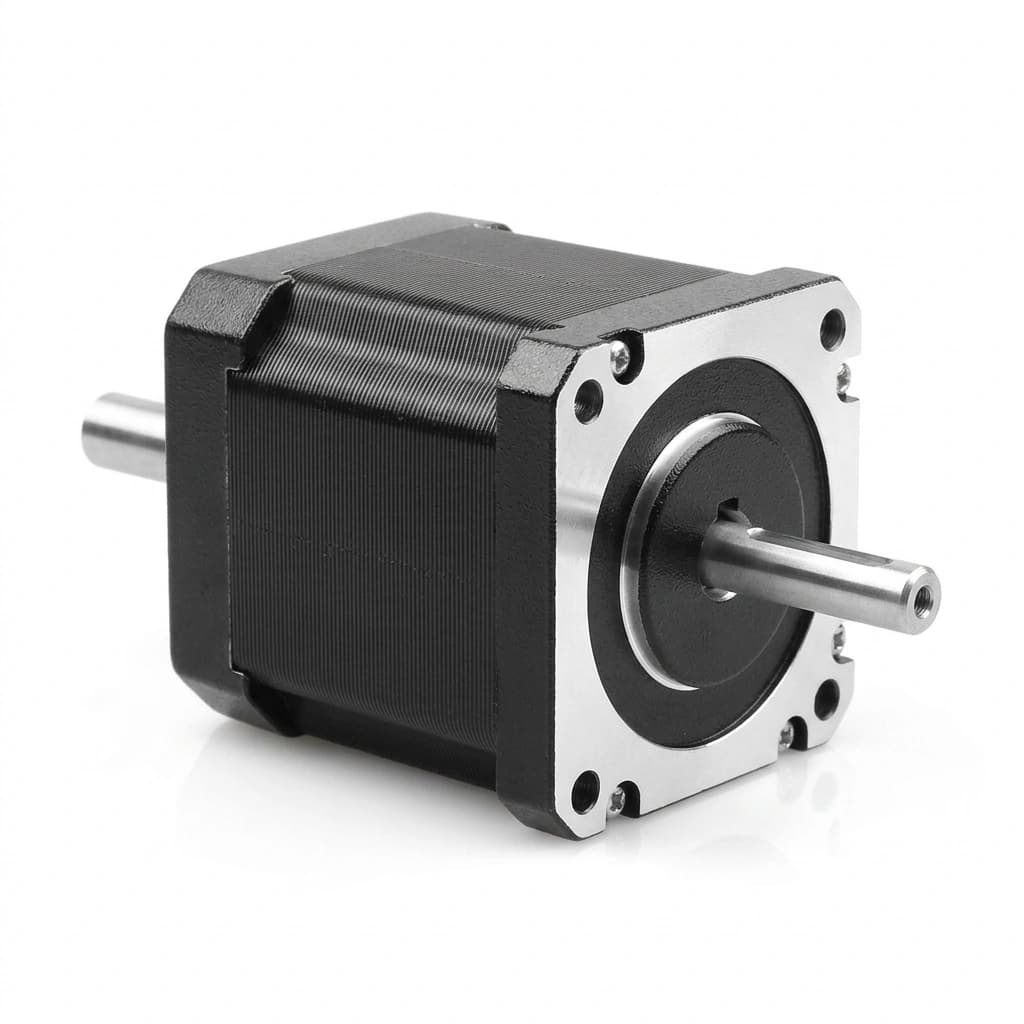
Stepper Motor Customization Options for Global Buyers
The key OEM customization parameters for stepper motors and how each choice affects performance, lead time, and quality risk.