
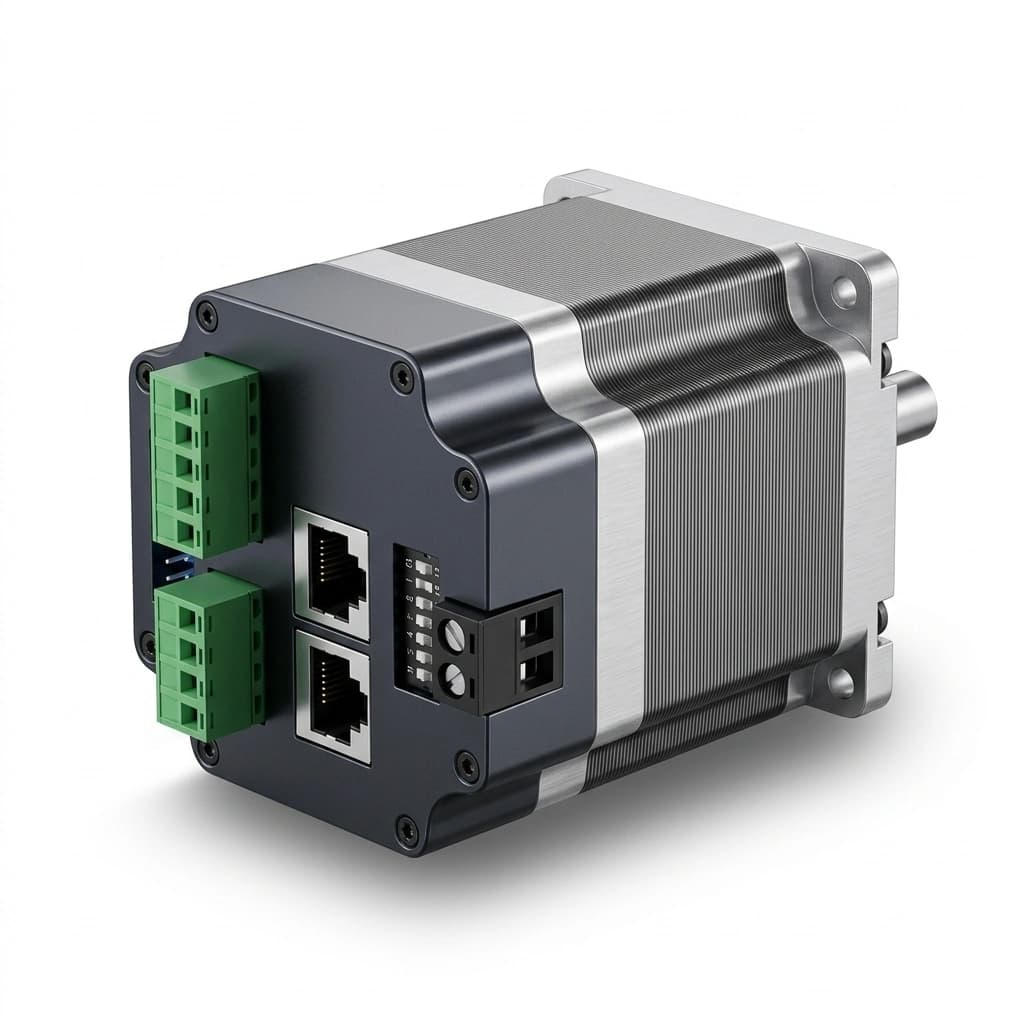
Integrated NEMA Stepper Motors vs Discrete Systems: OEM Sourcing Guide
Compare integrated stepper motors against discrete motor-drive systems. Analyze BOM costs, wiring labor, EMI reduction, and thermal boundaries for OEM machine builders.
"Why should we put the sensitive driver electronics directly on the hottest part of the machine?"
This is the first question engineering and procurement teams ask when evaluating integrated NEMA stepper motors. For decades, the standard architecture placed a discrete stepper motor out on the machine axis and kept the delicate driver safely inside a climate-controlled electrical cabinet.
However, in 2026, the demand for compact machines, reduced assembly labor, and strict EMI (Electromagnetic Interference) compliance has shifted the math. Integrated stepper motors—where the motor, encoder, and driver are packaged into a single unit—are becoming the default choice for many decentralised automation architectures.
Let's break down the true Total Cost of Ownership (TCO) and the engineering trade-offs when choosing between integrated and discrete stepper systems.
Scope, Date, and Assumptions
This guide was reviewed on July 19, 2026 for global OEM sourcing teams evaluating NEMA 17, NEMA 23, and NEMA 34 integrated stepper motors in compact industrial machines. It is most applicable to multi-axis equipment where panel space, wiring labor, EMI risk, and field-service time are meaningful cost drivers.
The cost model below is an illustrative 3-axis NEMA 23 baseline. It is not a universal price sheet, and it does not replace supplier qualification for washdown, hazardous-area, high-shock, high-temperature, or continuous high-torque applications.
The Hidden Costs of Discrete Systems
When procurement teams compare a $30 bare NEMA 23 motor plus a $40 discrete driver against a $95 integrated motor, the integrated unit appears 35% more expensive. However, this calculation misses the substantial hidden costs associated with discrete setups.
Discrete systems require extensive cabling. Motor phase wires carry high-frequency PWM (Pulse Width Modulation) switching currents. These act as antennas, emitting severe EMI that can disrupt nearby sensors and communication lines unless expensive shielded cables are used.
Furthermore, every connection point requires labor: stripping wires, crimping ferrules, routing through cable chains, and landing terminals inside the control cabinet. The control cabinet itself must be larger to accommodate the discrete drivers and their associated cooling fans.
Total System Cost Comparison
To make an accurate procurement decision, OEMs must compare the true Bill of Materials (BOM) and labor cost. Here is a realistic baseline comparison for a 3-axis NEMA 23 system:
| Cost Component | Discrete System (3-Axis) | Integrated System (3-Axis) | Sourcing Impact & Explanation |
|---|---|---|---|
| Motors & Drivers | $210 (3 Motors + 3 Drives) | $285 (3 Integrated Motors) | Integrated unit price is higher initially. |
| Cabling (Phase & Encoder) | $80 (Long, shielded, custom runs) | $30 (Only DC power and comms) | Integrated drastically cuts expensive shielded cable. |
| Control Panel Space | $60 (Larger enclosure, DIN rails) | $10 (Smaller enclosure, fewer rails) | Decentralized architecture reduces physical footprint. |
| Assembly Labor | $90 (Wire routing, crimping, 12+ terminations) | $30 (Daisy-chained power/comms) | Fewer connections drastically reduce assembly time. |
| EMI Mitigation | $40 (Ferrite cores, shielding grounds) | $0 (Zero external phase wires) | Integrated eliminates the EMI source at the root. |
| Field Maintenance Time | Higher (Trace wiring faults across machine) | Lower (Swap single unit, plug-in) | Simplified troubleshooting reduces warranty costs. |
| Total Estimated System Cost | $480+ | $355+ | Integrated systems save 25%+ at the system level. |
Note: Pricing reflects generic OEM volume estimates. Actual quotes depend on torque ratings, IP limits, and communication protocols.
The Thermal Boundary: When NOT to Use Integrated Stepper Motors
If integrated motors save money and reduce EMI, why doesn't everyone use them? The limiting factor is heat.
Stepper motors are notoriously hot. The internal windings of a Class B insulated stepper motor can handle up to 130°C. However, the sensitive microcontrollers, MOSFETs, and electrolytic capacitors inside the attached driver will degrade or fail at much lower temperatures (typically around 85°C).
If your application involves running the motor near its maximum continuous torque, in an unventilated enclosure, or near external heat sources (like a heated print bed or an industrial oven), the driver electronics will overheat long before the motor windings fail.
Discrete systems isolate the vulnerable electronics in a cool cabinet. In extreme high-temperature applications, discrete architectures remain the only viable option.
Treat the thermal boundary as a qualification test, not a catalog assumption. Ask suppliers for case-temperature limits, internal PCB/electronics limits, derating curves, and the test conditions behind their continuous-current rating before approving a design freeze.
OEM Sourcing Checklist for Integrated Stepper Motors
Before approving a transition to integrated motors, review this technical and commercial checklist:
- Ambient Temperature: Is the ambient environment around the motor axis guaranteed to remain below 40°C - 50°C?
- Duty Cycle: Does the motion profile allow the motor to rest, or does it require 100% continuous high-current holding torque? (Closed-loop integrated motors run cooler on average).
- Physical Constraints: Do the axes have clearance for the extra 20mm-40mm of stack length added by the integrated driver block?
- Communication Bus: Are you standardizing on pulse/direction, CANopen, RS485/Modbus, or EtherCAT? (Integrated motors favor bus architectures).
- Connector Robustness: Are the M8 or M12 connectors on the integrated motor rated for the vibration and IP level (e.g., IP65) of your machine?
- Vibration Limits: Will the motor be mounted on an axis experiencing extreme shock loads that could fracture the driver's internal PCB?
Buyer FAQ
Are integrated stepper motors less reliable than discrete components?
Statistically, the reliability of the electronic components is similar. However, integrated motors reduce the total number of failure points (fewer connectors and crimps), which often leads to higher overall machine reliability, provided the thermal limits are respected.
Do I lose flexibility by combining the motor and driver?
Yes, if one part fails, you must replace the entire unit. However, the labor cost saved by a quick "swap-and-go" replacement usually outweighs the cost of the discarded sub-component.
Can integrated stepper motors operate in closed-loop mode?
Absolutely. In fact, most modern integrated stepper motors include a built-in magnetic or optical encoder, turning them into closed-loop stepper servos. This is the optimal configuration, as closed-loop control only draws the current needed to move the load, significantly reducing heat generation.
Need Help Sizing for Your Next Machine?
Whether you are consolidating your BOM with integrated units or sticking to robust discrete systems for high-temperature environments, selecting the right torque margin is critical.
If you are an OEM evaluating decentralized motion control, our engineering team can help you map out a drop-in replacement strategy.
Check out our NEMA 23 Stepper Motors and NEMA 34 Stepper Motors configurations, or send your machine requirements directly to [email protected].
Sources
- Novanta Robotics & Automation: Integrated Stepper Motors - Covers platforms that combine motor, drive, controller, and encoder functions to reduce separate components, cabinet space, and installation time. novanta.com
- Oriental Motor: Stepper motor heat surface temperature FAQ - Explains Class B winding insulation, case temperature boundaries, and temperature-related operating limits. faq.orientalmotor.com
- JVL: Temperature for Stepper Motor - Shows how integrated stepper electronics can impose a lower operating-temperature limit than the motor winding insulation class. jvl.dk
Author

Categories
More Posts
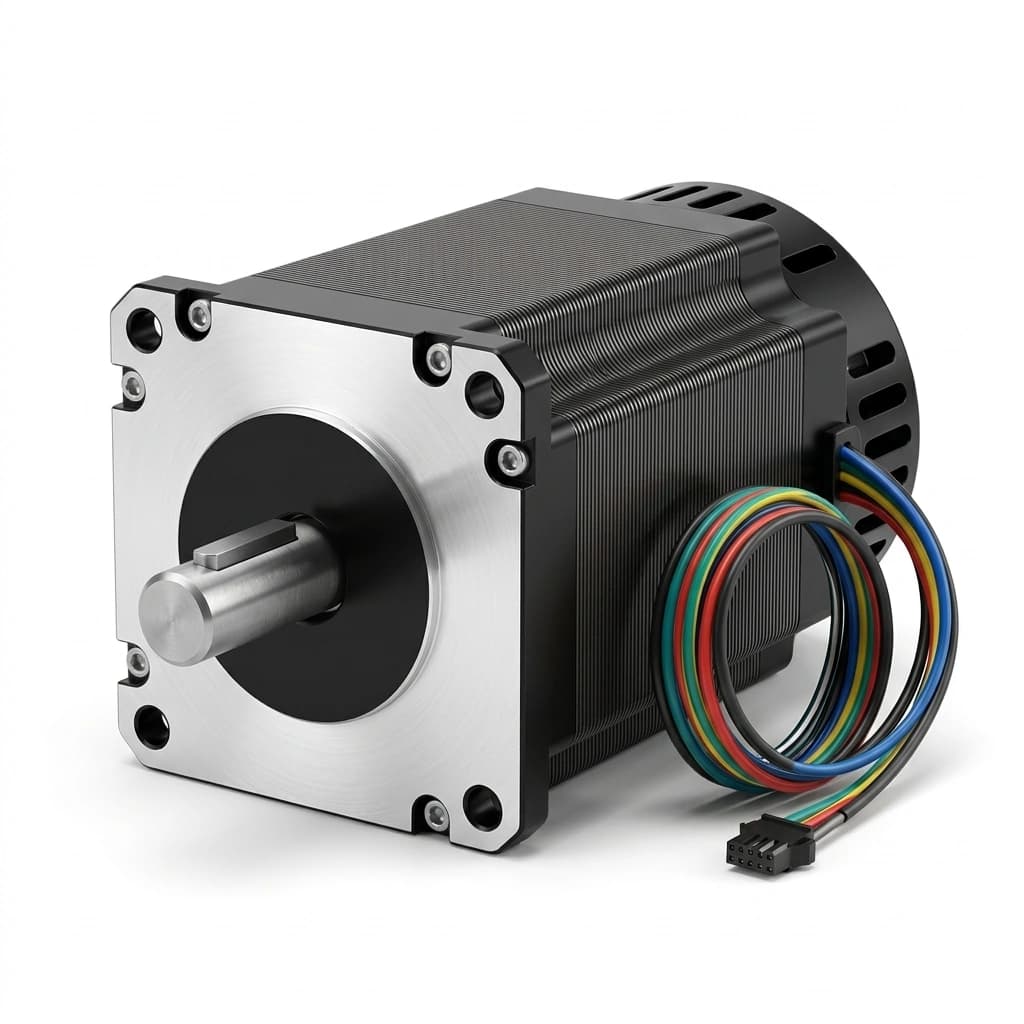
CE, RoHS, and UL Compliance for NEMA Stepper Motors in 2026
Source compliant NEMA stepper motors in 2026 with CE, RoHS, UL, and REACH checks, supplier RFQ questions, and document evidence before quote.
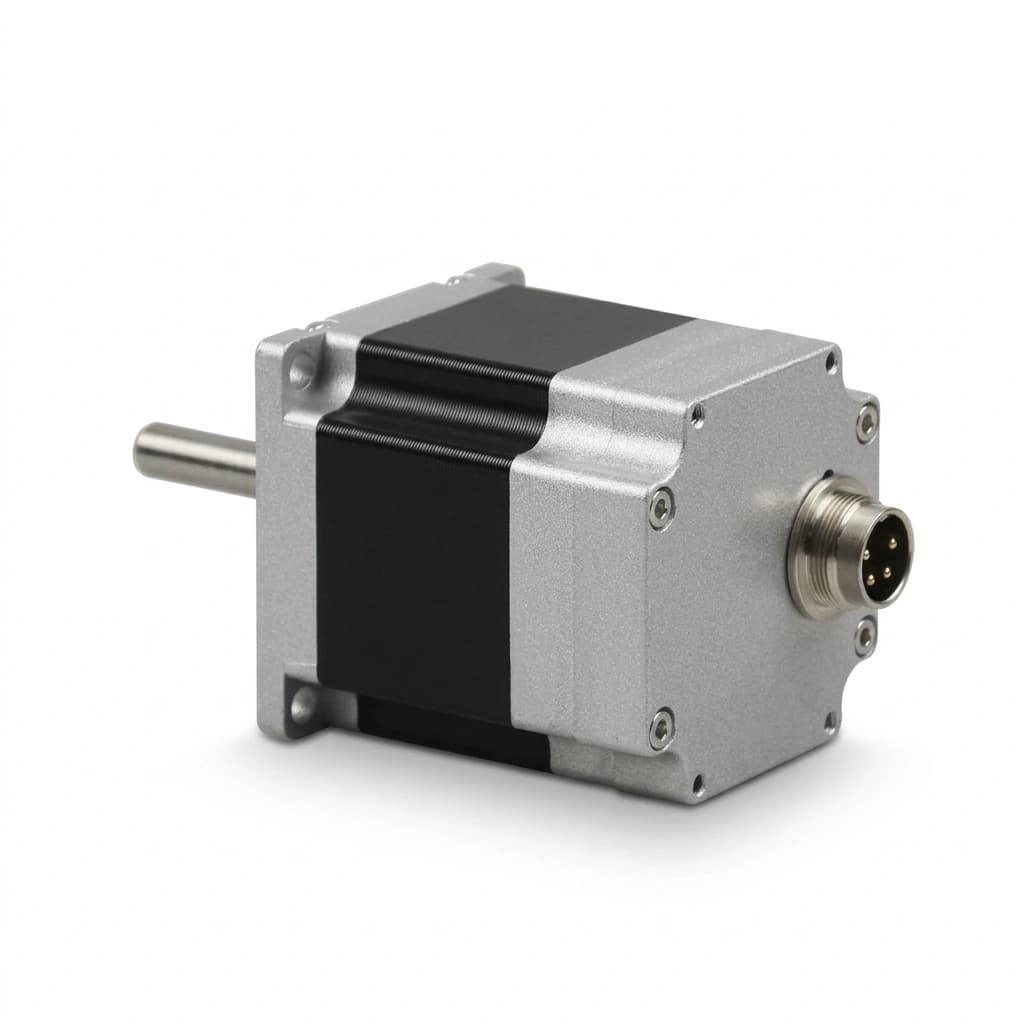
IP65 vs IP67 Waterproof Stepper Motors: OEM Selection Guide
How to specify waterproof NEMA stepper motors for harsh environments without overpaying. Covers shaft seals, thermal derating, and cable traps.
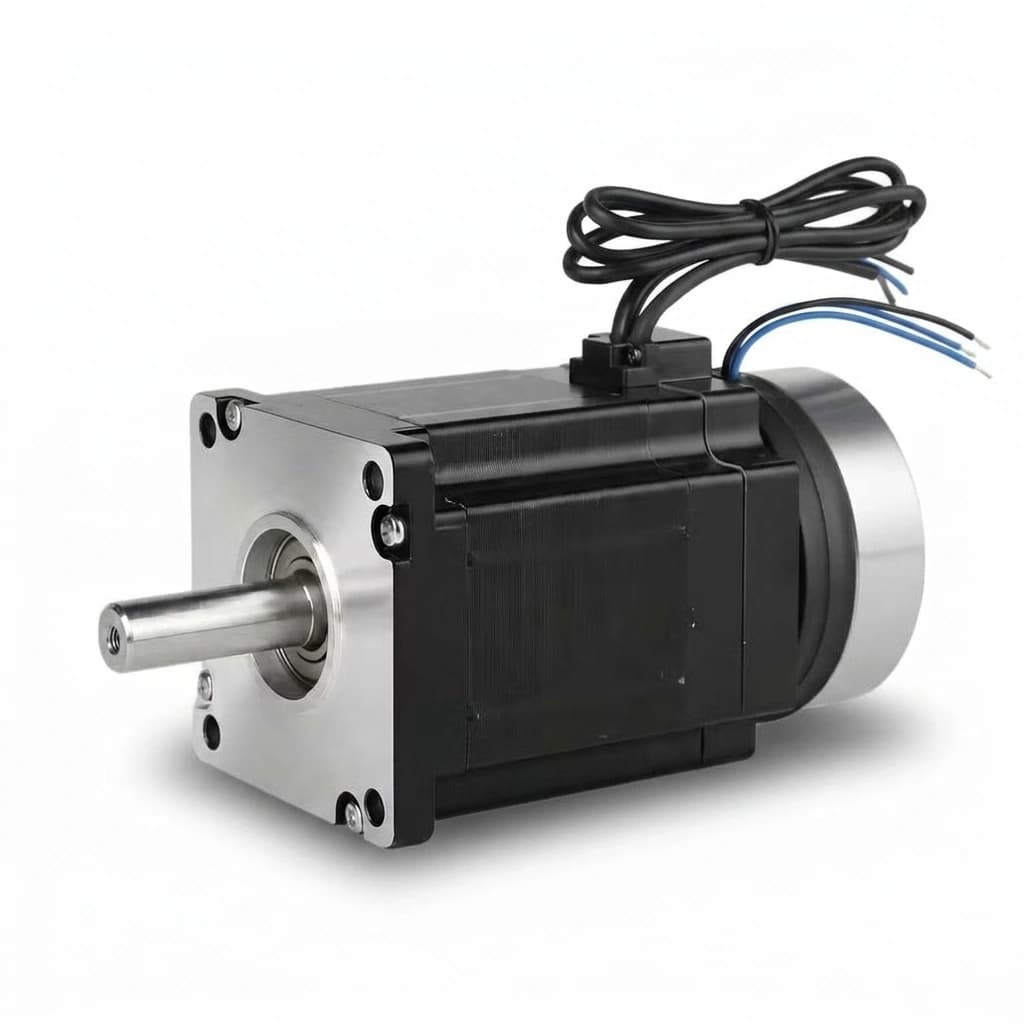
NEMA Stepper Motor with Electromagnetic Brake: 2026 Z-Axis Sourcing & Sizing Guide
A comprehensive OEM guide for specifying NEMA stepper motors with power-off electromagnetic brakes for vertical Z-axis applications. Covers sizing, holding vs dynamic torque, 24V interlock wiring, and procurement checklists.