
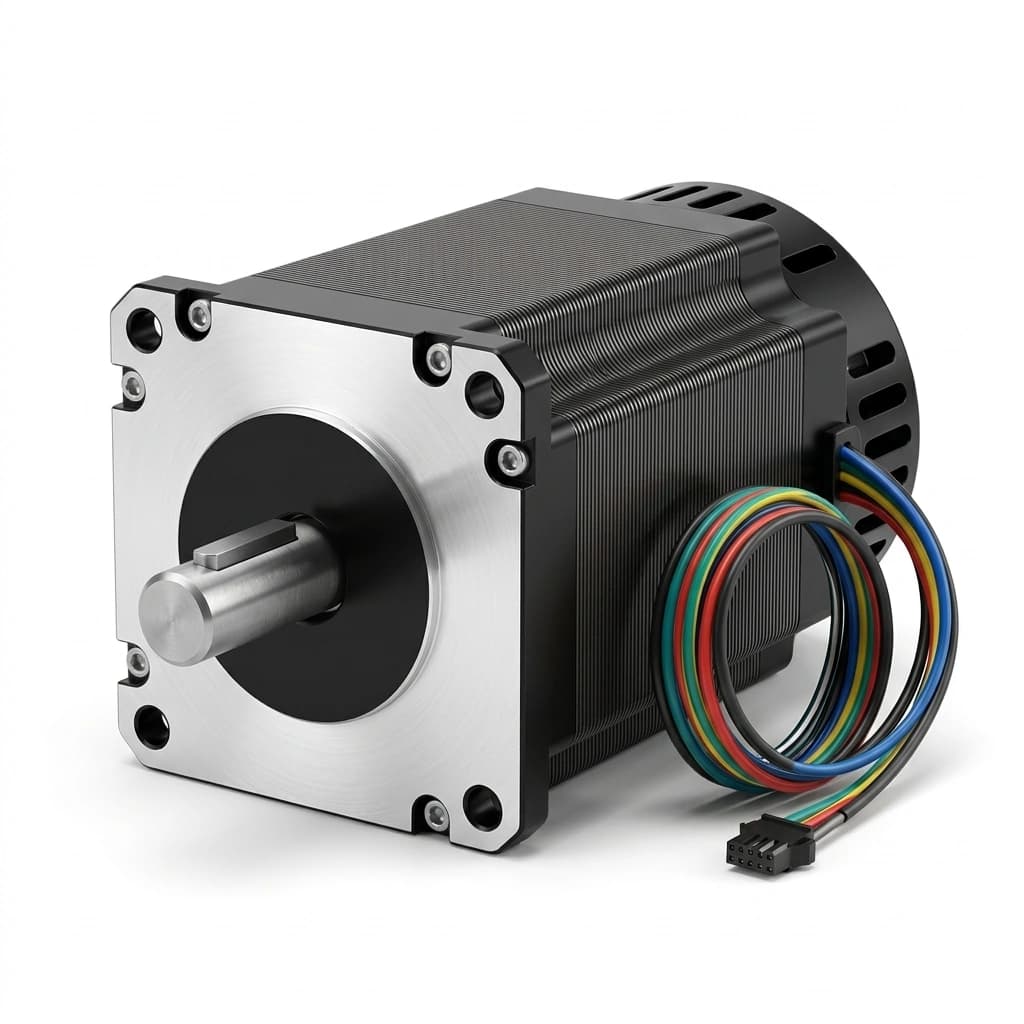
CE, RoHS, and UL Compliance for NEMA Stepper Motors in 2026
Source compliant NEMA stepper motors in 2026 with CE, RoHS, UL, and REACH checks, supplier RFQ questions, and document evidence before quote.
Executive Summary (TL;DR)
- For 2026 sourcing programs, CE, RoHS, UL, and REACH reviews should be treated as part of total landed risk, not an afterthought to unit price.
- Unverified, expired, or model-mismatched certificates can trigger audit findings, customs questions, and redesign delays; buyers should verify DoC and test-report traceability before PO release.
- NEMA frame sizes define mechanical mounting, not electrical safety or efficiency standards. Never assume a NEMA 23 motor is inherently compliant without verified testing data.
- Using a structured compliance checklist during RFQ and incoming quality control reduces downstream integration surprises for machine builders.
In the fast-paced global manufacturing landscape of 2026, sourcing a NEMA stepper motor is no longer just about matching torque specifications and NEMA frame sizes. For OEM procurement teams, distributors, and engineers, the most significant hidden costs are often tied to regulatory non-compliance.
When a machine builder imports 5,000 units of a seemingly cost-effective NEMA 23 stepper motor, discovering that the batch lacks proper CE marking or RoHS compliance upon customs entry is a nightmare. It results in delayed production schedules, impounded goods, and potentially catastrophic redesigns.
This guide provides a deep dive into the critical compliance standards—CE, RoHS, UL, and REACH—for NEMA stepper motors, explaining exactly how buyers can navigate this complex landscape, audit suppliers effectively, establish a resilient supply chain, and make informed decisions using sourcing checklists and decision matrices.
Scope and limitations: This article reflects global OEM sourcing practice as of July 22, 2026. It is written for procurement and engineering screening, not as legal advice or a substitute for product-specific certification review. Always confirm the exact target market, final machine classification, applied voltage, driver pairing, and customer contract requirements before purchase order release.
1. The Real Cost of Non-Compliance in 2026: Failure Risks
The market for NEMA stepper motors is heavily fragmented, with hundreds of overseas suppliers offering varying degrees of quality and documentation. While it might be tempting to select a supplier offering a 15% discount on bulk orders, the hidden liabilities of non-compliance can exceed the initial savings by a factor of ten.
Key Failure Risks for OEMs:
- Customs Impoundment: Border control agencies and market-surveillance teams increasingly rely on digital documentation and risk-based checks. Missing or fraudulent RoHS test reports can trigger shipment holds, storage fees, and disrupted production lines.
- Product Recalls: If a medical device or consumer appliance utilizes a non-compliant stepper motor, the entire assembly is non-compliant. Recalling field-deployed machinery due to a $15 motor can cost millions and destroy brand reputation.
- Liability and Insurance: Industrial fires caused by non-UL recognized motor insulation failures can void corporate liability insurance. The legal fallout from such events far outweighs any upfront component savings.
When you purchase a stepper motor, you are not just buying a piece of hardware; you are buying the documentation and the engineering rigor that guarantees its safety and environmental adherence in your target market. If an end-user machine (such as a medical device, CNC router, or packaging machine) fails a regional safety audit because the internal stepper motor lacks proper UL insulation classification or violates EMC directives, the entire machine cannot be sold.
The burden of proof has shifted entirely onto the importer and the OEM. Regulatory bodies expect complete digital traceability and immediate availability of valid Declarations of Conformity (DoC) and test reports.
2. Core Compliance Standards and Applicability Boundaries
Understanding what each certification actually covers—and its strict boundaries—is the first step toward robust procurement.
CE (Conformité Européenne)
The CE mark is a mandatory conformity marking for products sold within the European Economic Area (EEA).
- Applicability Boundary: Required for the EEA market. It signifies self-declaration or third-party validation that the motor meets EU health, safety, and environmental protection standards.
- Low Voltage Directive (LVD) (2014/35/EU): Ensures electrical equipment within specific voltage limits (50-1000V AC or 75-1500V DC) provides high protection. Many smaller NEMA motors operate below this threshold (e.g., 24V DC), but the complete machine assembly will require it. Motors for higher voltages (e.g., 110V/220V) must comply with LVD.
- Electromagnetic Compatibility (EMC) Directive (2014/30/EU): Ensures the motor does not emit excessive electromagnetic interference (EMI) and is immune to external interference.
RoHS (Restriction of Hazardous Substances)
RoHS (Directive 2011/65/EU and amendments like RoHS 3) restricts specific hazardous materials in electronic products.
- Applicability Boundary: Applies to all electrical components imported into the EU, but increasingly adopted globally (e.g., China RoHS, California RoHS).
- Restricted Materials: Includes Lead (Pb), Mercury (Hg), Cadmium (Cd), Hexavalent chromium (Cr6+), and specific phthalates (DEHP, BBP, DBP, DIBP).
- Specification Dimensions: Stepper motor stators, rotors, lead wires, and PCB assemblies must be manufactured using compliant soldering and raw materials.
UL (Underwriters Laboratories) & CSA
For North America, UL and CSA are the gold standard for electrical safety.
- Applicability Boundary: Primarily North America. While not legally mandated everywhere like CE, local electrical codes, OSHA requirements, and insurance policies make it virtually mandatory for industrial machinery.
- UL 1004-1 (Rotating Electrical Machines): Covers the basic safety of the motor structure.
- Insulation Systems (UL 1446): Motors generate significant heat. UL requires the motor's insulation system (Class B [130°C], Class F [155°C], or Class H [180°C]) to be tested to prevent degradation, short circuits, or fire.
REACH (Registration, Evaluation, Authorisation and Restriction of Chemicals)
- Applicability Boundary: EU regulation addressing chemical substances throughout the supply chain.
- Requirements: Buyers must obtain a REACH declaration confirming the motor does not contain Substances of Very High Concern (SVHC) above the 0.1% weight-by-weight threshold.
3. Engineering Decision & Supplier Communication Table
To streamline the procurement strategy, use this expanded reference table to align motor specifications with your target market, establish clear applicability boundaries, and define exactly what you must ask your supplier for during RFQ.
| Certification / Standard | Target Region | Core Focus & Applicability Boundary | Required Documentation (Ask Supplier For) | Supplier Communication Fields (RFQ) | Risk if Missing (Failure Risk) |
|---|---|---|---|---|---|
| CE (LVD/EMC) | Europe (EEA) | Electrical safety, EMI limits. Applies to full assemblies and high-voltage motors. | Declaration of Conformity (DoC), Technical File, Test Reports | "Provide CE DoC and underlying EMC test reports per EN 61000." | Blocked by EU customs; inability to sell the final machine. |
| RoHS 3 | Global (EU led) | Restriction of 10 toxic materials. Applies to all electronic sub-components. | RoHS Test Report (from SGS, TUV, etc.) | "Provide full BOM and component-level RoHS 3 declarations." | Product recall, heavy fines, brand damage, environmental liability. |
| REACH | Europe (EEA) | Limiting SVHCs. Applies to raw materials, plastics, and coatings. | REACH SVHC Declaration (updated to the current Candidate List) | "Confirm compliance with the current ECHA Candidate List; record the check date and attach the supplier declaration." | Compliance audit failure; environmental penalties. |
| UL / cULus | North America | Fire safety, thermal endurance. Applies to coils, wires, and insulation. | UL File Number, listed on UL Product iQ portal | "Provide UL file number for the motor insulation system (Class B/F/H)." | Rejected by US inspectors, uninsurable machinery, fire hazards. |
| UKCA | United Kingdom | Post-Brexit CE equivalent. Applies to machines sold in Great Britain. | UK DoC | "Provide UKCA DoC (can often be cross-referenced with CE data)." | Cannot be legally placed on the UK market. |
| IP Rating (IEC 60529) | Global | Ingress protection against dust and water. Essential for harsh environments. | IP Test Report | "Provide third-party IP65/IP67 waterproof test certification." | Premature motor failure due to contamination or fluid ingress. |
| ISO 9001:2015 | Global | Factory quality management system. Ensures consistency. | ISO 9001 Certificate | "Provide current ISO 9001 factory audit certificate." | High batch-to-batch variability; quality control failures. |
| NEMA Standard | Global | Standardized mechanical mounting dimensions (e.g., NEMA 17, 23, 34). | Dimensional Drawing (CAD / PDF) | "Provide detailed 2D drawings and 3D step models." | Physical integration failure (does not affect safety). |
If the stepper motor ships with an external or integrated driver, review the driver as its own compliance item. Driver voltage, switching frequency, enclosure design, and cable routing can change EMC and LVD exposure; use a separate stepper drivers and controllers review before approving the complete axis package.
4. How to Spot Fake Certificates and Vet Suppliers
The proliferation of digitally manipulated or outright fake certificates is a massive issue. Procurement teams must move beyond simply asking "Do you have CE?" and asking for the PDF.
Here is how you actually verify a supplier's claims:
- Check the Issuing Body: A valid CE or RoHS certificate should be issued by a reputable, accredited testing laboratory (e.g., TUV, SGS, Intertek, Bureau Veritas).
- Verify the Certificate Number: Reputable labs provide an online database where you can enter the certificate number to verify its authenticity. If the supplier's certificate cannot be found in the lab's portal, flag it immediately.
- Match the Product Models: Ensure the models listed on the certificate exactly match the models you are purchasing. A certificate for a "NEMA 17 Stepper Motor" does not cover a newly designed "NEMA 34 High Torque Motor" unless explicitly stated.
- Examine the Test Standards: Look at the specific standards tested. For example, a CE certificate should list EN 60034 or EN 61000 standards.
- Demand the Test Report, Not Just the Certificate: A one-page certificate is easy to forge. The accompanying 30-page test report containing actual data graphs, photos of the motor on the test bench, and component breakdowns is much harder to fake.
For recurring OEM programs, move these checks into a formal quality and compliance sourcing workflow so procurement, engineering, and incoming quality control use the same evidence gates.
5. The Comprehensive OEM Sourcing Checklist for Stepper Motors
Use this expanded checklist internally during your next RFQ process. Do not issue a Purchase Order until every item is marked "Yes" or explicitly waived by your engineering team.
Phase 1: Inquiry Fields & RFQ Stage
- Target Market Alignment: Have you identified every country where the final machine will be sold?
- Document Request: Did you explicitly request CE, RoHS, and (if NA) UL documentation in the initial RFQ?
- Performance & Specs: Did you request detailed torque-speed curves and holding torque degradation data at maximum operating temperature?
- Traceability Demand: Did you ask for a Bill of Materials (BOM) showing the compliance status of critical components (wires, stators, adhesives)?
Phase 2: Supplier Evaluation & Spec Confirmation
- Authenticity Verification: Has a team member independently verified the certificate numbers on the issuing agency's website (e.g., UL Product iQ, SGS database)?
- Insulation Class Check: If the application runs hot, is the insulation system UL recognized for the required temperature (e.g., Class F - 155°C)?
- Model Matching: Do the exact part numbers you are ordering appear verbatim on the submitted test reports?
- Change Control Agreement: Do you have a contractual agreement that the supplier will not change raw materials or sub-suppliers (which could void RoHS/UL) without prior written notification?
Phase 3: Acceptance Criteria (IQC - Incoming Quality Control)
- Label Verification: Do the physical motors arriving in the first batch feature the correct, standardized certification marks (e.g., the specific UL RU logo or CE mark) etched or printed on the nameplate?
- Visual Inspection: Are the lead wires clearly marked with their AWG and temperature ratings (e.g., 105°C) to match the documentation?
- Batch Documentation: Did the shipment include a Certificate of Compliance (CoC) tied to your specific PO and batch number?
6. Frequently Asked Questions (FAQ) for Engineering Buyers
These are the real-world questions procurement teams and engineers face when dealing with motor compliance.
How do I verify the insulation class (Class B vs. Class F) of a NEMA 34 motor for high-duty cycle CNC applications?
To verify the insulation class, you cannot just look at the datasheet. You must request the supplier's UL File Number for their insulation system (OBJY2 category code). You then log into the UL Product iQ database, input the file number, and confirm that the specific materials used in their NEMA 34 motor (magnet wire, slot liners, varnish) match the approved Class F (155°C) system.
What is the difference between a self-declared CE mark and a third-party tested DoC for NEMA 23 stepper systems?
For certain low-risk products, a manufacturer can self-declare CE compliance without independent testing. However, for industrial stepper motors operating in noisy EMC environments, relying on a self-declaration is highly risky for the OEM. A third-party tested Declaration of Conformity (DoC) means a recognized lab (like TUV or Intertek) has empirically tested the motor's emissions and immunity. Always demand third-party test reports to back up the DoC.
Does an IP65 rating guarantee compliance for food-grade or medical environments?
No. An IP65 rating (IEC 60529) only certifies that the motor is protected against dust ingress and low-pressure water jets. It says nothing about whether the paint, coatings, or lubricants used in the motor are FDA-approved, food-safe, or biologically inert. For food and medical applications, you must request specific material data sheets and look for specialized certifications (e.g., NSF, FDA CFR Title 21 compliant materials) in addition to IP ratings.
Are all NEMA stepper motors automatically compliant?
No. "NEMA" (National Electrical Manufacturers Association) merely defines the physical dimensions of the motor's faceplate (e.g., a NEMA 23 motor has a 2.3 x 2.3 inch faceplate). It implies nothing about the internal electrical design, efficiency, or safety compliance.
What happens if our machine fails an EMC test because of the stepper motor?
You will have to pause production, redesign the machine's shielding, add expensive chokes or EMI filters, or swap the motor entirely. This introduces severe delays and costs. Sourcing a motor with verified EMC data minimizes this failure risk at the integration stage.
7. Next Steps for Procurement and Engineering
The complexities of global compliance mean that your stepper motor supplier must act as an engineering partner, not just a hardware vendor. Relying on opaque supply chains or unverified online marketplaces is a gamble that modern OEMs cannot afford.
When selecting a vendor, prioritize transparency. A capable supplier will immediately provide full technical files, robust test reports, and a clear bill of materials.
For custom windings, cable assemblies, brake variants, or high-duty-cycle axes, treat compliance evidence as part of the engineering specification, not a late-stage document request. Start the custom design engineering review before freezing drawings or mass-production forecasts.
Partner with a Fully Compliant Supplier
Our NEMA stepper motors are rigorously tested and verified for CE, RoHS, and UL compliance. We provide full documentation upfront to accelerate your engineering cycle and guarantee smooth customs clearance.
Request a Quote & Compliance Docs
Sources / References
- NEMA Motor Standards Overview: National Electrical Manufacturers Association (NEMA), motor and generator standards work. https://www.nema.org/membership/products/view/motor-generator
- CE Marking Guidelines: European Commission, Single Market and Standards. https://single-market-economy.ec.europa.eu/single-market/ce-marking_en
- RoHS Directive Information: European Commission, Environment. https://environment.ec.europa.eu/topics/waste-and-recycling/rohs-directive_en
- REACH Regulation Details: European Commission, Chemicals. https://environment.ec.europa.eu/topics/chemicals/reach-regulation_en
- UL Component Recognition: UL Solutions, Components Certification. https://www.ul.com/services/components-certification
Author

Categories
More Posts
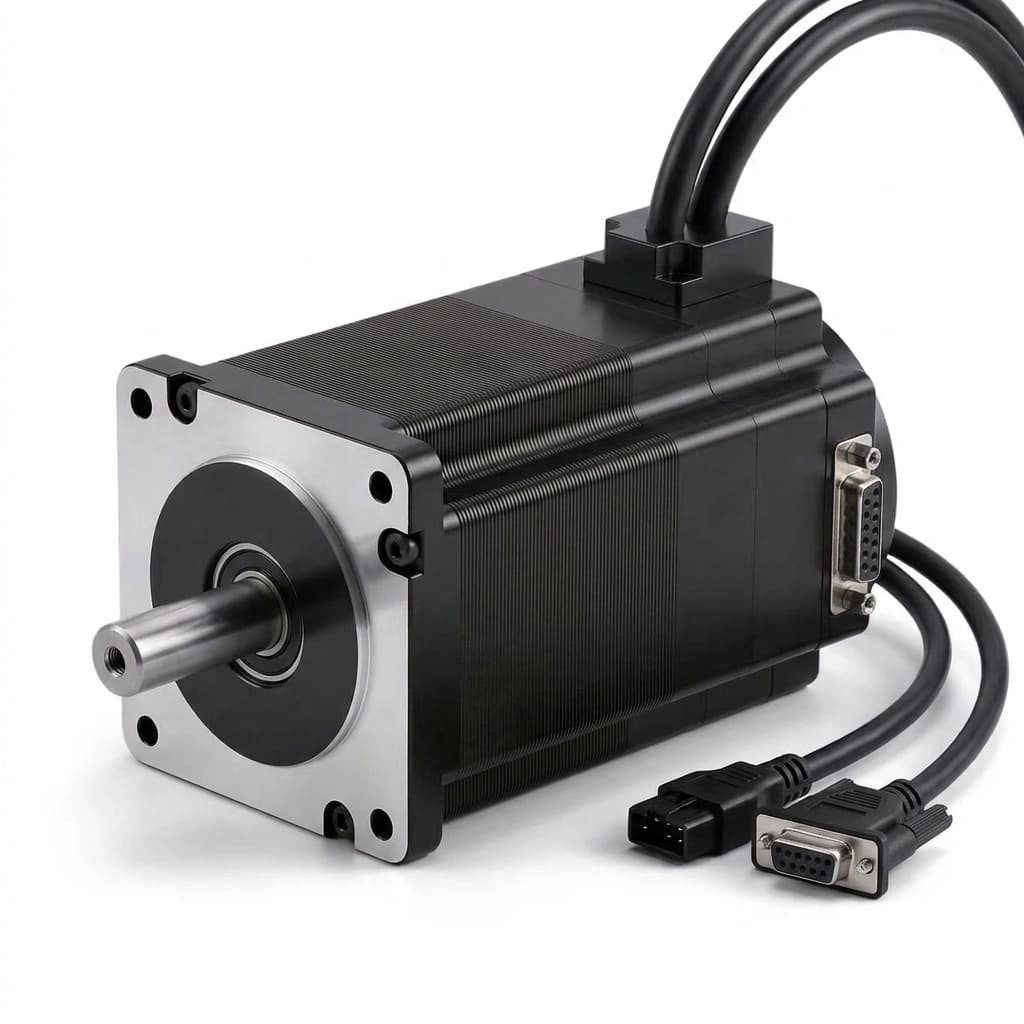
Closed-Loop NEMA Stepper Motors: The 2026 OEM Selection Guide
Use this OEM guide to compare open-loop and closed-loop NEMA stepper motors: torque margins, encoder feedback, BOM tradeoffs, sizing limits, and RFQ checks.
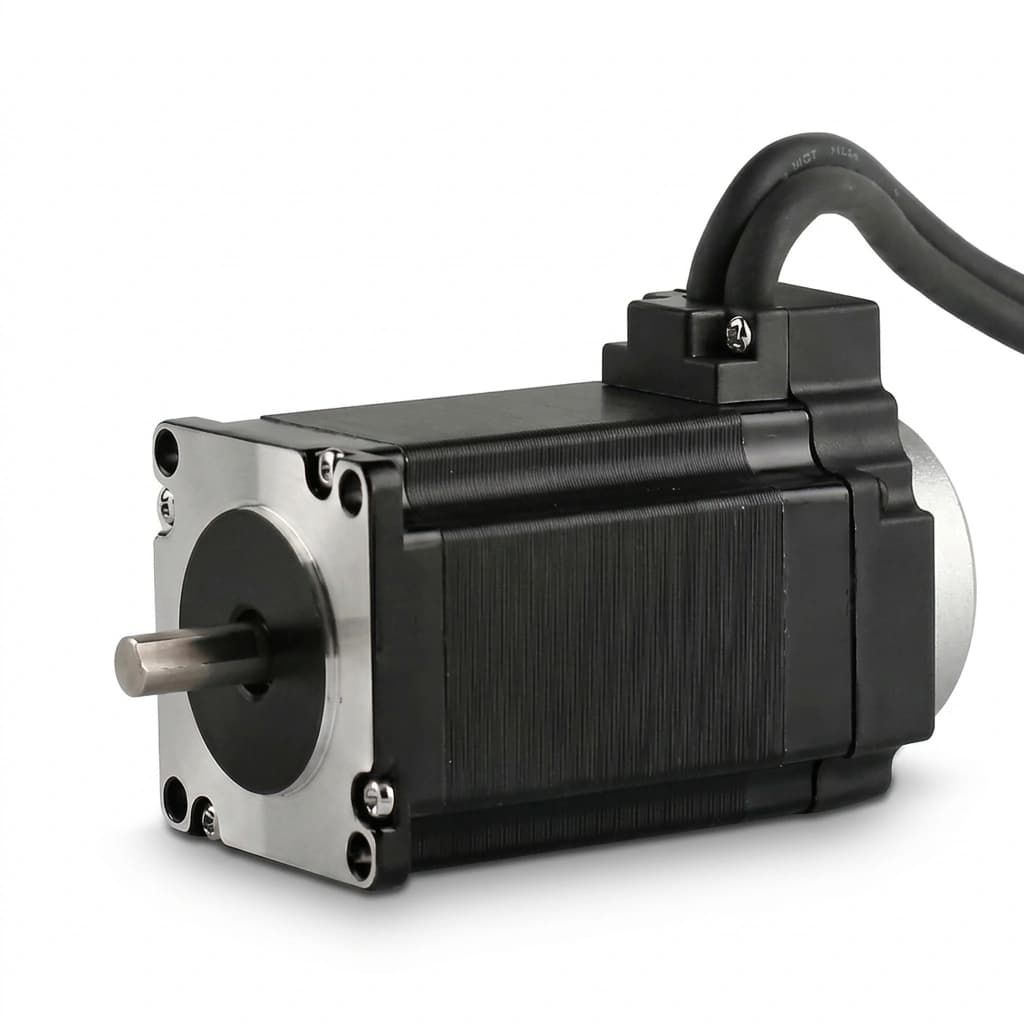
Stepper Motor vs Servo Motor: An OEM Buyer's Decision Framework
When to use stepper motors vs servo motors in industrial machines. Includes cost models, performance comparison data, and a structured decision tree for OEM procurement teams.
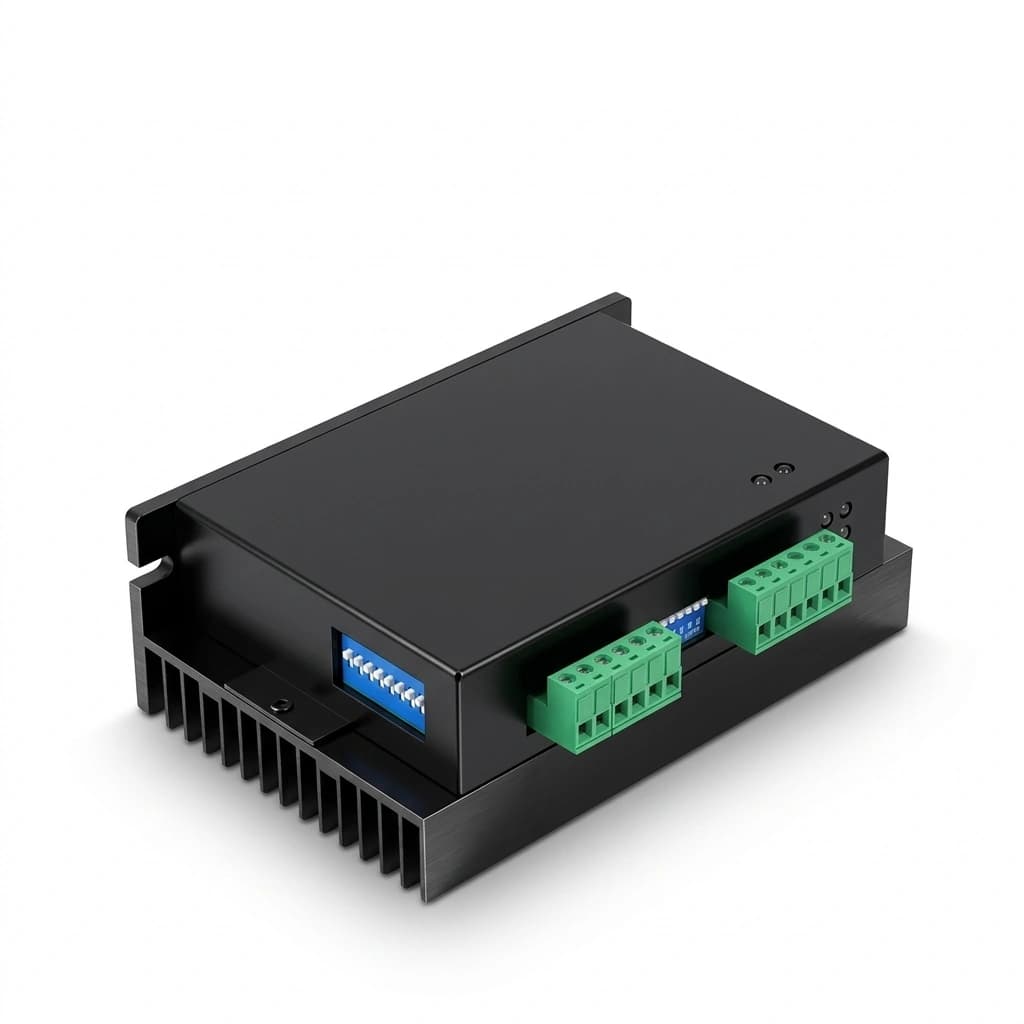
Stepper Motor Driver Selection: DM542 vs DM556 vs DM860
A buyer-focused comparison of the three most popular DSP stepper drivers with real specification data, motor matching rules, and thermal management guidance for industrial OEM projects.