
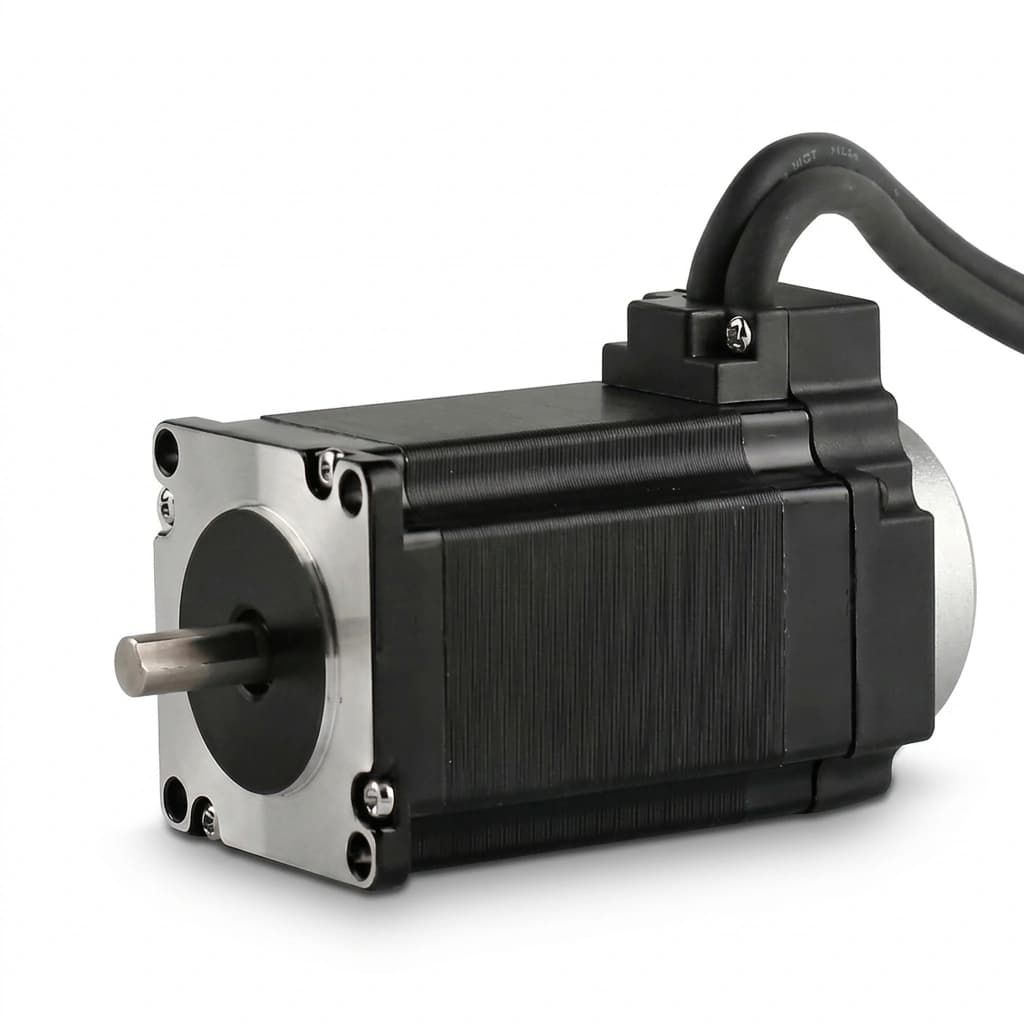
Stepper Motor vs Servo Motor: An OEM Buyer's Decision Framework
When to use stepper motors vs servo motors in industrial machines. Includes cost models, performance comparison data, and a structured decision tree for OEM procurement teams.
"Should we use a stepper or a servo for this axis?" If I had a dollar for every time an engineering team debated this, I could probably retire.
Usually, the debate falls into two extremes. The mechanical engineers push for servos "just to be safe" because they don't want to deal with missed steps. The purchasing managers push for steppers because the BOM cost is 70% lower. I've sat in the middle of these meetings for a decade, and I've learned that arguing over "which is better" is missing the point.
You shouldn't pick a motor based on preference. You should pick it based on a quantitative evaluation of the axis load, speed, and budget. Let's break down the actual math and decision logic I use with OEM clients.
The core trade-off, stated clearly
Steppers provide high torque density at low cost with simple controls, but sacrifice speed range and dynamic load adaptability.
Servos provide continuous feedback, wide speed range, and dynamic response, but require higher investment and tuning expertise.
Neither is universally "better." The right choice depends on your specific axis requirements.
Quantitative performance comparison
| Performance metric | Stepper (open-loop) | Stepper (closed-loop) | AC servo |
|---|---|---|---|
| Holding torque (standstill) | Excellent | Excellent | Good |
| Torque at 500 RPM | 60–80% of holding | 60–80% of holding | 90–100% of rated |
| Torque at 2000 RPM | 10–30% of holding | 10–30% of holding | 85–95% of rated |
| Maximum practical speed | 800–1,500 RPM | 800–1,500 RPM | 3,000–5,000 RPM |
| Position accuracy (open-loop) | ±0.05° (full step) | N/A | N/A |
| Position accuracy (closed-loop) | ±0.01° (with encoder) | N/A | ±0.01° or better |
| Missed step detection | None | Yes | Not applicable (continuous feedback) |
| Overload capability | None — stalls at limit | Alarm or retry | 200–300% for short bursts |
Total cost comparison per axis
This is where many buyers make errors. Motor price is typically less than 30% of total axis cost.
| Cost component | Stepper system | Servo system | Notes |
|---|---|---|---|
| Motor unit | $25–120 | $150–600 | Depends on frame size and torque class |
| Driver/amplifier | $30–80 | $200–500 | Servo drives include encoder processing |
| Encoder (if needed) | $0–40 | Included in motor | Closed-loop stepper adds encoder cost |
| Power supply | $15–50 | $30–80 | Servo bus voltage is often higher |
| Wiring and connectors | $10–20 | $30–60 | Servo needs encoder cable + power cable |
| Commissioning time | 1–2 hours/axis | 2–6 hours/axis | Servo tuning requires expertise |
| Total per axis | $80–310 | $410–1,240 | Stepper is 3–5× cheaper per axis |
OEM Cost Modeling: Stepper vs Servo
Calculate the total axis cost difference, including commissioning engineering time.
Annual BOM Savings
For a 3-axis machine, the cost difference is $990–$2,790 per unit. At 500 units/year, the annual procurement difference is $495,000–$1,395,000. This is why the decision matters.
Decision matrix: which axis needs which motor
Use this table to evaluate each axis independently:
| Criterion | Score: stepper | Score: servo |
|---|---|---|
| Operating speed < 1,000 RPM | ✓ | |
| Operating speed > 1,500 RPM | ✓ | |
| Load is constant and predictable | ✓ | |
| Load varies significantly during cycle | ✓ | |
| Positioning accuracy ≤ 0.05° is sufficient | ✓ | |
| Positioning accuracy < 0.01° required | ✓ | |
| Budget is primary constraint | ✓ | |
| Machine must recover from stall events | ✓ | |
| Axis controls simple point-to-point moves | ✓ | |
| Axis requires multi-axis interpolation | ✓ | |
| Motor must hold position at zero speed | ✓ | |
| Motor must operate at high continuous duty | ✓ |
Scoring rule: If stepper scores ≥ 7 checks, stepper is likely the right choice. If servo scores ≥ 6 checks, servo is likely necessary.
Many production machines use mixed architectures — steppers for cost-sensitive auxiliary axes and servos for performance-critical process axes.
When closed-loop steppers make sense
Closed-loop stepper systems add an encoder to detect and correct position errors. They bridge the gap between open-loop steppers and full servo systems.
Best fit scenarios:
- Application needs stall detection and recovery, but not high-speed operation
- Budget allows $20–40 per axis for encoder upgrade but not full servo investment
- Machine must log position accuracy data for quality compliance
- Existing machine design is sized for stepper frame sizes
Closed-loop stepper limitations:
- Still subject to torque drop at high speed (mechanical limit, not control limit)
- Does not provide the burst overload capability of AC servos
- Encoder adds connector, cable, and potential failure point
Application-specific guidance
CNC routers and milling
Case Study Snapshot
A medical dispensing robotics startup originally spec'd 100W AC servos for all 3 axes. After reviewing their actual speed requirement (max 400 RPM on X/Y, holding position on Z), we switched them to closed-loop NEMA 17 steppers. Result: BOM cost dropped by $540 per machine, and setup time decreased by 2 hours because they no longer needed to tune servo PID loops for their varying syringe payloads.
| Axis | Typical choice | Rationale |
|---|---|---|
| X/Y (large travel) | Servo or closed-loop stepper | Needs consistent torque at varying feed rates |
| Z (vertical, shorter travel) | Stepper (open or closed-loop) | Lower speed, predictable load, holding torque critical |
| Spindle | Servo or VFD motor | Speed range and dynamic response required |
3D printers and additive manufacturing
| Axis | Typical choice | Rationale |
|---|---|---|
| X/Y (print head) | Stepper | Low load, simple moves, cost-sensitive |
| Z (bed lift) | Stepper | Very low speed, holding position required |
| Extruder | Stepper | Low speed, constant load |
For 3D printers, stepper motors dominate across all axes because the load is light, speeds are moderate, and cost per unit is critical.
Medical and laboratory equipment
| Axis | Typical choice | Rationale |
|---|---|---|
| Sample positioning | Stepper or closed-loop stepper | Repeatable positioning, low speed, low noise |
| Fluid dispensing | Stepper with microstepping | Fine volume control via precise angular steps |
| Imaging stage | Servo or closed-loop stepper | Micron-level accuracy, smooth motion required |
Packaging and material handling
| Axis | Typical choice | Rationale |
|---|---|---|
| Conveyor indexing | Stepper | Simple point-to-point, predictable load |
| Pick-and-place arm | Servo | High dynamic load, multi-axis coordination |
| Labeling head | Stepper | Moderate speed, repeatable positioning |
Common mistakes in stepper-vs-servo decisions
| Mistake | Consequence | Prevention |
|---|---|---|
| Specifying servo "just to be safe" | 3–5× higher cost per axis with no performance benefit | Evaluate each axis against actual load and speed data |
| Ignoring torque drop at speed for steppers | Motor undersized for actual operating conditions | Use torque-speed curve at target RPM, not holding torque |
| Choosing stepper for highly dynamic loads | Step loss and position errors in the field | If load varies > 30% during cycle, evaluate servo |
| Not testing prototype under worst-case duty | Thermal or performance failure after production launch | Run 60-minute worst-case validation before design freeze |
| Assuming all axes need the same motor type | Missed cost optimization opportunity | Evaluate each axis independently |
Procurement checklist for OEM buyers
Before finalizing motor type for each axis:
- Define operating speed range — if any axis needs > 1,200 RPM sustained, evaluate servo.
- Calculate required torque at operating speed — use speed-torque curves, not holding torque.
- Characterize load variability — constant load favors stepper; variable load favors servo.
- Set accuracy requirements per axis — stepper full-step accuracy is ±0.05°; if tighter is needed, add encoder or use servo.
- Model total axis cost — include motor, driver, wiring, PSU, and commissioning.
- Validate thermal feasibility — stepper motors in enclosed machines need thermal design (see our thermal management guide).
- Prototype test under worst-case conditions — 60 minutes minimum at maximum load and ambient.
Buyer FAQ
Can I upgrade from stepper to servo later without redesigning the machine?
Usually not without significant changes. Servo motors have different shaft dimensions, mounting patterns, and wiring requirements. The controller and software also change. Design the motor mount and control architecture for the final motor type from the start.
Are Chinese stepper motors reliable enough for production machines?
Quality varies significantly by manufacturer. Look for suppliers that provide: incoming inspection data, winding resistance/inductance test reports, and traceable production lot records. A well-made Chinese stepper motor is functionally equivalent to any global brand at the same specification level.
What is the break-even point where servo becomes cheaper than stepper?
There is rarely a break-even on unit cost. Servo becomes justified when field failure costs from stepper step-loss events exceed the servo premium. For machines running 16+ hours/day with dynamic loads, the reliability payback often justifies servo investment within 12–18 months.
Should I standardize on one motor family across all machines?
Standardizing on a motor family (e.g., NEMA 23 for all stepper axes) reduces procurement complexity and spare parts inventory. But do not force-fit one frame size if a different size is technically more appropriate for specific axes.
For axis-by-axis motor type evaluation, send your machine specification and motion profile to [email protected]. We can provide comparative recommendations with cost models.
Author

Categories
More Posts
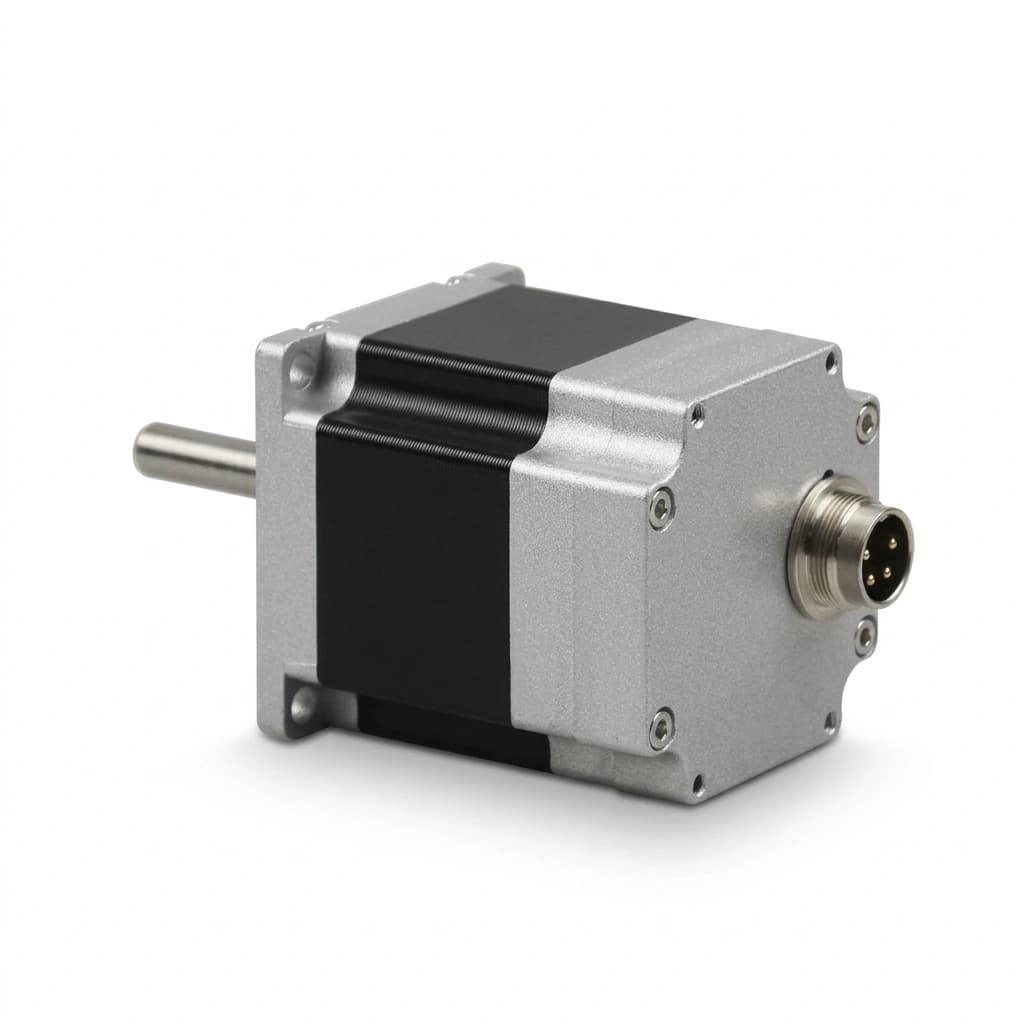
IP65 vs IP67 Waterproof Stepper Motors: OEM Selection Guide
How to specify waterproof NEMA stepper motors for harsh environments without overpaying. Covers shaft seals, thermal derating, and cable traps.
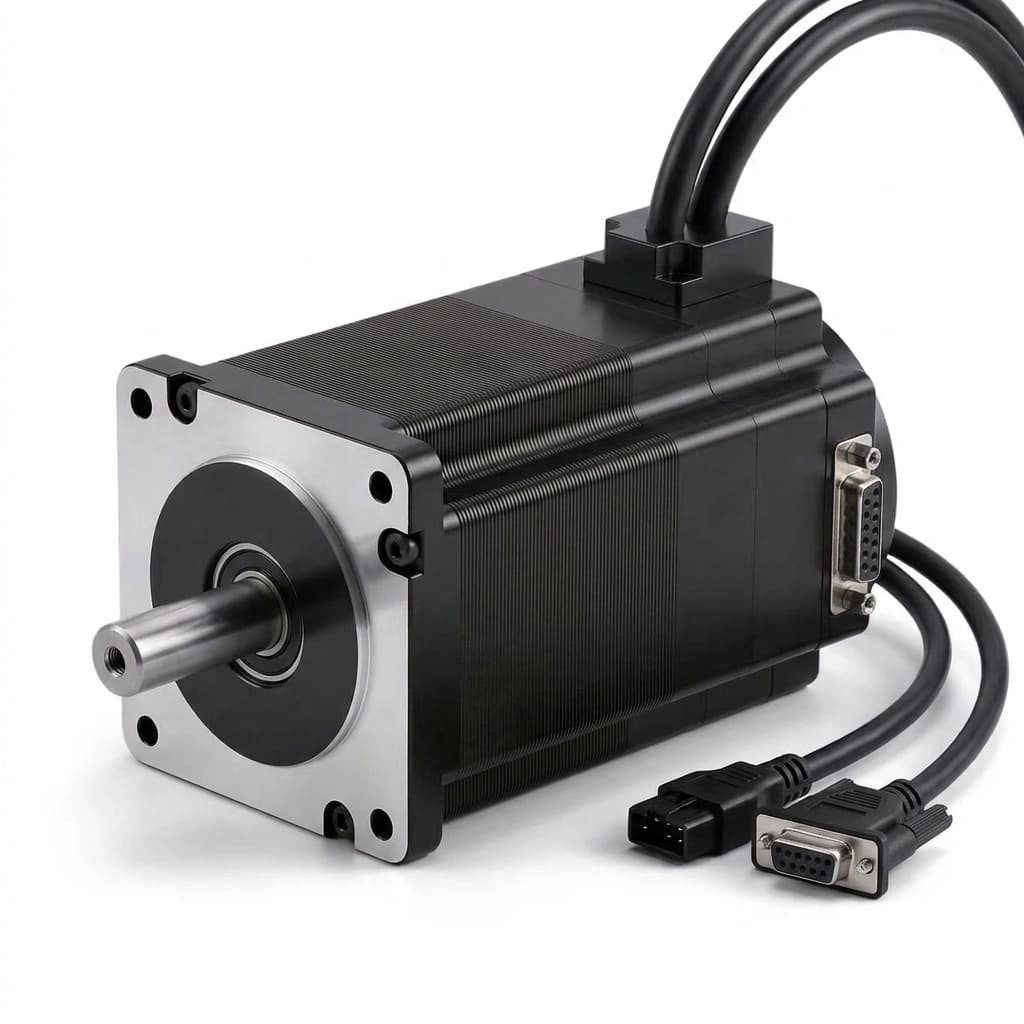
Closed-Loop NEMA Stepper Motors: The 2026 OEM Selection Guide
Use this OEM guide to compare open-loop and closed-loop NEMA stepper motors: torque margins, encoder feedback, BOM tradeoffs, sizing limits, and RFQ checks.
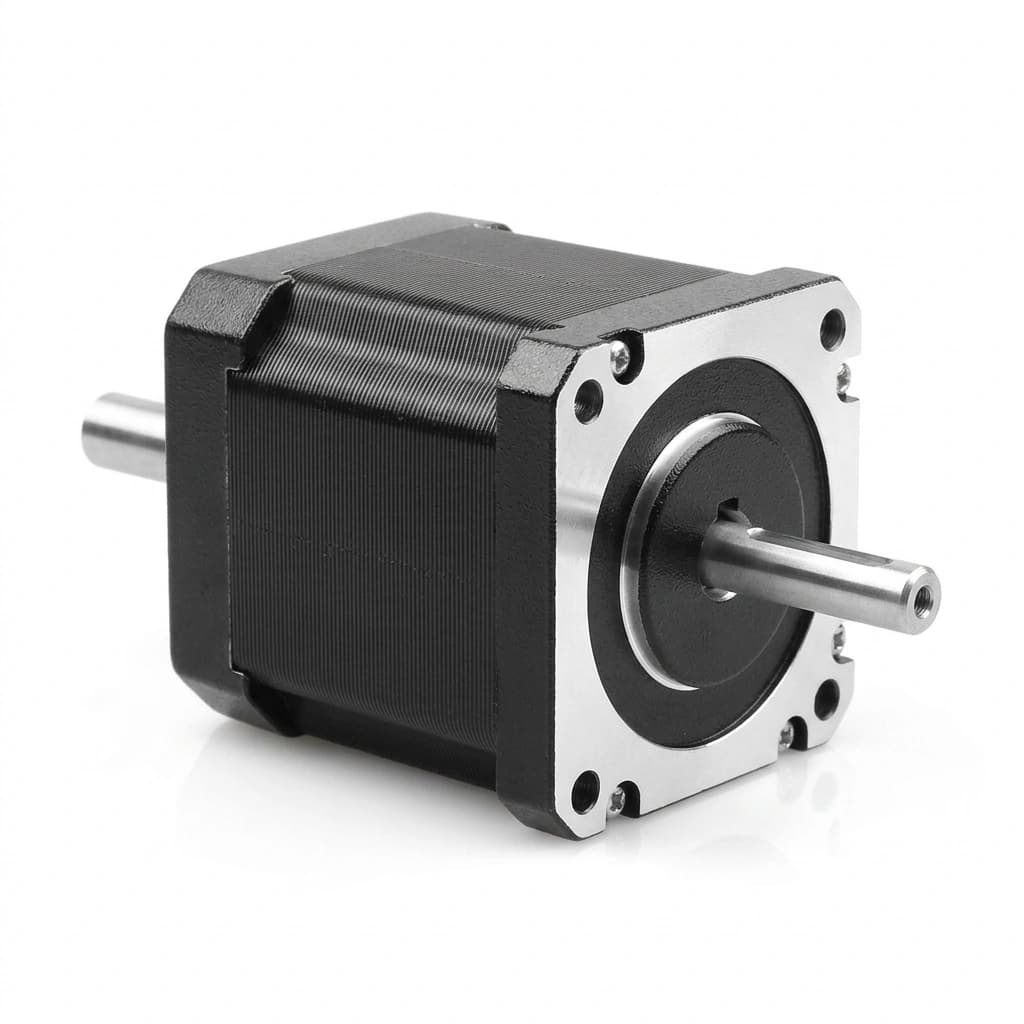
Stepper Motor Customization Options for Global Buyers
The key OEM customization parameters for stepper motors and how each choice affects performance, lead time, and quality risk.