
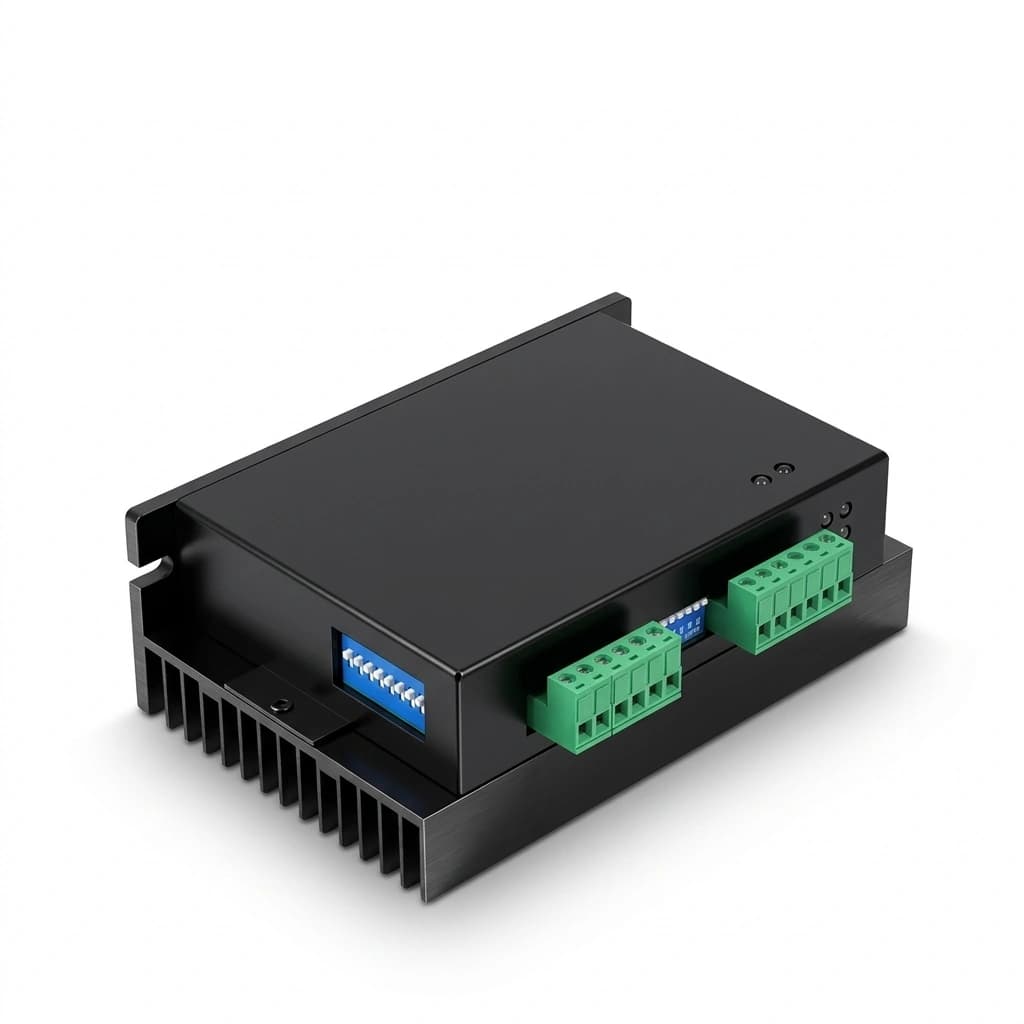
Stepper Motor Driver Selection: DM542 vs DM556 vs DM860
A buyer-focused comparison of the three most popular DSP stepper drivers with real specification data, motor matching rules, and thermal management guidance for industrial OEM projects.
Executive Summary (TL;DR)
- Match drivers to motor current, not frame size (e.g., NEMA 34 needs DM860, not DM542).
- Ensure power supply capacity is at least 1.5× the total motor current draw.
- Always enable the driver's auto-idle-current reduction to prevent overheating during dwell periods.
- Start commissioning at 70% of rated current and only increase if torque margin is insufficient.
I get asked about driver selection at least twice a week. The question is usually some version of "which DM-series driver do I need for my NEMA 23?" — and the answer is never just "pick the cheapest one that fits."
Last year a customer in Germany sent us a warranty claim on 50 motors. Turns out the motors were fine — they'd paired every NEMA 23 (2.8 A) with DM542 drivers running off a 24 V supply. The drivers were thermal-shutting down after 25 minutes. We swapped to DM556 at 48 V and the problem disappeared overnight. That single mismatch cost them two weeks of machine downtime and a batch of angry end-users.
Here's what I tell every buyer: spend 10 minutes on driver selection now, or spend 10 days fixing field failures later.
How to pick: the decision flow
Spec comparison — the numbers that matter
| Parameter | DM542 | DM556 | DM860 |
|---|---|---|---|
| Input voltage | 20–50 VDC | 20–50 VDC | 24–80 VDC |
| Peak output current | 1.0–4.2 A | 1.8–5.6 A | 2.4–7.2 A |
| Microstepping range | Up to 25,600 pulses/rev | Up to 25,600 pulses/rev | Up to 51,200 pulses/rev |
| Best fit motors | NEMA 17, NEMA 23 | NEMA 23, NEMA 24 | NEMA 24, NEMA 34 |
| Idle current reduction | Yes (~50%) | Yes (~50%) | Yes (~50%) |
| Anti-resonance | Yes | Yes | Yes |
| Protection | Over-V, over-I | Over-V, over-I | Over-V, under-V, over-I |
| Size (L×W×H mm) | 96 × 56 × 33 | 118 × 76 × 34 | 118 × 86 × 38 |
Values are typical catalog ranges. Your actual units may differ by manufacturer batch.
The four rules of driver selection
Rule 1: match driver current to motor rated current
This is the single most important selection criterion.
- Read the motor nameplate for rated phase current (not holding torque).
- Set the driver output current to match this value, within ±10%.
- The driver's peak current capacity should exceed the motor's rated current by at least 15–20% for dynamic margin.
Example: A NEMA 23 motor rated at 2.8 A/phase needs a driver that can supply at least 2.8 A continuously. DM542 maxes out at 4.2 A peak (roughly 3.0 A RMS) — this is a tight fit. DM556 at 5.6 A peak provides comfortable headroom.
Rule 2: higher voltage means better high-speed torque
A motor's torque drops at higher RPM because its internal inductance limits current rise time. Higher bus voltage overcomes this limitation.
Practical impact:
| Motor | Driver at 24 VDC | Driver at 48 VDC | Driver at 72 VDC |
|---|---|---|---|
| NEMA 23 (1.8 A) | Good below 400 RPM | Good below 800 RPM | — |
| NEMA 23 (2.8 A) | Weak above 300 RPM | Good below 600 RPM | — |
| NEMA 34 (4.2 A) | Not recommended | Acceptable below 400 RPM | Good below 800 RPM |
If your application needs consistent torque above 500 RPM with a NEMA 23 or larger motor, DM556 or DM860 with a 48–60 V power supply is the practical minimum.
Rule 3: match microstepping to actual positioning need
Higher microstepping does not always mean higher accuracy. Beyond a certain point, micro-steps produce almost no actual rotor movement — only smoother current waveforms.
Practical guideline:
- 800–3,200 steps/rev: Sufficient for most CNC routing, conveyor indexing, and general automation.
- 6,400–12,800 steps/rev: Useful when vibration and resonance reduction is the primary goal.
- 25,600+ steps/rev: Mainly for ultra-smooth motion in optics, dispensing, or medical equipment.
Rule 4: thermal design determines reliability
All three drivers generate heat. Power dissipation follows approximately:
P_dissipation ≈ I²_rms × R_on + switching_losses
Design rules:
- DM542: Can run passively cooled at up to ~70% peak current in open-air enclosures. Above that, add a fan or heat sink.
- DM556: Needs ventilation in any panel enclosure operating above 2.5 A continuous.
- DM860: Always design with forced cooling or heat-sink mounting when running NEMA 34 motors at rated current.
Surface temperature limit: keep driver case below 70 °C in continuous operation. Measure after 30 minutes of worst-case duty, not during short bench tests.
Driver-motor matching matrix
| Motor type | Rated current | Recommended driver | Minimum bus voltage |
|---|---|---|---|
| NEMA 17 (0.4–1.7 A) | ≤ 1.7 A | DM542 | 24 VDC |
| NEMA 23 short stack (1.0–2.0 A) | ≤ 2.0 A | DM542 | 24–36 VDC |
| NEMA 23 long stack (2.0–3.0 A) | ≤ 3.0 A | DM556 | 36–48 VDC |
| NEMA 23 high-torque (3.0–4.2 A) | ≤ 4.2 A | DM556 or DM860 | 48 VDC |
| NEMA 24 (2.5–4.0 A) | ≤ 4.0 A | DM556 or DM860 | 48 VDC |
| NEMA 34 (4.0–6.0 A) | ≤ 6.0 A | DM860 | 48–72 VDC |
| NEMA 34 high-torque (5.0–7.0 A) | ≤ 7.0 A | DM860 | 60–80 VDC |
Wiring and integration checklist
Before commissioning, verify:
- Power supply capacity: PSU continuous rating ≥ 1.5 × total motor current draw (all axes combined).
- Signal isolation: Pulse and direction inputs must be opto-isolated. Use differential signals for cable runs over 1 meter.
- Grounding: Separate motor power ground and signal ground. Connect driver chassis to machine ground plane.
- DIP switch settings: Photograph final DIP switch positions and record in production documentation for repeat builds.
- Current setting: Start at 70% of motor rated current during commissioning. Increase only if torque margin testing shows a deficit.
Implementation Snippet: Standard Arduino/C++ Pulse Generation
Hardware engineers often pass the baton to software engineers at this stage. Here is a standard, blocking pulse generation loop we use for initial bench testing of DM-series drivers before writing non-blocking interrupt code:
// Basic validation loop for DM542/DM556/DM860
// Set driver DIP switches to 1600 pulses/rev (1/8 step)

const int stepPin = 9;  // Connect to PUL+ (PUL- to GND)
const int dirPin = 8;   // Connect to DIR+ (DIR- to GND)

void setup() {
  pinMode(stepPin, OUTPUT);
  pinMode(dirPin, OUTPUT);
}

void loop() {
  digitalWrite(dirPin, HIGH); // Set forward direction

  // Accelerate and run for 1 revolution (1600 steps)
  for(int x = 0; x < 1600; x++) {
    digitalWrite(stepPin, HIGH);
    delayMicroseconds(500);   // Control speed here (lower = faster)
    digitalWrite(stepPin, LOW);
    delayMicroseconds(500);
  }

  delay(1000); // Wait 1 second

  digitalWrite(dirPin, LOW); // Reverse direction

  // Return to start
  for(int x = 0; x < 1600; x++) {
    digitalWrite(stepPin, HIGH);
    delayMicroseconds(500);
    digitalWrite(stepPin, LOW);
    delayMicroseconds(500);
  }

  delay(1000);
}
Common buyer mistakes
| Mistake | What happens | How to prevent |
|---|---|---|
| Choosing by price alone | Under-rated driver causes thermal shutdown in the field | Match to motor current, not to budget |
| Running DM542 with NEMA 34 | Insufficient current, motor never reaches target torque | Use DM860 for all NEMA 34 applications |
| Setting maximum current from day one | Excessive heat, reduced driver life | Start at 70%, increase based on test data |
| Ignoring idle current reduction | Motor and driver overheat during long dwell periods | Always enable auto-idle-current feature |
| No ventilation planning for enclosed panels | Thermal shutdown after 20–40 minutes | Design forced cooling before build |
Buyer FAQ
Can I use one driver model for all motors in my machine?
Only if all motors have similar current requirements. In practice, most multi-axis machines benefit from mixing driver sizes — DM542 for lighter axes and DM556/DM860 for loaded axes. This optimizes both cost and thermal budget.
How do I know if my driver is running too hot?
Measure case temperature after 30+ minutes of worst-case duty cycle. If case temperature exceeds 65 °C, add cooling or reduce current setting.
What is the real-world lifespan of these drivers?
In properly ventilated industrial enclosures running within rated specifications, quality DSP drivers typically last 30,000–50,000+ operating hours. The primary failure mode is electrolytic capacitor aging, which accelerates with temperature.
Should I buy drivers from the motor supplier or separately?
Buying matched motor-driver sets from the same supplier reduces integration risk. The supplier can verify current compatibility, pulse interface, and thermal behavior as a system before shipment.
For driver selection support, send your motor specifications and motion profile to [email protected]. We can recommend pre-validated motor-driver combinations for your project.
If your design target is ultra-low-speed tracking (for example 0.1 RPM output in telescope drives), run our 1 10th RPM stepper motor telescope drive calculator and report before final driver lock.
If your requirement is explicitly around 1/32 microstepping on a 1.8° motor, run our 1/32 stepper driver for 1.8 degree motor fit checker and report for pulse-budget and driver-envelope screening.
Author

Categories
More Posts
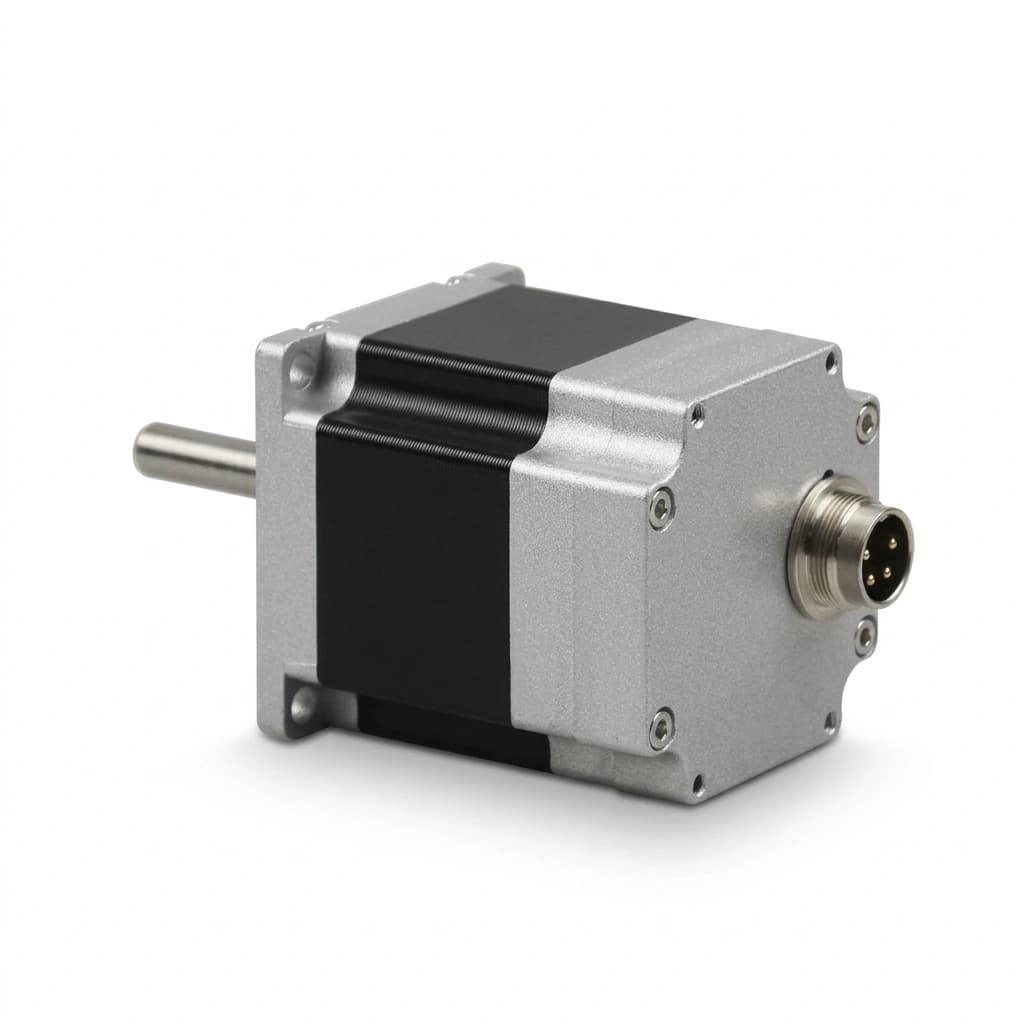
IP65 vs IP67 Waterproof Stepper Motors: OEM Selection Guide
How to specify waterproof NEMA stepper motors for harsh environments without overpaying. Covers shaft seals, thermal derating, and cable traps.
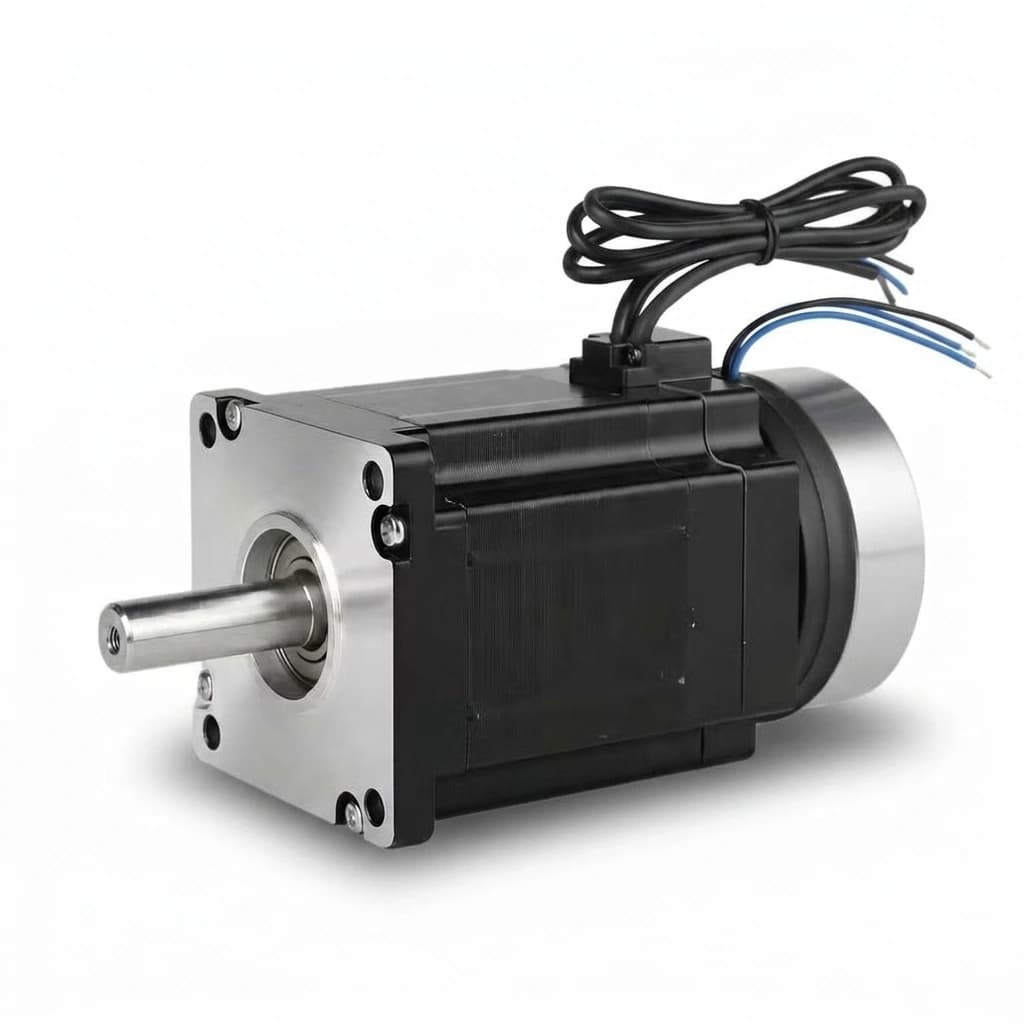
NEMA Stepper Motor with Electromagnetic Brake: 2026 Z-Axis Sourcing & Sizing Guide
A comprehensive OEM guide for specifying NEMA stepper motors with power-off electromagnetic brakes for vertical Z-axis applications. Covers sizing, holding vs dynamic torque, 24V interlock wiring, and procurement checklists.
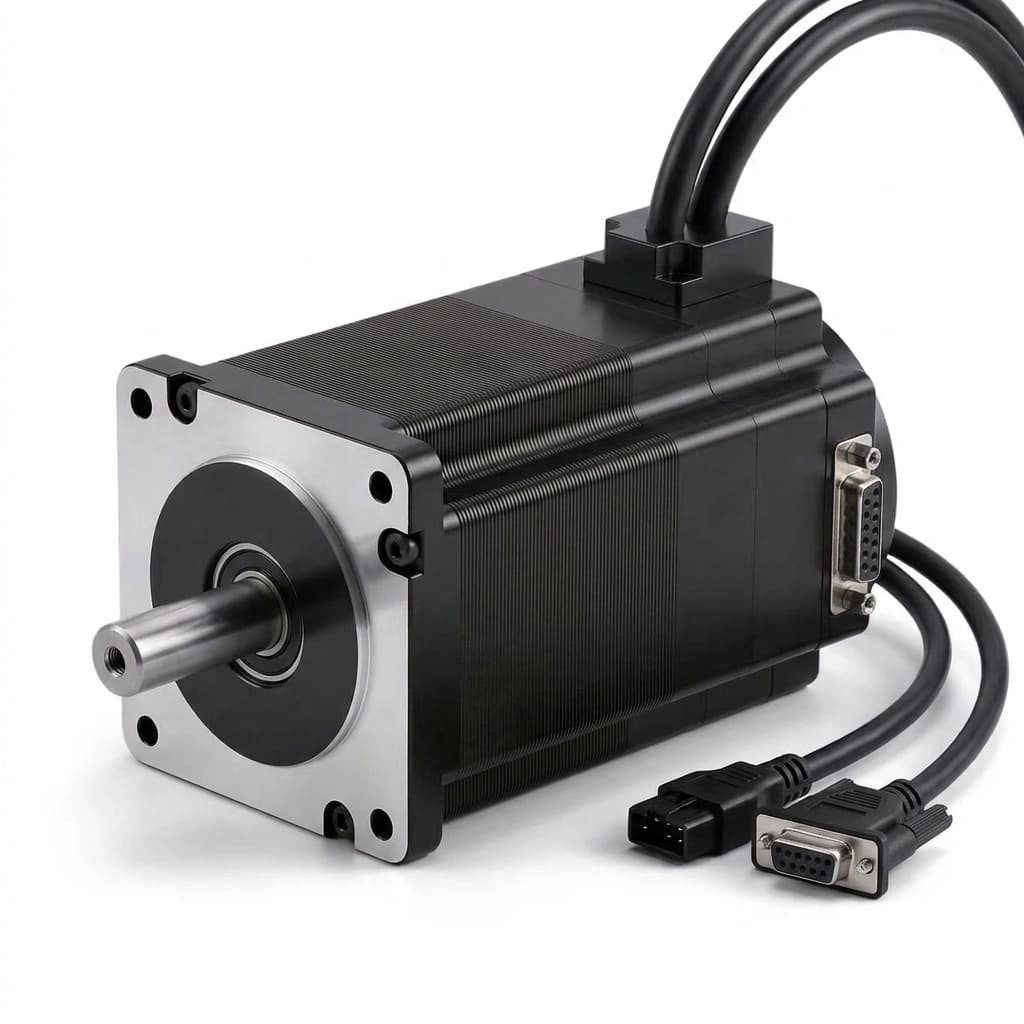
Closed-Loop NEMA Stepper Motors: The 2026 OEM Selection Guide
Use this OEM guide to compare open-loop and closed-loop NEMA stepper motors: torque margins, encoder feedback, BOM tradeoffs, sizing limits, and RFQ checks.