
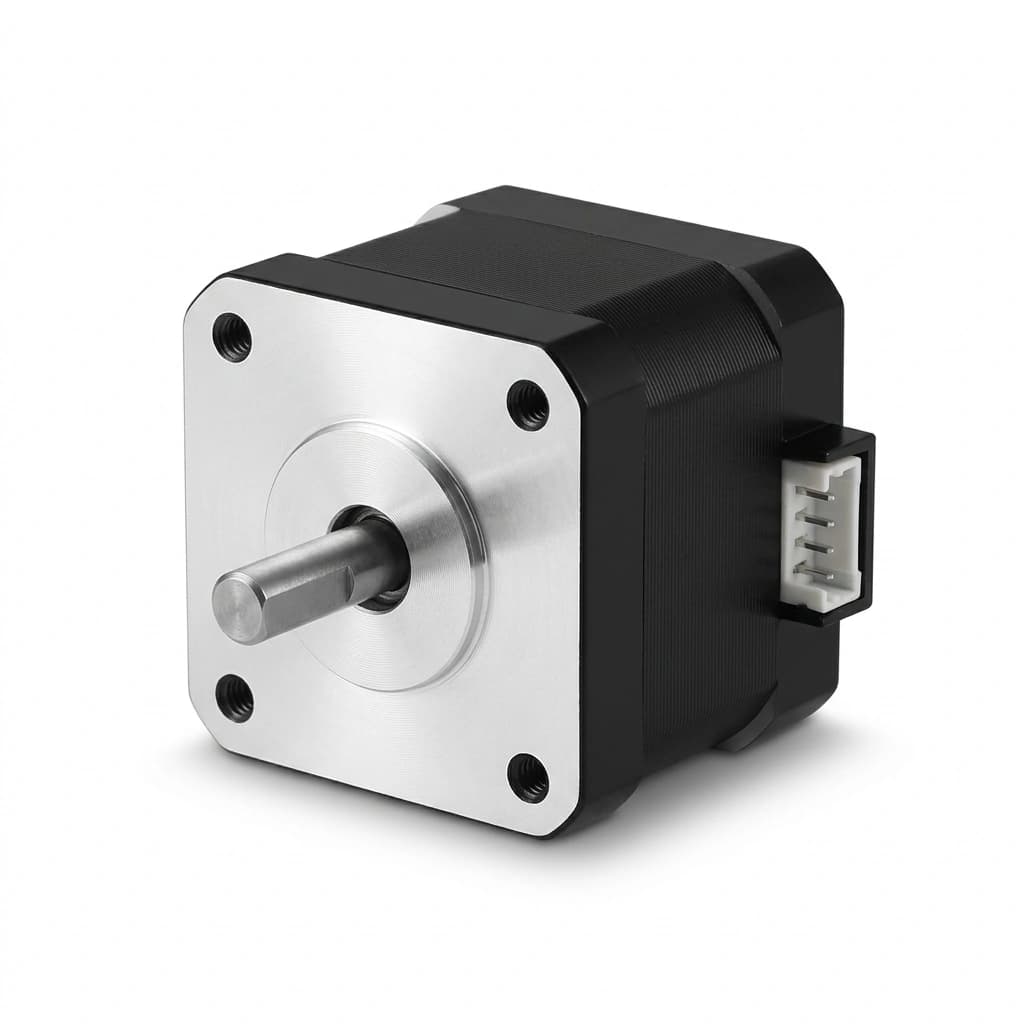
NEMA 17 vs NEMA 23: OEM Selection Guide
How to choose between NEMA 17 and NEMA 23 based on torque margin, speed range, thermal limits, and total system cost.
"Can I just use a longer NEMA 17 instead of switching to NEMA 23?"
I hear this constantly from hardware startups trying to avoid redesigning their mounting brackets. They'll ask for a 60mm long NEMA 17 to hit 0.8 N·m of holding torque, hoping it will behave like a NEMA 23. It rarely does.
A long NEMA 17 has high rotor inertia and high inductance. At 400 RPM, its torque drops off a cliff compared to a standard NEMA 23. You might save some space on the mounting flange, but you lose the dynamic performance you actually need.
Let's look at the real differences between these two workhorses of the motion control industry.
Practical comparison table (typical catalog ranges)
| Metric | NEMA 17 (typical) | NEMA 23 (typical) | Why it matters |
|---|---|---|---|
| Holding torque | 0.3 to 0.8 N·m | 1.0 to 3.0 N·m | Initial static reserve |
| Rated current | 1.0 to 2.0 A/phase | 2.0 to 4.2 A/phase | Driver and thermal design |
| Rotor inertia | ~30 to 80 g·cm² | ~150 to 600 g·cm² | Acceleration response |
| Common use cases | Light axes, compact modules | CNC axes, heavier linear stages | Risk of under/over-design |
Ranges vary by stack length, winding, and vendor design. Always validate with target model datasheets.
Decision rule 1: torque margin at real speed
Do not size from holding torque only. Use motor torque on the speed-torque curve at your target RPM.
A practical rule for stable production systems:
- Continuous operating point up to 70% of available torque at target RPM.
- Peak transient point up to 85% of available torque at target RPM.
Decision rule 2: reflected inertia compatibility
For screw or belt systems, check reflected inertia at motor shaft:
J_reflected = J_load / (gear_ratio^2)
Then compare J_reflected with motor rotor inertia.
If the ratio is too high, NEMA 17 often shows rough response or missed steps during aggressive ramps.
Decision rule 3: thermal envelope
Current increase can recover torque, but temperature rise follows quickly. Before freezing the model, define:
- Ambient temperature range
- Enclosure ventilation condition
- Motion duty cycle
- Max allowable winding temperature
Thermal failure often appears after 20 to 40 minutes, not in a short bench test.
Selection map (speed vs load tendency)
Cost model buyers should use
Do not compare only motor piece price. Use total system cost:
| Cost bucket | NEMA 17 risk | NEMA 23 risk |
|---|---|---|
| Motor BOM cost | Lower | Higher |
| Driver/PSU requirement | Lower | Often higher |
| Mechanical redesign risk | Higher if under-sized | Lower for torque reserve |
| Field failure/rework cost | Can be high under dynamic loads | Lower when correctly tuned |
In many projects, one field rework event is more expensive than the motor unit price delta.
Prototype validation checklist (must-have)
- Run at target RPM and acceleration profile for at least 30 minutes.
- Record winding temperature rise and step-loss events.
- Test worst-case payload and voltage tolerance window.
- Compare repeatability under 3 repeated start-stop cycles.
- Freeze model only after sample data passes acceptance criteria.
Common sizing mistakes
- Selecting by frame size convention from previous project.
- Ignoring torque drop at real operating speed.
- Ignoring reflected inertia from screw/gear layout.
- Running sample test without worst-case duty cycle.
Buyer FAQ
Is NEMA 23 always better than NEMA 17?
No. If your load and inertia are moderate, NEMA 17 can meet performance targets with lower system cost and smaller packaging.
Can I decide from holding torque only?
No. Holding torque is a static indicator. Final selection must use torque at the target RPM and duty cycle.
When should I test both frame sizes?
When your operating point is close to torque limits or when acceleration and thermal constraints are both strict.
If you want a model pre-check, send load and motion data to [email protected]. You can also review our product categories.
Full NEMA frame size reference (for context)
Buyers often ask about frames beyond NEMA 17 and 23. This table covers the full standard range:
| NEMA frame | Faceplate size | Typical holding torque range | Typical rotor inertia | Common applications |
|---|---|---|---|---|
| NEMA 8 | 20 × 20 mm | 0.01–0.04 N·m | 1–5 g·cm² | Miniature dispensing, optics |
| NEMA 11 | 28 × 28 mm | 0.05–0.12 N·m | 5–15 g·cm² | Small instruments, lab equipment |
| NEMA 14 | 35 × 35 mm | 0.10–0.40 N·m | 12–40 g·cm² | 3D printers, light automation |
| NEMA 17 | 42 × 42 mm | 0.30–0.80 N·m | 30–80 g·cm² | 3D printers, CNC engravers, compact modules |
| NEMA 23 | 57 × 57 mm | 1.0–3.0 N·m | 150–600 g·cm² | CNC routers, industrial indexing, packaging |
| NEMA 24 | 60 × 60 mm | 1.5–4.0 N·m | 200–800 g·cm² | Heavy CNC, conveyor drives |
| NEMA 34 | 86 × 86 mm | 3.0–12.0 N·m | 500–3,000 g·cm² | Large CNC, industrial automation |
| NEMA 42 | 110 × 110 mm | 8.0–25.0 N·m | 2,000–8,000 g·cm² | Heavy-duty industrial, press automation |
Inertia ratio guidelines for reliable motion
The ratio of reflected load inertia to motor rotor inertia affects motion quality:
| Inertia ratio (J_load / J_rotor) | Expected behavior |
|---|---|
| < 3:1 | Smooth acceleration, excellent step integrity |
| 3:1 to 10:1 | Acceptable with proper ramp tuning |
| 10:1 to 20:1 | Resonance risk, may need microstepping and damping |
| > 20:1 | High probability of missed steps and vibration |
Practical rule: If your reflected inertia ratio exceeds 10:1, either add a gear reduction stage to bring the ratio down, or upgrade to a larger motor frame.
Speed-torque behavior you should know
Most datasheets show holding torque (at 0 RPM). Here is what actually happens at operating speed for typical motors:
| Speed | NEMA 17 available torque (% of holding) | NEMA 23 available torque (% of holding) |
|---|---|---|
| 0 RPM (holding) | 100% | 100% |
| 200 RPM | 80–90% | 85–95% |
| 400 RPM | 55–70% | 70–85% |
| 600 RPM | 35–50% | 55–70% |
| 800 RPM | 20–35% | 40–55% |
| 1,000 RPM | 10–20% | 25–40% |
| 1,500 RPM | < 10% | 15–25% |
These values depend heavily on driver voltage. Higher voltage (36–48V vs. 24V) shifts the curve upward by 15–30% across all speed points.
Key takeaway: A NEMA 17 with 0.5 N·m holding torque may only deliver 0.15 N·m at 800 RPM. If your application needs 0.25 N·m at 800 RPM, you need NEMA 23 or a higher voltage driver.
Mounting dimensions quick reference
| Specification | NEMA 17 | NEMA 23 |
|---|---|---|
| Faceplate | 42.3 × 42.3 mm | 57.15 × 57.15 mm |
| Mounting holes | 4× M3, 31.04 mm spacing | 4× M5, 47.14 mm spacing |
| Pilot diameter | 22.0 mm | 38.1 mm |
| Common stack lengths | 20, 28, 34, 40, 48 mm | 41, 51, 56, 76, 112 mm |
| Shaft diameter (standard) | 5.0 mm (D-cut) | 6.35 mm or 8.0 mm |
When switching between NEMA 17 and NEMA 23, the mounting pattern changes completely. Plan your bracket and coupling design around the final frame choice.
Related resources
- Stepper Motor Driver Selection: DM542 vs DM556 vs DM860 — match the right driver to your motor choice
- Stepper Motor Thermal Management — prevent thermal failures after selecting the motor
- Stepper vs Servo Decision Framework — when stepper is not enough and servo is needed
- 1 10th RPM Stepper Motor Telescope Drive Calculator & Guide — evaluate ultra-low-speed pulse budget, gearbox ratio, torque reserve, and tracking-mode fit
Author

Categories
More Posts
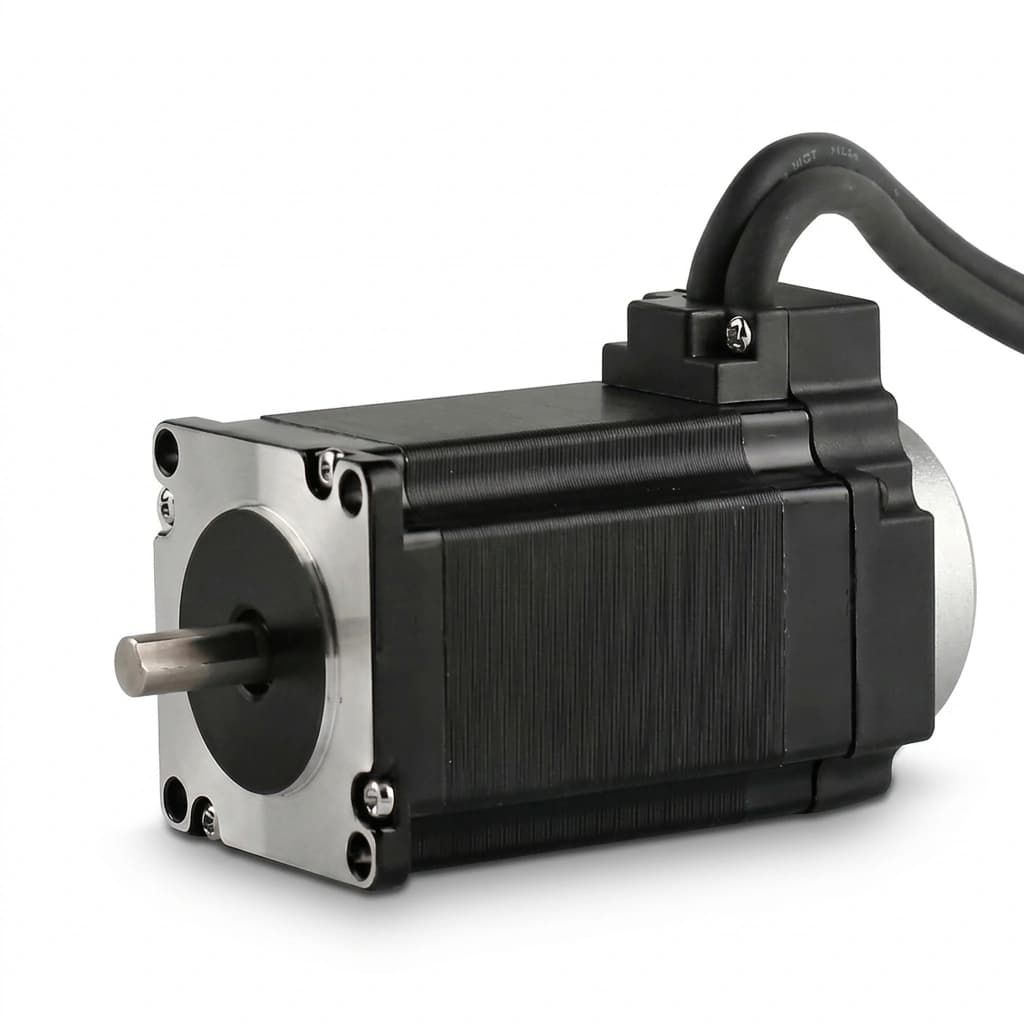
Stepper Motor vs Servo Motor: An OEM Buyer's Decision Framework
When to use stepper motors vs servo motors in industrial machines. Includes cost models, performance comparison data, and a structured decision tree for OEM procurement teams.
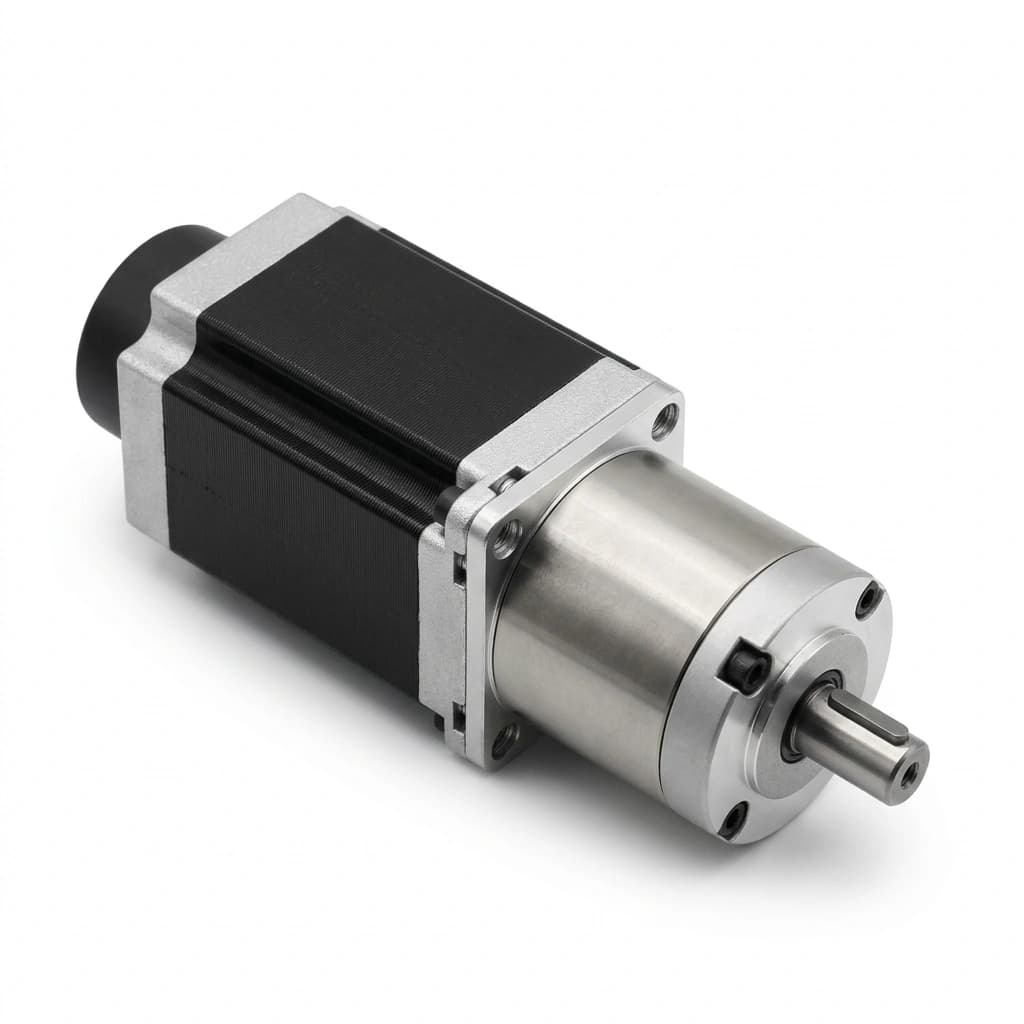
Geared NEMA Stepper Motors: Planetary vs. Spur Gearbox Selection for OEMs
Compare planetary and spur gearboxes for NEMA stepper motors. Learn how to evaluate torque multiplication, backlash, and BOM costs for 2026 OEM automation projects.
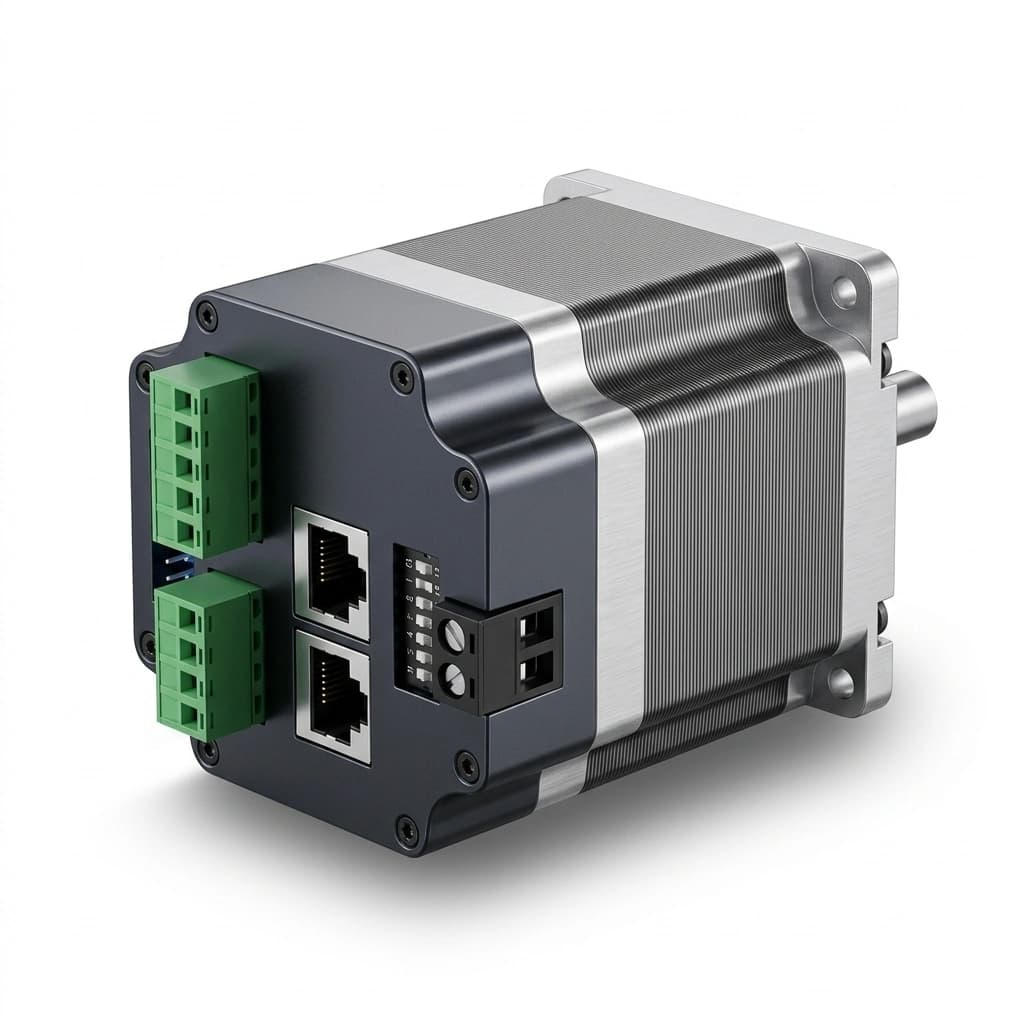
Integrated NEMA Stepper Motors vs Discrete Systems: OEM Sourcing Guide
Compare integrated stepper motors against discrete motor-drive systems. Analyze BOM costs, wiring labor, EMI reduction, and thermal boundaries for OEM machine builders.