
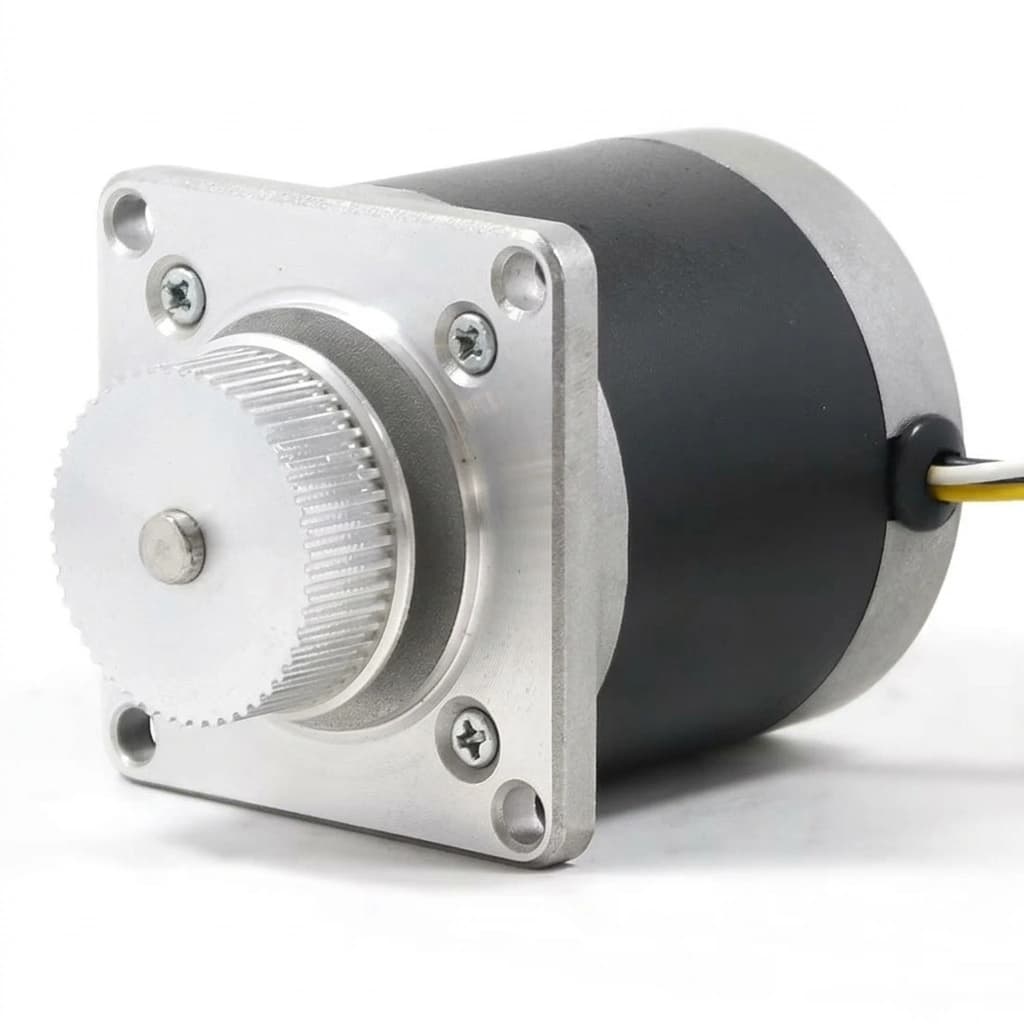
RFQ Checklist for NEMA Stepper Motor OEM Projects
A practical RFQ template that helps global buyers get accurate quotes, lead times, and risk visibility from stepper motor manufacturers.
Executive Summary (TL;DR)
- Incomplete RFQs are the #1 cause of OEM timeline delays. Quote on torque at speed, not just holding torque.
- Always specify load duty cycle to ensure the factory designs for proper thermal margin.
- Using an annual Blanket Order strategy can reduce lead times from 35 days to 5 days while cutting unit costs.
- Never assume custom shaft modifications are 'easy'—they always add 5+ days to prototyping.
"Hi Jimmy, we need 5,000 pieces of a NEMA 23 motor. Please send your best price."
I receive emails like this from OEM procurement teams almost daily. I know they're under pressure to hit BOM targets, but an RFQ like this guarantees a delay. I have to reply with 15 technical questions before I can even estimate the cost.
Most quote delays come from incomplete RFQs, not slow factories. When you send a technically complete RFQ in round one, you skip the endless clarification loops and get straight to DFM and sample planning.
Here is the exact checklist I use to audit inbound OEM projects. Use it to build an RFQ that gets taken seriously.
Save Time: Download the Complete RFQ Template
Don't start from scratch. Download our pre-formatted Excel template (.xlsx) that includes all 15 critical DFM parameters. It's exactly what our factory engineers want to see.
Download Template (.xlsx)
What a "usable RFQ" must answer
| RFQ item | Why supplier needs it | Typical failure if missing |
|---|---|---|
| Frame size and motor architecture | Defines candidate platform and cost range | Supplier sends wrong size family |
| Required torque at target RPM | Screens out models that fail at speed | Overfocus on holding torque only |
| Driver current/voltage strategy | Determines winding and thermal margin | Coil match is wrong, overheating risk |
| Shaft and mounting tolerances | Controls assembly fit and repeatability | Coupling wobble or assembly rework |
| Motion duty cycle | Impacts thermal and lifetime validation | Lab pass but field failure |
| Destination + compliance scope | Defines labels/docs/packing process | Customs or customer audit delay |
RFQ completeness score (100-point quick audit)
Use this before sending your inquiry email:
| Section | Weight | Pass rule |
|---|---|---|
| Electrical target (torque, speed, current, voltage) | 25 | Has numeric range and test condition |
| Mechanical interface (shaft, flange, connector) | 25 | Has drawing or tolerance text |
| Application profile (duty, ambient, load type) | 20 | Includes cycle and environment |
| Quality/validation requirements | 15 | CTQ + acceptance method defined |
| Commercial scope (qty, Incoterm, date, destination) | 15 | Includes prototype and MP forecast |
Interpretation:
- 85 to 100: Supplier can quote with low clarification risk.
- 60 to 84: Quote possible but timeline risk is high.
- Below 60: Expect multiple back-and-forth loops.
Minimum engineering calculation to include
Even a rough estimate helps the factory filter models correctly:
T_required = (J_total × α + T_load + T_friction) / η
Where:
T_required: required motor-side torque (N·m)J_total: total reflected inertia (kg·m²)α: angular acceleration (rad/s²)T_load: external working torque (N·m)T_friction: friction torque estimate (N·m)η: transmission efficiency (0 to 1)
If you cannot provide full inertia data, at least share load mass, transmission ratio, travel speed, and target acceleration time.
Lead-time planning matrix
| Scenario | Typical prototype lead time impact | Main driver |
|---|---|---|
| Catalog model + standard cable | Baseline | Existing BOM and tooling |
| Custom shaft only | +3 to +10 days | Shaft process + dimensional validation |
| Custom winding + cable harness | +7 to +21 days | Electrical validation + harness setup |
| Motor + gearbox + encoder assembly | +14 to +30 days | Stack-up alignment and test fixture |
Lead-time impact varies by revision maturity, MOQ, and test scope. Use this as planning guidance, not a fixed promise.
RFQ workflow visual (buyer side)
RFQ email template (copy and send)
Subject: RFQ - NEMA Stepper Motor - [Project Name]

1) Application
- Industry / machine type:
- Motion function:

2) Motor target
- NEMA frame:
- Required torque at speed:
- Operating current / voltage:

3) Mechanical interface
- Shaft spec (dia, length, tolerance):
- Mounting pattern:
- Connector / cable:

4) Validation and quality
- CTQ metrics:
- Required test report:
- Traceability requirement:

5) Commercial scope
- Prototype quantity:
- Annual forecast:
- Target Incoterm and destination:
- Required first shipment date:
Pre-PO risk gate for buyers
Before releasing the purchase order, confirm:
- Supplier quote references the same drawing revision.
- Electrical parameters in quote match driver design window.
- Sample acceptance criteria are written, not verbal.
- Packaging/label requirements are confirmed for destination customs.
- Change control owner is named on both sides.
Buyer FAQ
What is the minimum data needed for a first quotation?
Frame size, torque at speed target, current/voltage window, shaft and mounting spec, quantity plan, and destination country.
Can a supplier quote without drawings?
Yes, but it will be a provisional quote with wider tolerance on cost and lead time. Drawing release is usually required before final commercial freeze.
Should compliance requirements be discussed before sample order?
Yes. If compliance scope is added after sample validation, lead time and labeling process may need rework.
For a fast pre-check, send your RFQ pack to [email protected] or use the RFQ contact page.
Supplier evaluation criteria for stepper motor manufacturers
A good RFQ is only half the equation. Evaluating supplier responses is equally critical:
| Evaluation criterion | What to look for | Red flag |
|---|---|---|
| Technical response speed | Clarification questions within 24–48 hours | No response after 3 business days |
| Quote specificity | Exact model, revision, tolerance, test scope | Generic pricing without model reference |
| Drawing comprehension | Comments on fit, tolerance, or DFM issues | Acceptance without any technical feedback |
| Sample process clarity | Defined timeline, acceptance criteria, test scope | "We'll send samples" without process detail |
| Traceability capability | Can provide lot/serial tracking and inspection records | Cannot trace materials or production batches |
| Change control process | Revision-controlled workflow with approval gates | No formal change management process |
Scoring supplier quotes (weighted rubric)
| Category | Weight | Pass criteria |
|---|---|---|
| Technical accuracy of quote | 30% | Model matches requirements, tolerances confirmed |
| Commercial competitiveness | 25% | Unit price, tooling, MOQ, payment terms reasonable |
| Lead-time reliability | 20% | Timeline is specific and includes validation gates |
| Quality documentation scope | 15% | Can provide required inspection/compliance package |
| Communication responsiveness | 10% | Consistent, timely, technically competent responses |
Negotiation leverage points for OEM buyers
Case Study Snapshot
A textile machinery builder was ordering 2,000 NEMA 34 motors quarterly, requesting quotes each time. By shifting to a 12-month blanket order with quarterly releases (Strategy #5 below), we were able to buy copper wire and magnets in bulk. Result: Their unit price dropped by 11%, and their lead time went from 35 days to 5 days, since we kept finished inventory ready.
When you have a technically complete RFQ, you have leverage. Use it:
- Volume commitment visibility: Sharing a 12-month forecast (even approximate) typically improves pricing by 8–15% compared to spot ordering.
- Standardization across platforms: If you can use the same motor across 2–3 machine models, communicate this. Larger combined volume improves negotiating position.
- Sample-to-production continuity: Committing to the same supplier from sample through mass production (vs. re-quoting after sample) often unlocks 5–10% better MP pricing.
- Payment terms: Standard 30-day net terms are typical. Offering advance payment (30% deposit) can reduce lead time by 3–7 days on custom orders.
- Multi-year framework agreement: For established relationships, 2–3 year blanket agreements with quarterly releases provide the best unit economics.
RFQ timing guide
When you send the RFQ matters almost as much as what you send:
| Project stage | When to send RFQ | What to expect |
|---|---|---|
| Concept exploration | 6–12 months before production | Budget pricing, catalog recommendations |
| Design validation | 3–6 months before production | Detailed quote with DFM feedback |
| Pre-production | 1–3 months before production | Final pricing with tooling and MOQ commitments |
| Emergency sourcing | < 1 month | Limited options, premium pricing, catalog only |
Rule of thumb: Every month of earlier engagement reduces total project cost by approximately 3–5% through better supplier collaboration.
Related resources
- NEMA 17 vs NEMA 23 Selection Guide — choose the right frame size before writing your RFQ
- Stepper Motor Customization Options — understand customization scope and lead-time impact
- Stepper Motor Driver Selection — include driver requirements in your RFQ for matched system quotes
Author

Categories
More Posts
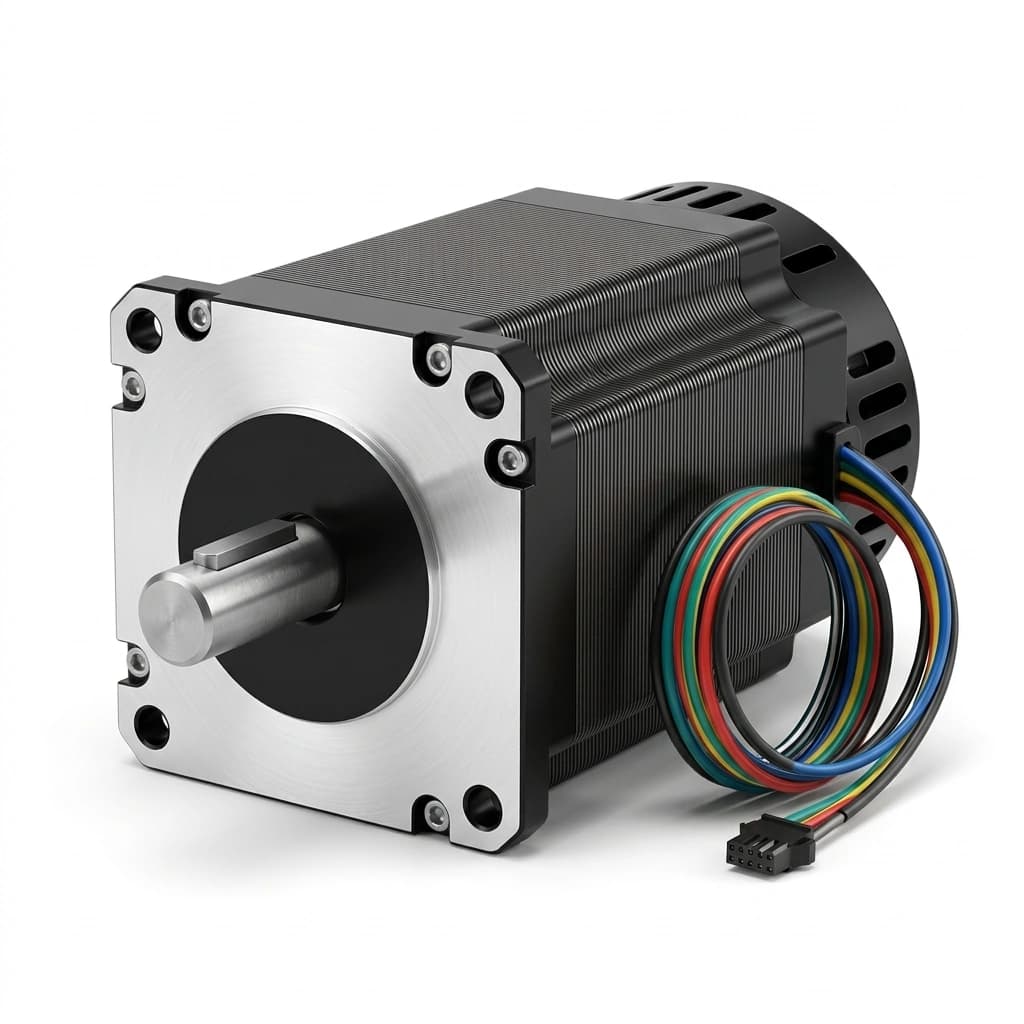
CE, RoHS, and UL Compliance for NEMA Stepper Motors in 2026
Source compliant NEMA stepper motors in 2026 with CE, RoHS, UL, and REACH checks, supplier RFQ questions, and document evidence before quote.
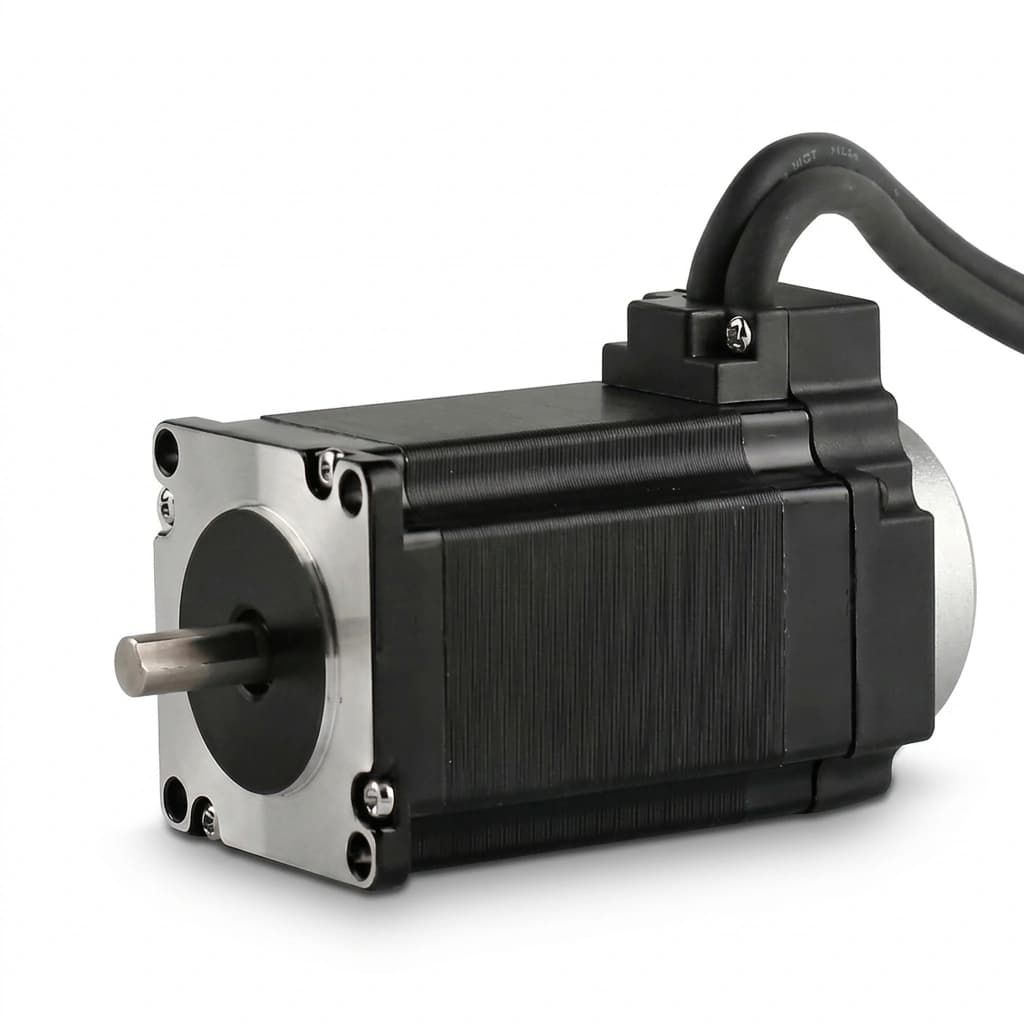
Stepper Motor vs Servo Motor: An OEM Buyer's Decision Framework
When to use stepper motors vs servo motors in industrial machines. Includes cost models, performance comparison data, and a structured decision tree for OEM procurement teams.
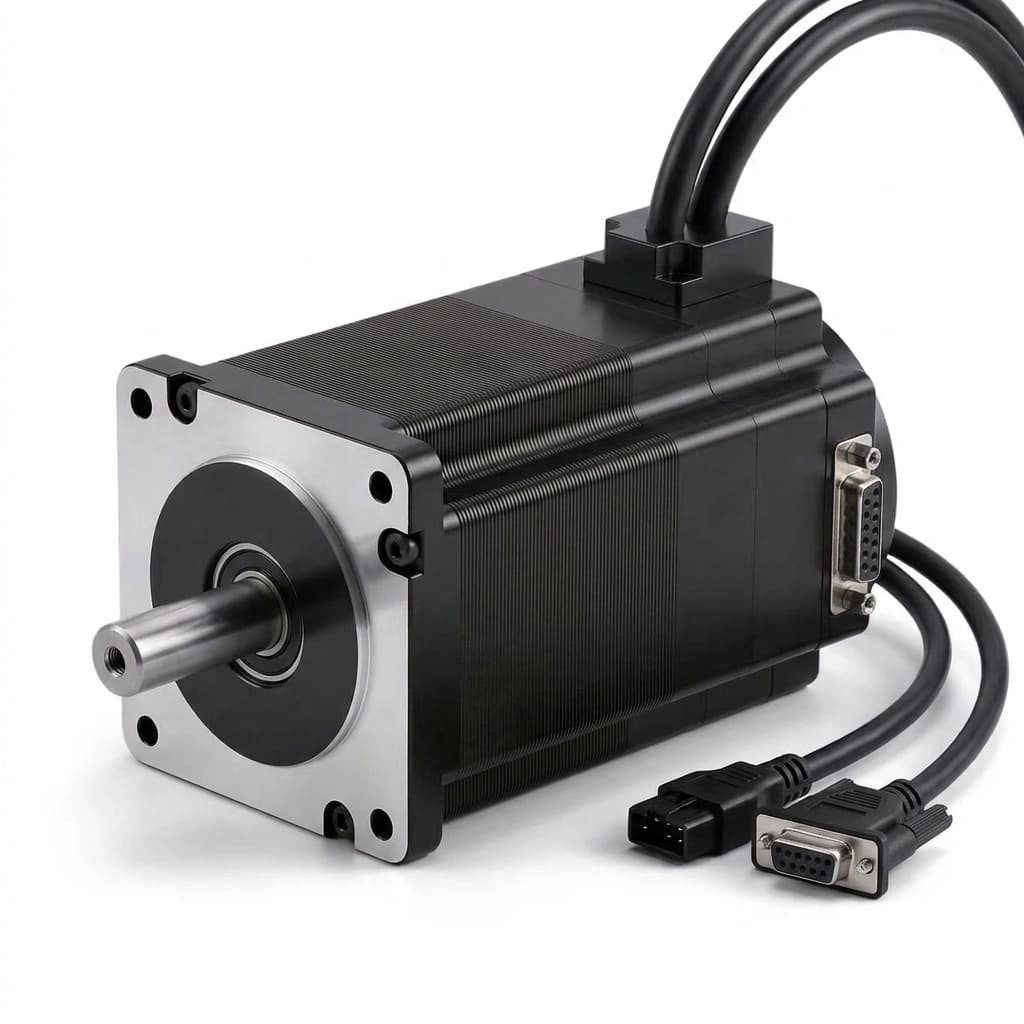
Closed-Loop NEMA Stepper Motors: The 2026 OEM Selection Guide
Use this OEM guide to compare open-loop and closed-loop NEMA stepper motors: torque margins, encoder feedback, BOM tradeoffs, sizing limits, and RFQ checks.