
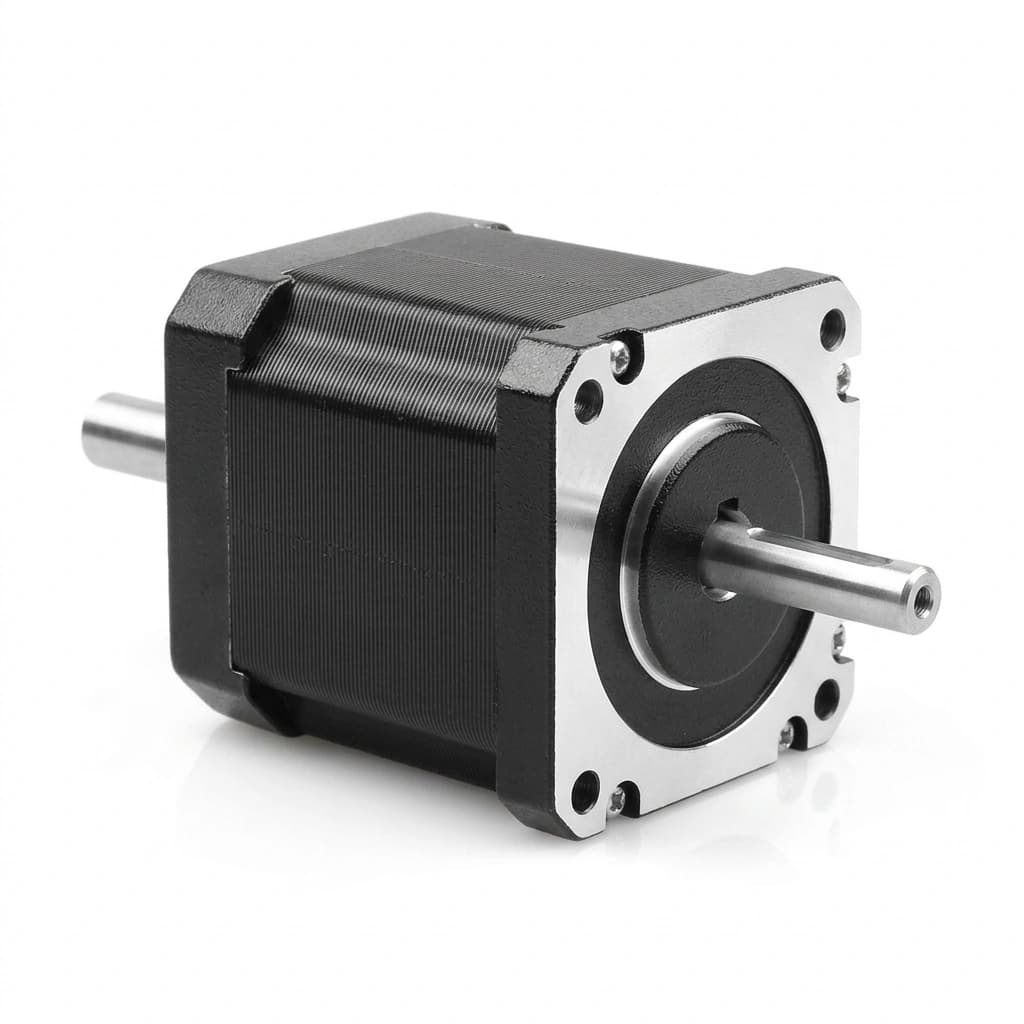
Stepper Motor Customization Options for Global Buyers
The key OEM customization parameters for stepper motors and how each choice affects performance, lead time, and quality risk.
"Can we just add an encoder and make the shaft 3mm longer?"
I get requests like this every day. On paper, it sounds like a simple swap. In reality, adding an encoder and changing the shaft length means we are no longer selling you a standard motor — we are entering a custom manufacturing pipeline.
For OEM buyers, catalog motors are just a starting point. But every customization you request adds a layer of validation risk, lead time, and cost. If you don't map these out early, your "simple swap" can delay your machine launch by a month.
Let's break down how I categorize customization requests when quoting projects, so you know exactly what you're asking for.
Customization depth levels (and what they really mean)
| Level | Typical scope | Engineering impact | Realistic Lead-time impact |
|---|---|---|---|
| L1 | Label, cable length, connector pinout | Low risk | +2–5 days |
| L2 | Shaft geometry, mounting adaptation | Tooling required | +5–12 days |
| L3 | Winding redesign + integrated sub-assembly | Full re-validation | +14–35 days |
A clear level definition helps buyers align timeline and validation budget before issuing a PO.
1) Mechanical customization: shaft and interface
Most field issues are mechanical-fit issues, not electrical issues.
Define at minimum:
- Shaft type: round, D-cut, keyway, threaded, dual-shaft
- Shaft diameter/length tolerance
- Flange and pilot dimensions
- Concentricity/runout acceptance target
Practical tolerance note
If coupling alignment budget is tight, runout and concentricity limits should be specified in drawing notes, not only in CAD nominal dimensions.
2) Electrical customization: winding and driver match
Winding changes affect torque-speed behavior, thermal profile, and driver compatibility.
| Parameter | Buyer must provide | Why it matters |
|---|---|---|
| Rated current target | Driver continuous current limit | Prevents overheat and demagnetization risk |
| Voltage strategy | Bus voltage and drive mode | Defines high-speed torque reserve |
| Resistance/inductance window | Acceptable range | Stabilizes multi-vendor consistency |
3) Harness and connector engineering
Harness choices are often the top hidden cause of integration delay.
Confirm:
- Connector family and pin assignment
- Wire gauge and jacket material
- Cable exit orientation
- Cable pull test and strain relief criteria
4) Integrated options (encoder / gearbox / assembly)
Integrated builds reduce assembly work at customer site, but introduce stack-up and interface dependencies.
| Integrated option | Benefit | New validation task |
|---|---|---|
| Encoder | Closed-loop feedback | Noise immunity and index repeatability test |
| Gearbox | Torque multiplication | Backlash and lifetime grease test |
| Pre-assembled harness | Faster installation | Routing and bend-life validation |
5) Quality and compliance package planning
For global B2B projects, include documentation requirements in RFQ stage:
- COC / routine test report format
- Traceability granularity (lot-level or serial-level)
- Label and carton marking standard
- Destination-specific compliance file list
Customization risk matrix buyers can use
| Risk source | Trigger condition | Prevention action |
|---|---|---|
| Drawing mismatch | CAD and PO revision are different | Lock one drawing revision in PO |
| Electrical mismatch | Driver spec changed after sample | Freeze driver window before MP |
| Supply delay | New tooling required but not planned | Confirm tooling path in quote |
| Quality drift | CTQ not linked to outgoing test | Map CTQ to test method and limit |
Process visualization: from RFQ to mass production
Buyer checklist before customization sign-off
- Interface dimensions are frozen and revision-controlled.
- Electrical target is tied to driver operating window.
- CTQ list includes measurable limits and test method.
- Sample approval criteria are written into commercial terms.
- Change request owner and response SLA are defined.
Buyer FAQ
What customization causes the biggest lead-time increase?
Winding redesign plus integrated assembly usually has the largest impact because it requires extra validation and process setup.
Is custom shaft machining enough for most OEM projects?
For many projects, yes. Mechanical fit and connector adaptation solve a large share of integration issues without full electrical redesign.
How should buyers control engineering changes after sample approval?
Use a revision-controlled change workflow where drawing revision, impact scope, and effective lot are explicitly signed off by both sides.
If you need a structured OEM review, send your files to [email protected]. Related capabilities are listed under OEM Capabilities.
Customization lead-time and cost impact guide
Understanding how each customization type affects timeline and cost helps buyers plan budgets accurately:
| Customization type | Typical lead-time impact (prototype) | Typical cost impact vs catalog | MOQ tendency |
|---|---|---|---|
| Label/marking only | 0 days | +0–3% | Same as catalog |
| Cable length/connector swap | +2–5 days | +3–8% | Low MOQ possible |
| Shaft diameter/length change | +5–10 days | +5–15% | May need minimum 50–100 pcs |
| D-cut / keyway / threaded shaft | +5–12 days | +8–20% | Tooling may apply |
| Custom winding (current/voltage) | +10–21 days | +10–25% | Usually ≥ 100 pcs |
| Integrated encoder | +7–14 days | +$15–40/unit | Depends on encoder model |
| Integrated gearbox | +14–28 days | +$25–80/unit | Gearbox MOQ applies |
| Full motor-gearbox-encoder assembly | +21–35 days | +$40–120/unit | Higher MOQ typical |
These are planning estimates. Actual values depend on supplier capacity, tooling readiness, and validation scope.
Case Study Spotlight
The Custom Connector Trap: A 3D printer OEM requested a proprietary 6-pin locking connector (Level 1 customization) to speed up their assembly line. The connector had a 10-week MOQ lead time from the connector vendor. When the printer sales spiked, we couldn't build motors fast enough simply because we were waiting on $0.50 plastic housings. Lesson: We reverted them to a standard JST connector with an adapter cable, cutting motor lead time back to 14 days.
How to model total customization cost
Do not evaluate customization cost on per-unit motor price alone. Use total project cost:
Total_cost = (unit_price × qty) + tooling_NRE + sample_validation_cost + lead_time_delay_cost
Where:
- tooling_NRE: One-time tooling charges (typically $200–$1,500 for shaft/connector tooling)
- sample_validation_cost: Engineering hours × hourly rate for testing and approval
- lead_time_delay_cost: Opportunity cost of delayed production start (often the largest hidden cost)
Example: A shaft customization at +$2/unit on 1,000 units = +$2,000. But if the customization adds 14 days to lead time and delays your machine launch, the actual cost may be 10× higher.
When NOT to customize
Customization is not always the right answer. Avoid it when:
- Catalog motor meets 90%+ of requirements — adapter sleeves or coupling changes often solve the remaining 10% at lower total cost
- Annual volume < 200 units — customization amortization makes unit cost unattractive
- Design is not frozen — customizing before final design freeze creates revision churn and waste
- Timeline is critical — if first shipment date is more important than unit cost, use catalog and adapt
Related resources
- RFQ Checklist for NEMA Stepper Motor OEM Projects — prepare a complete RFQ package that includes customization specifications
- Stepper Motor Thermal Management — custom winding changes affect thermal behavior
- NEMA 17 vs NEMA 23 Selection Guide — choose the right base motor before customizing
Author

Categories
More Posts
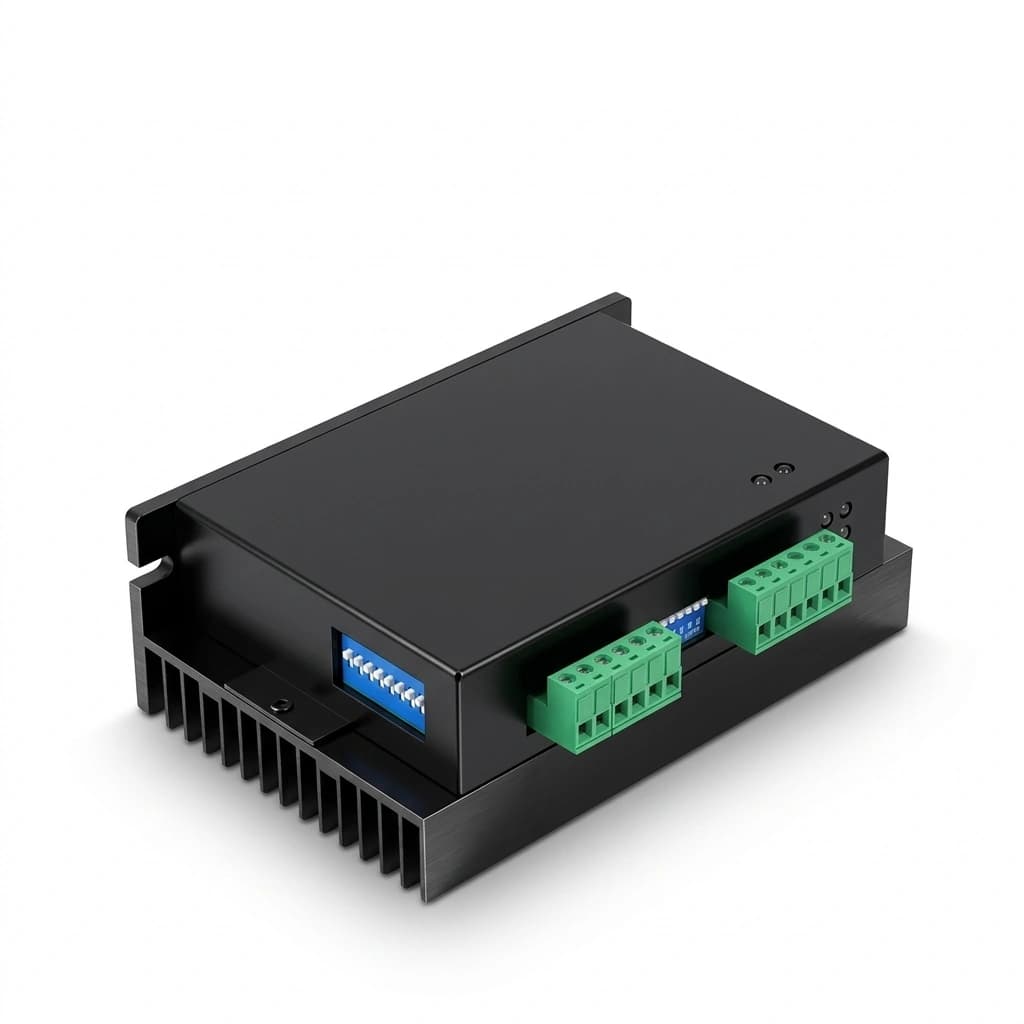
Stepper Motor Driver Selection: DM542 vs DM556 vs DM860
A buyer-focused comparison of the three most popular DSP stepper drivers with real specification data, motor matching rules, and thermal management guidance for industrial OEM projects.
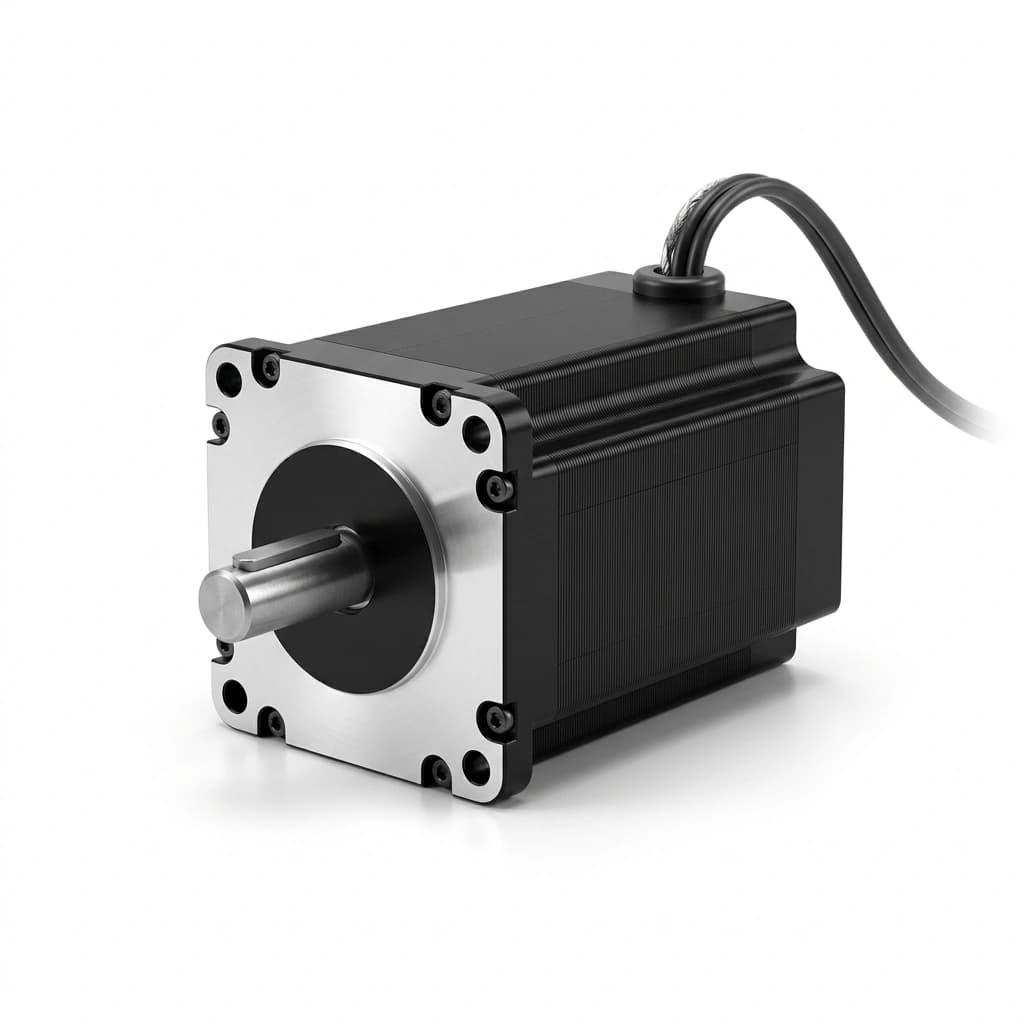
NEMA Stepper Motor Industry Update (April-May 2026): Tariff Mechanics, Standards Activity, and Buyer Decisions
April-May 2026 NEMA stepper update for OEM teams: U.S. tariff shifts, NEMA standards activity, frame-size and driver-current tradeoffs, and PO-release controls.
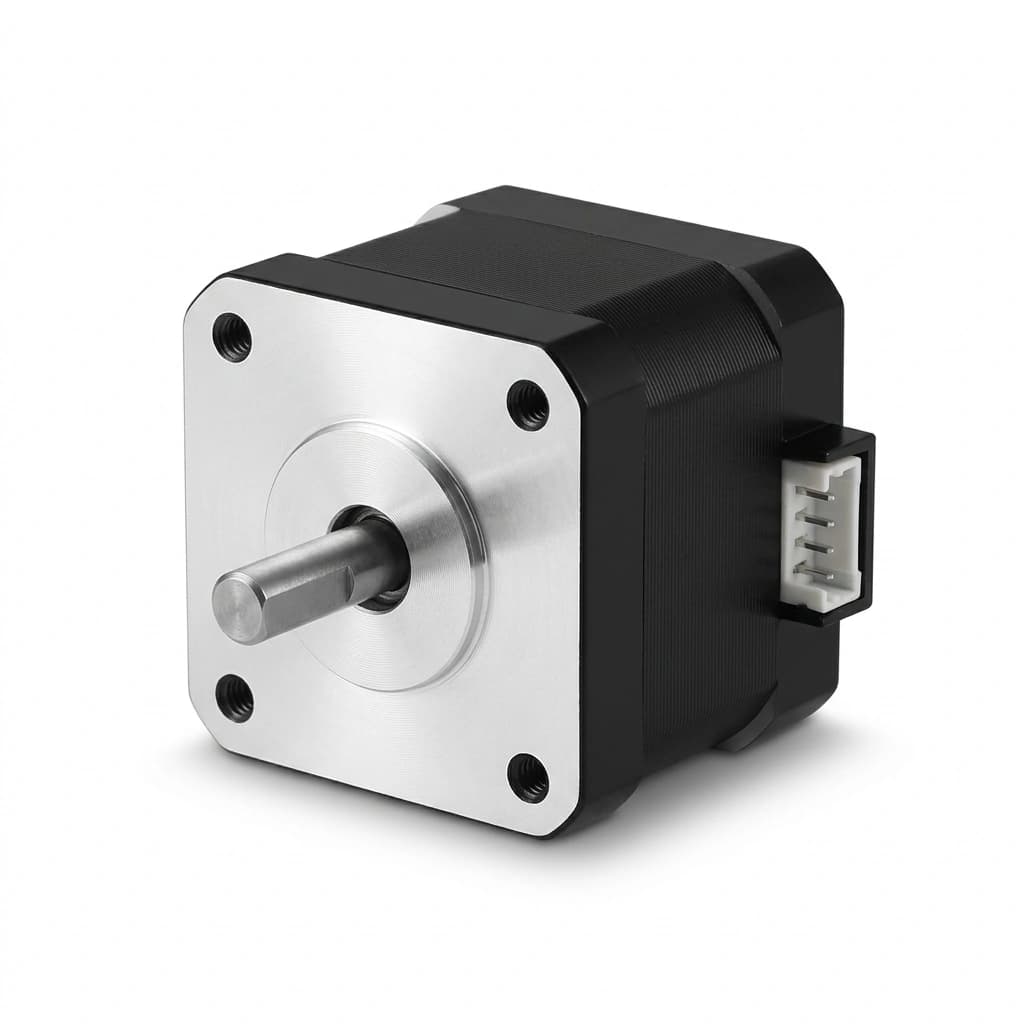
NEMA 17 vs NEMA 23: OEM Selection Guide
How to choose between NEMA 17 and NEMA 23 based on torque margin, speed range, thermal limits, and total system cost.