LogoNEMA Stepper Motors
Start inquiry
LogoNEMA Stepper Motors
WhatsApp
LogoNEMA Stepper Motors

China-based NEMA stepper motor factory supporting OEM customization, quality control, and global delivery.

Inquiry Email

[email protected]

Email app

Instant Chat

+8618857971991

Chat on WhatsApp

Direct response from our engineering team.

Products
  • NEMA Frame Stepper Motors
  • Hybrid Stepper Motors
  • Drivers & Controllers
Solutions
  • CNC & Machine Tools
  • 3D Printing & Robotics
  • Medical & Laboratory Equipment
OEM Capabilities
  • Custom Design & Engineering
  • Prototype & Validation
  • Quality & Compliance
Resources
  • Blog
  • About
  • Contact / RFQ
  • Privacy Policy
  • Cookie Policy
  • Terms of Service
© 2026 NEMA Stepper Motors. All Rights Reserved.|Operated by Magatom Dynamics Co., Ltd.

Factory sourcing worksheet

12V Step Motor Factory Sourcing

Screen your volume, requested changes, and timing. Get a practical next step and an RFQ checklist before comparing a factory with catalog suppliers.
Build my RFQBrowse stepper motors
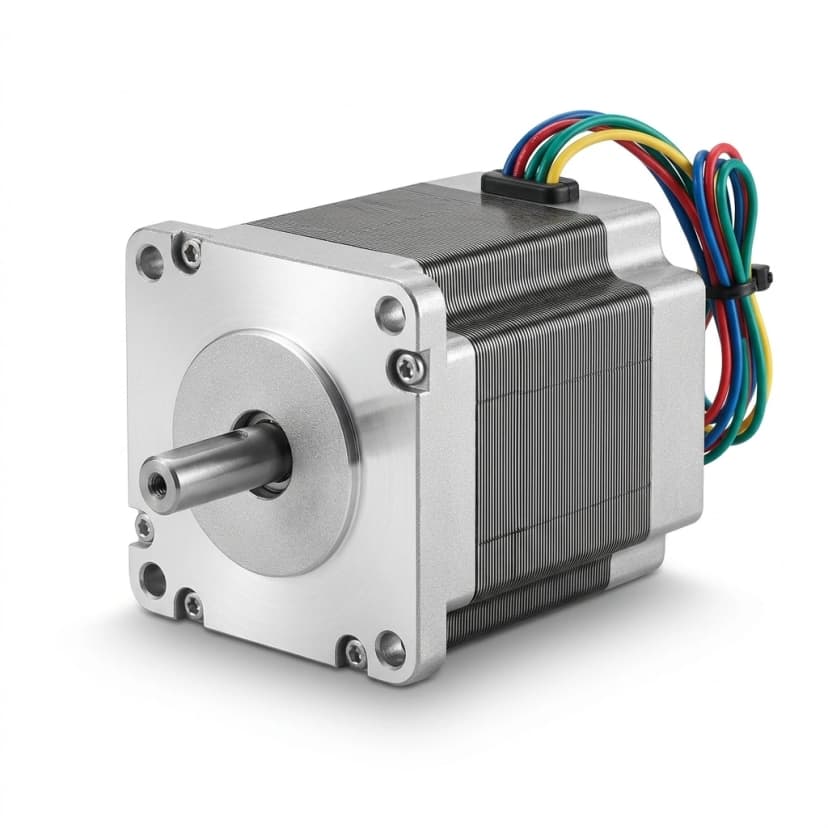
NEMA 23 stepper motor product sample; winding voltage depends on the selected model
Sourcing requirements
Screen whether to start with a catalog motor, compare suppliers, or scope a factory change. This is a checklist, not a live quote.
4. Application area

Complete all four requirements to see a sourcing route.

Sourcing route
A transparent next-step screen based on your inputs, not a cost or supplier-performance prediction.

Complete the four requirements to see a practical sourcing route and RFQ checklist.

Evidence and limits
Published September 26, 2026; reviewed October 6, 2026. This screen applies simple routing rules to your selections; it has no live supplier, price, MOQ, or delivery database. Commercial terms below are questions to verify in written quotations, not market averages. Volume ranges and timing windows are worksheet categories, not factory MOQ or lead-time benchmarks. The official references here cover quality systems and product market rules; they do not verify any particular factory. Published by a motor supplier, this worksheet is not an independent factory audit. Learn about the publisher.

Four conclusions to guide your sourcing decision

  • Start with catalog fit. Check the winding, current, shaft, mounting, and driver against the actual load before paying for a change.
  • Do not assume a universal 12V factory price or MOQ. Ask each supplier to price stock, adapted, and custom options separately.
  • Approve the sample against a written test plan. A certificate alone does not demonstrate that the motor meets your torque, thermal, or life requirements.
  • Verify finished-product obligations for each market. A motor component's documents do not automatically cover the final machine or device.

A review sequence, not a price forecast

Factory sourcing review sequenceConfirm whether a catalog motor fits, define and sample any required changes, then approve the specification and commercial terms before production.1Check an existing motor firstConfirm electrical, mechanical, and application fit.2Define the change and sampleAgree drawings, test criteria, cost, MOQ, and milestones.3Approve evidence before productionSign off the sample, acceptance record, and written terms.

Quality evidence and market requirements

Treat certificates as evidence to verify, then agree the exact motor tests and the rules that apply to the finished product and its destination market.

Supplier and sample checks

  • Quality system: Ask for the current certificate, scope, site address, expiry, and issuing certification body. ISO 9001 sets QMS requirements; certification is one possible demonstration and is not itself proof of motor performance. See ISO's overview.
  • Sample acceptance: Agree winding resistance/current data, torque-speed evidence with the intended driver, insulation checks where relevant, step accuracy, and the acceptance limits before ordering.
  • Production control: Request the inspection record and lot/serial traceability needed for your product, plus how changes to materials or process are approved.
  • Automotive supply: Confirm your customer's QMS and flow-down requirements. IATF 16949 expectations depend on the supply chain and customer-specific requirements; it is not a universal motor requirement. See the IATF customer requirements.

Check the destination market

  • CE: only applies where relevant EU harmonisation legislation requires it. It is a manufacturer's conformity marking, not an EU approval or a general safety certificate. Check the European Commission guidance.
  • UKCA / CE: confirm the current rules for the product category and Great Britain or Northern Ireland route. See UK government guidance.
  • RoHS / REACH: ask which declaration and material data apply to the product and destination. Coverage depends on the product and supply-chain role; see the official RoHS overview and ECHA REACH obligations for articles.
  • End equipment: determine compliance for the machine, medical device, or consumer product as a whole with your responsible compliance professional. A motor supplier's statement is only one input.

Factory versus distributor: compare the actual offer

Stock, custom scope, order quantity, and destination change the result. Use the same specification when requesting quotes.

Sourcing route trade-offs to confirm in supplier quotations
CompareCatalog / distributorFactory / OEM
AvailabilityConfirm stock, minimum pack, and shipping date.Confirm sample, approval, production, and transit milestones.
ChangesExisting variants or local adaptation may be available.Can assess a defined change; feasibility and charges need confirmation.
MOQ / one-time costsAsk about sample units, pack size, and price breaks.Quote MOQ, sample fees, engineering, and tooling separately for each revision.
Total landed costInclude unit price, distributor handling, freight, and taxes/duties.Include unit price, one-time costs, inspection, freight, taxes/duties, and inventory carrying cost.
Best next evidenceStock confirmation and sample datasheet.Approved drawing, sample test record, and signed commercial terms.
Three risks to control
Demand risk: tie order quantity to a documented forecast and consider a pilot before a long production run.Tooling risk: state ownership, storage, maintenance, and transfer rights in the contract before paying one-time charges.Revision risk: control drawing revisions and require approval before material, process, or site changes.

Ready to compare offers?

Send the same motor specification and quantities to each supplier so you can compare their responses.

Email an RFQ

What to put in a 12V motor RFQ

Send the same requirement to each candidate so the resulting quotes can be compared line by line.

  1. Application, load, duty cycle, and operating environment
  2. Motor frame, mounting, shaft, wiring, and connector drawing
  3. Winding current/resistance, driver, torque-speed target
  4. Annual forecast, pilot quantity, and product-life estimate
  5. Sample deadline, production date, and ship-to destination
  6. Test limits, material declarations, and traceability needs

For driver selection and the motor-side data to include, see the stepper motor control guide.

Compare fully loaded cost

Divide all quoted costs for the same order by accepted quantity. Keep one-time charges visible instead of treating them as a hidden unit-price increase.

(unit price × quantity + one-time charges + freight + inspection) ÷ accepted quantity

Add taxes/duties and inventory cost where relevant. Compare both the pilot order and the forecasted repeat order; an assumed break-even point is not a supplier quote.

Frequently asked questions

Compare 12V NEMA 23 performanceReview 12V torque and load considerationsReview 12V DC supplier considerations

Inquiry Email

[email protected]

Email app

Instant Chat

+8618857971991

Chat on WhatsApp

Direct response from our engineering team.