
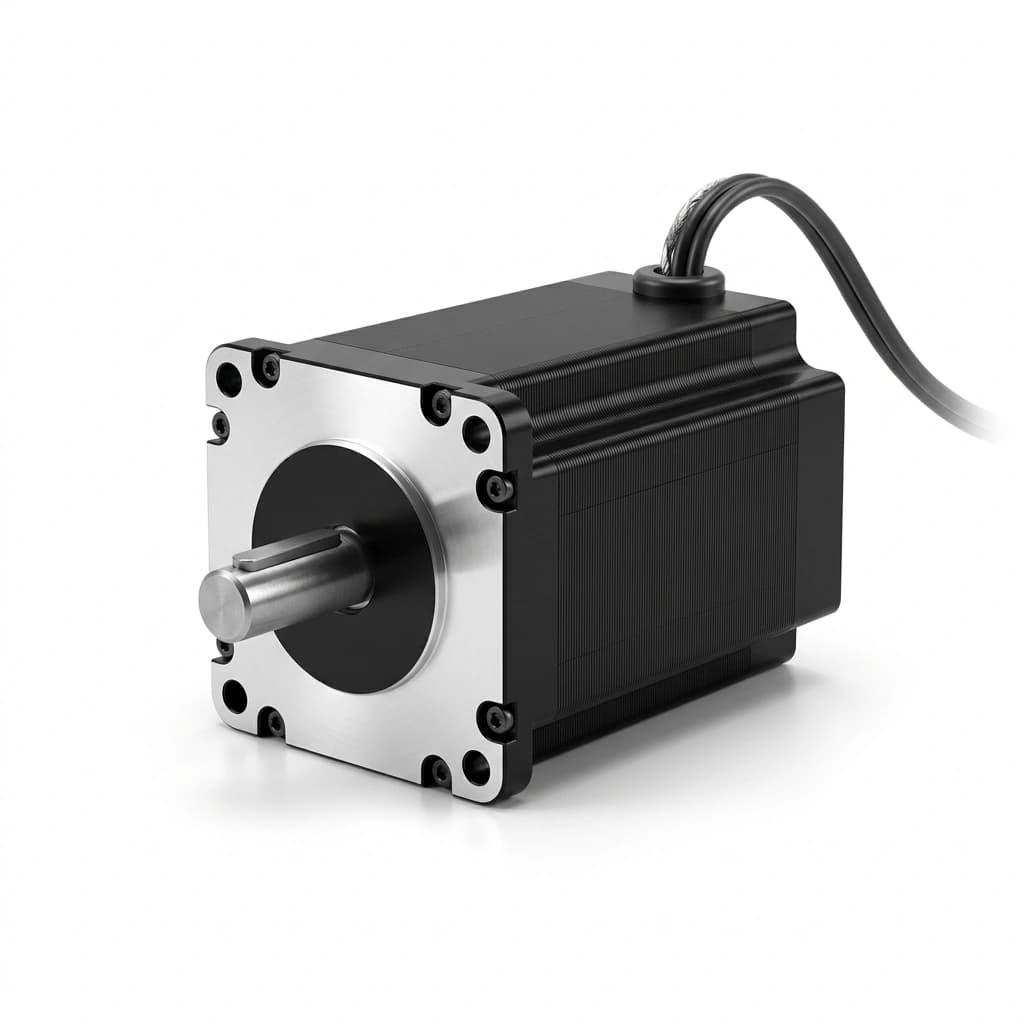
NEMA Stepper Motor Industry Update (April-May 2026): Tariff Mechanics, Standards Activity, and Buyer Decisions
April-May 2026 NEMA stepper update for OEM teams: U.S. tariff shifts, NEMA standards activity, frame-size and driver-current tradeoffs, and PO-release controls.
One-line decision: If your machine ships to the U.S. in 2026, freeze HTS classification and material-origin checks before PO release, and approve NEMA 23/24/34 substitutions only after torque-at-speed revalidation, not holding-torque comparison.
Updated: 2026-05-10
Research window for change detection: 2026-04-10 to 2026-05-10.
For active RFQs this week, start with the RFQ checklist and book a joint engineering and compliance review before PO release.
Executive Summary
- U.S. tariff mechanics changed in early April 2026: valuation moved to full customs value for covered metal products, with revised 50% and 25% duty structures depending on article class and conditions.
- A follow-up technical-correction notice on April 29, 2026 adjusted HTS implementation details, including treatment for entries that do not actually contain aluminum, steel, or copper.
- NEMA April and May 2026 standards-action cycles surfaced directly relevant items for motor buyers, including BE/CE motor design work, controller-related ballot items, and domestic-preference-specification activity.
- For engineers, the practical risk is false equivalence: "same NEMA frame" does not mean same high-speed torque under driver current limits and bus-voltage constraints.
- For procurement teams, the practical risk is quote drift: tariff logic, HTS line-item treatment, and origin documentation can now change landed-cost outcomes faster than normal quarterly sourcing cycles.
What Changed (Last 30 Days)
| Date | Source | What changed | Why motion-control buyers should care |
|---|---|---|---|
| 2026-04-02 (effective 2026-04-06) | White House Proclamation 11021 | Section 232 treatment updated for aluminum, steel, and copper articles/derivatives, including full customs-value basis and revised rate buckets. | Imported housings, shafts, fasteners, brackets, enclosures, and some downstream assemblies can shift landed cost even if motor nameplate is unchanged. |
| 2026-04-13 | trade.gov press release | ITA public communication reiterated full-value assessment logic and 50%/25% structure for covered categories. | Commercial teams need consistent language between technical BOM and customs declarations during RFQ and PO negotiation. |
| 2026-04-23 | Federal Register 2026-07987 (91 FR 21790) | Commerce opened submission procedures for eligible steel/aluminum producers (Canada/Mexico-linked facilities) for tariff adjustments under Proclamation 10984. | OEMs with North American supply chains may gain adjustment pathways, but only with documentation discipline and milestone tracking. |
| 2026-04-29 | Federal Register public inspection PDF 2026-08297 | Technical corrections/clarification to HTS implementation for Proclamation 11021 (including a heading for listed entries that do not contain covered metals). | Misclassification risk is now an execution risk: engineering BOM descriptions and customs line mapping must agree. |
| 2026-04-06 and 2026-05-03 | NEMA Standards Action (April/May 2026 issues) | Motor/control-related projects and ballots continued, including BE/CE motor design and controller/contactors domain items, plus domestic-preference specification activity. | Standards-track movement affects medium-term documentation, conformity arguments, and buyer qualification language in RFQs. |
Change Timeline (Engineering + Procurement)
Engineering Impact: Frame Size and Driver-Current Class
The April-May policy and standards changes do not change motor physics, but they do change how expensive it is to be wrong.
- Wrong frame sizing still causes missed steps, thermal drift, and field rework.
- Now it can also trigger avoidable landed-cost variance if a late-stage substitution alters origin/composition and HTS treatment.
| Motor frame | Typical current class (A/phase) | Typical driver band | Common high-speed failure mode | Engineering gate before approval |
|---|---|---|---|---|
| NEMA 17 | 1.0-2.0 | 24-36 V, lower-current class | Torque drops early above target RPM due to inductance limits | Validate torque at required RPM, not holding torque at standstill |
| NEMA 23 | 2.0-4.2 | 36-48 V, mid-current class | Substitution to long-stack variant raises inertia and slows response | Re-check accel/decel profile and reflected inertia ratio |
| NEMA 24 | 3.0-5.0 | 48 V class often preferred | Driver current margin disappears after cost-down winding swap | Confirm RMS/peak mapping and thermal margin in enclosure |
| NEMA 34 | 4.0-7.2 | 48-80 V, higher-current class | Undersized drive or PSU causes torque collapse at speed | Run worst-case duty test with final bus voltage and ambient |
Interpretation for specifiers: frame-size naming is a mounting-interface standard, not a dynamic-performance guarantee. In the current procurement climate, every "equivalent" replacement needs an updated torque-speed and thermal signoff.
Buyer-Facing Sourcing Impact (US, EU, APAC Supply Chains)
| Procurement point | What changed in practice | Immediate control |
|---|---|---|
| Landed-cost quoting | Full-value duty logic increases sensitivity to classification and composition details. | Add customs-review checkpoint before quote validity is issued. |
| Supplier substitution | "Equivalent" supplier swaps can alter origin treatment and metal-content declarations. | Require a joint ECO: engineering + trade-compliance signoff. |
| North America strategy | Adjustment pathways exist for specific Canada/Mexico-linked producer commitments under the April 23 procedure. | Ask suppliers whether they are eligible participants and request documented status. |
| EU/APAC exporters to U.S. | Cross-border assemblies may face different outcomes depending on derivative classification and documentation quality. | Keep batch-level origin and composition traceability tied to shipment documents. |
| Delivery risk | Classification corrections can surface after purchase commitments if upstream data is incomplete. | Use contract language for re-pricing trigger thresholds and lead-time renegotiation. |
Buyer Action Checklist (Who Should Act Now)
| Role | Action in next 7 days | Action in next 30 days | Evidence to keep |
|---|---|---|---|
| Motion-control engineer | Freeze acceptance criteria at target RPM and duty cycle for each axis. | Revalidate any pending frame-size substitution (17/23/24/34) against actual driver-current window. | Test report: torque-speed points, thermal rise, missed-step checks. |
| Electrical lead | Map each motor to a current class and bus-voltage class before cost-down decisions. | Audit PSU headroom and driver derating for enclosure temperature. | Driver setting sheet, current limits, ambient assumptions. |
| Procurement manager | Add HTS/origin/composition fields to RFQ template. | Implement dual-source policy only with customs + engineering co-approval. | RFQ revision control, supplier declarations, approval logs. |
| Trade-compliance team | Review April 2026 tariff and correction notices against current HTS mappings. | Build exception handling for entries that are listed but non-metal-containing where applicable. | Classification memos, broker instructions, correction references. |
| Program manager | Re-baseline risk register for cost, lead time, and requalification effort. | Add a gate that blocks PO for unverified substitutions. | Program gate checklist and escalation path. |
Related Playbooks and Calculators
- NEMA 17 vs NEMA 23 Selection Guide: frame-size tradeoffs at operating speed.
- DM542 vs DM556 vs DM860 Driver Selection: current-class and bus-voltage pairing logic.
- Stepper Motor Thermal Management for OEM Machine Builders: enclosure-temperature and derating controls.
- RFQ Checklist for NEMA Stepper Motor OEM Projects: add HTS, origin, and composition fields to quote intake.
- 1 10th RPM Stepper Motor Telescope Drive Calculator and Guide: validate pulse budget, low-speed stability, and sidereal tracking-mode alignment before substitution approval.
- NEMA Stepper Motor Product Categories: shortlist frame/stack families for re-qualification plans.
Risks, Limits, and Evidence Gaps
- Scope limit: The policy sources are U.S.-centric. They materially affect global suppliers shipping into the U.S., but do not by themselves replace EU or APAC local compliance obligations.
- Standards-cycle limit: NEMA Standards Action reflects project and ballot movement; it is not the same as immediate mandatory compliance on the plant floor.
- Tooling/data limit: During research, one web-search channel returned a credit-limit error. Findings were cross-checked through alternate channels and direct official pages/PDFs.
- Vendor-signal limit (TI/ST): In this 30-day window, we did not find a strong, official stepper-specific launch/regulatory event on ti.com or st.com with direct buyer-impact magnitude comparable to the U.S. tariff and NEMA standards-process signals above.
FAQ
Is this a "buy now" signal for all NEMA frames?
No. It is a "control execution" signal. Keep buying based on axis requirements, but tighten classification, origin traceability, and substitution gates.
Should we avoid NEMA 23/24 substitutions during this period?
Not categorically. Approve substitutions only after torque-at-speed and thermal revalidation under the final driver current/voltage settings.
Do these changes affect only U.S. importers?
Directly, mostly U.S. entries. Indirectly, EU and APAC suppliers exporting to U.S.-bound OEM programs are affected through documentation and landed-cost mechanics.
Are NEMA standards-action items mandatory immediately?
No. They indicate standards-development motion (project, ballot, publication status). Use them to future-proof RFQ language and qualification plans.
What is the most common failure mode we see now?
Commercial teams approving a "same frame" supplier swap without engineering and customs re-approval. That combination creates both performance and landed-cost surprises.
What should be locked before PO release?
Motor frame and winding revision, driver current setting, bus voltage class, target RPM test point, HTS mapping, and origin/composition declarations.
Need joint engineering and procurement support this month? Send your current frame/driver shortlist and destination market to our OEM inquiry page for a re-qualification checklist aligned to your PO timeline.
Sources
Primary sources used for this page (with date context):
-
Strengthening Actions Taken to Adjust Imports of Aluminum, Steel, and Copper Into the United States - The White House (Proclamation), 2026-04-02
https://www.whitehouse.gov/presidential-actions/2026/04/strengthening-actions-taken-to-adjust-imports-of-aluminum-steel-and-copper-into-the-united-states/ -
Procedures for Submissions by Certain Steel and Aluminum Producers Committing to New U.S. Steel or Aluminum Production To Obtain Tariff Adjustments Under Proclamation 10984 - U.S. Department of Commerce, International Trade Administration (Federal Register 2026-07987, 91 FR 21790), 2026-04-23
https://www.federalregister.gov/documents/2026/04/23/2026-07987/procedures-for-submissions-by-certain-steel-and-aluminum-producers-committing-to-new-us-steel-or -
Notice of Technical Corrections to the Harmonized Tariff Schedule for Duties Imposed by Proclamation 11021 - Bureau of Industry and Security (FR Doc 2026-08297, publication date 2026-04-29), public inspection PDF
https://public-inspection.federalregister.gov/2026-08297.pdf -
What They Are Saying: President Trump Strengthens U.S. Steel, Aluminum, and Copper Industries with Historic Action - International Trade Administration, 2026-04-13
https://www.trade.gov/press-release/what-they-are-saying-president-trump-strengthens-us-steel-aluminum-and-copper -
NEMA Standards Action - April 2026 issue - National Electrical Manufacturers Association, issue date 2026-04-06 (project/ballot/publication status listings)
https://www.nema.org/docs/default-source/default-document-library/public/standards-actions/nema-standards-action-april-2026.pdf?sfvrsn=73934d20_2 -
NEMA Standards Action - May 2026 issue - National Electrical Manufacturers Association, issue date 2026-05-03 (project/ballot/publication status listings)
https://www.nema.org/docs/default-source/default-document-library/public/standards-actions/nema-standards-action-may-2026.pdf?sfvrsn=ec796e84_2
Author

Categories
More Posts
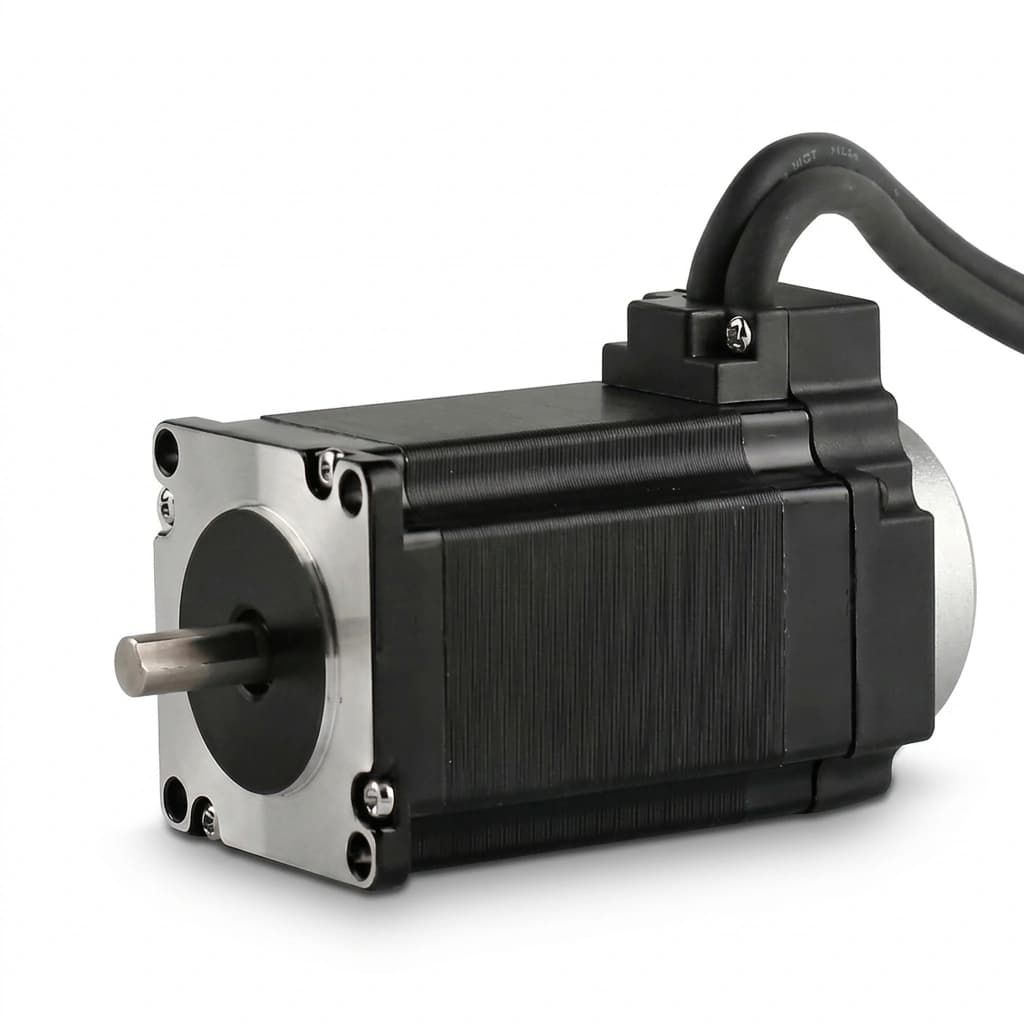
Stepper Motor vs Servo Motor: An OEM Buyer's Decision Framework
When to use stepper motors vs servo motors in industrial machines. Includes cost models, performance comparison data, and a structured decision tree for OEM procurement teams.
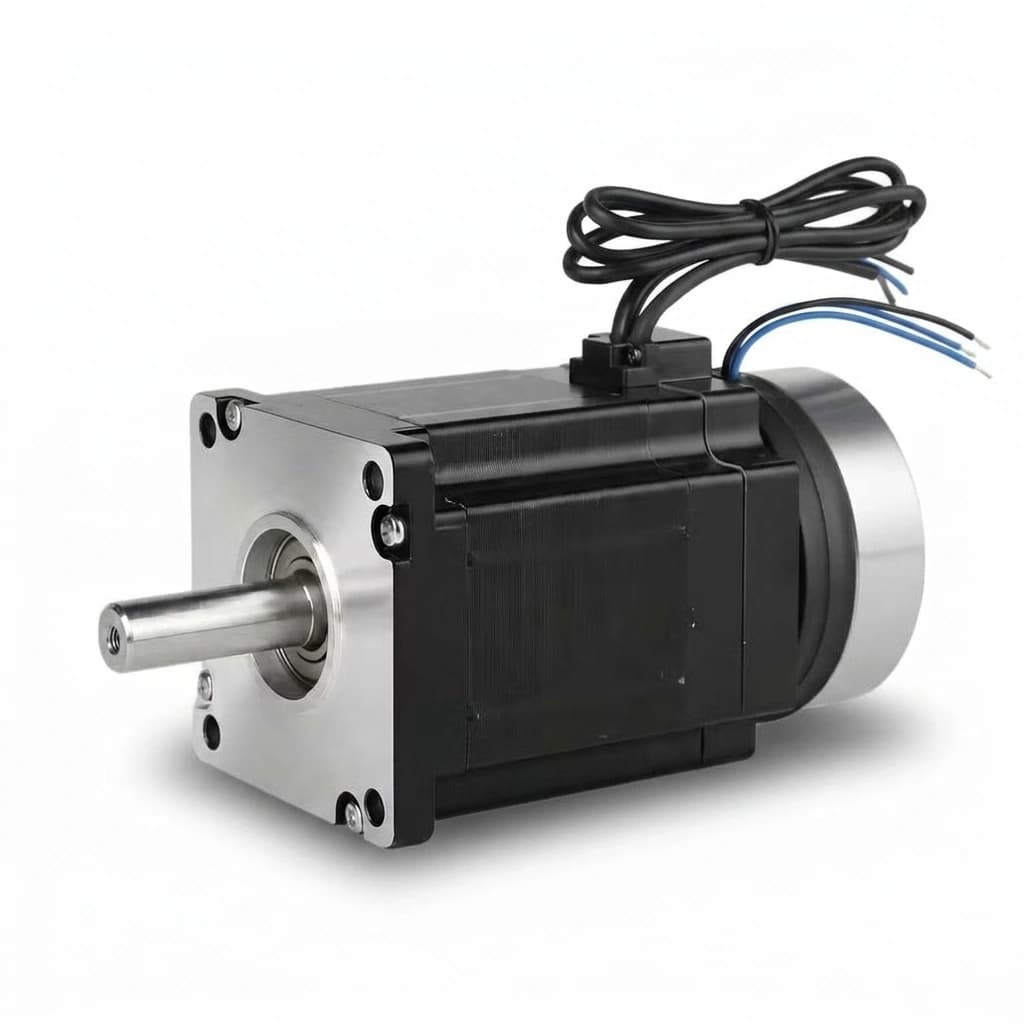
NEMA Stepper Motor with Electromagnetic Brake: 2026 Z-Axis Sourcing & Sizing Guide
A comprehensive OEM guide for specifying NEMA stepper motors with power-off electromagnetic brakes for vertical Z-axis applications. Covers sizing, holding vs dynamic torque, 24V interlock wiring, and procurement checklists.
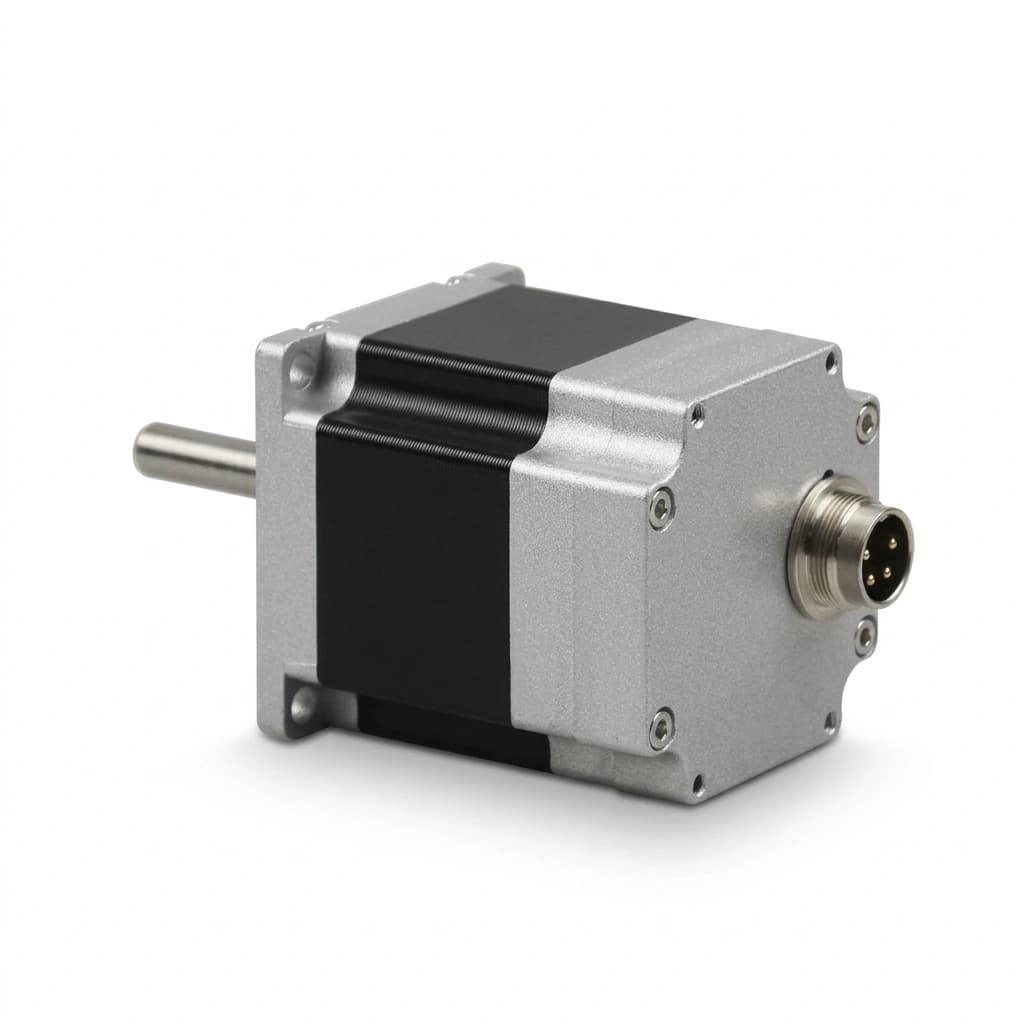
IP65 vs IP67 Waterproof Stepper Motors: OEM Selection Guide
How to specify waterproof NEMA stepper motors for harsh environments without overpaying. Covers shaft seals, thermal derating, and cable traps.