LogoNEMA Stepper Motors
Start inquiry
LogoNEMA Stepper Motors
WhatsApp
LogoNEMA Stepper Motors

China-based NEMA stepper motor factory supporting OEM customization, quality control, and global delivery.

Inquiry Email

[email protected]

Email app

Instant Chat

+8618857971991

Chat on WhatsApp

Direct response from our engineering team.

Products
  • NEMA Frame Stepper Motors
  • Hybrid Stepper Motors
  • Drivers & Controllers
Solutions
  • CNC & Machine Tools
  • 3D Printing & Robotics
  • Medical & Laboratory Equipment
OEM Capabilities
  • Custom Design & Engineering
  • Prototype & Validation
  • Quality & Compliance
Resources
  • Blog
  • About
  • Contact / RFQ
  • Privacy Policy
  • Cookie Policy
  • Terms of Service
© 2026 NEMA Stepper Motors. All Rights Reserved.|Backed by Linkup Ai Co., Ltd. Manufacturing delivered by the Advanced Manufacturing Division of Linkup Precision.

Hybrid Tool + Report

12V 1A Stepper Motor Driver: Fit Checker and Engineering Report

Start with the checker to decide whether a 12 V 1 A supply can realistically support your driver, motor winding, duty cycle, and speed target. Then use the report layer to compare A4988, DRV8825, ULN2003, risks, source evidence, and RFQ actions on this same canonical URL.

Run 12V 1A CheckerRequest Driver Stack Review
1. Run tool2. Read key numbers3. Verify evidence4. Close risks

Tool Layer

12V 1A Stepper Motor Driver Fit Checker

Enter your supply, motor winding, driver, and speed assumptions. The checker returns a deterministic pass/caution/fail result with the power, current, and wiring limits shown beside the next action.

Boundary notes: the power calculation is a conservative screening model for supply and winding load. Chopper-driver dynamic supply current still needs measurement on the actual motor, speed, and duty cycle.

Empty state: run the checker to see whether your 12 V 1 A supply, driver class, motor winding, and speed target belong in a prototype test, a caution zone, or a redesign path.

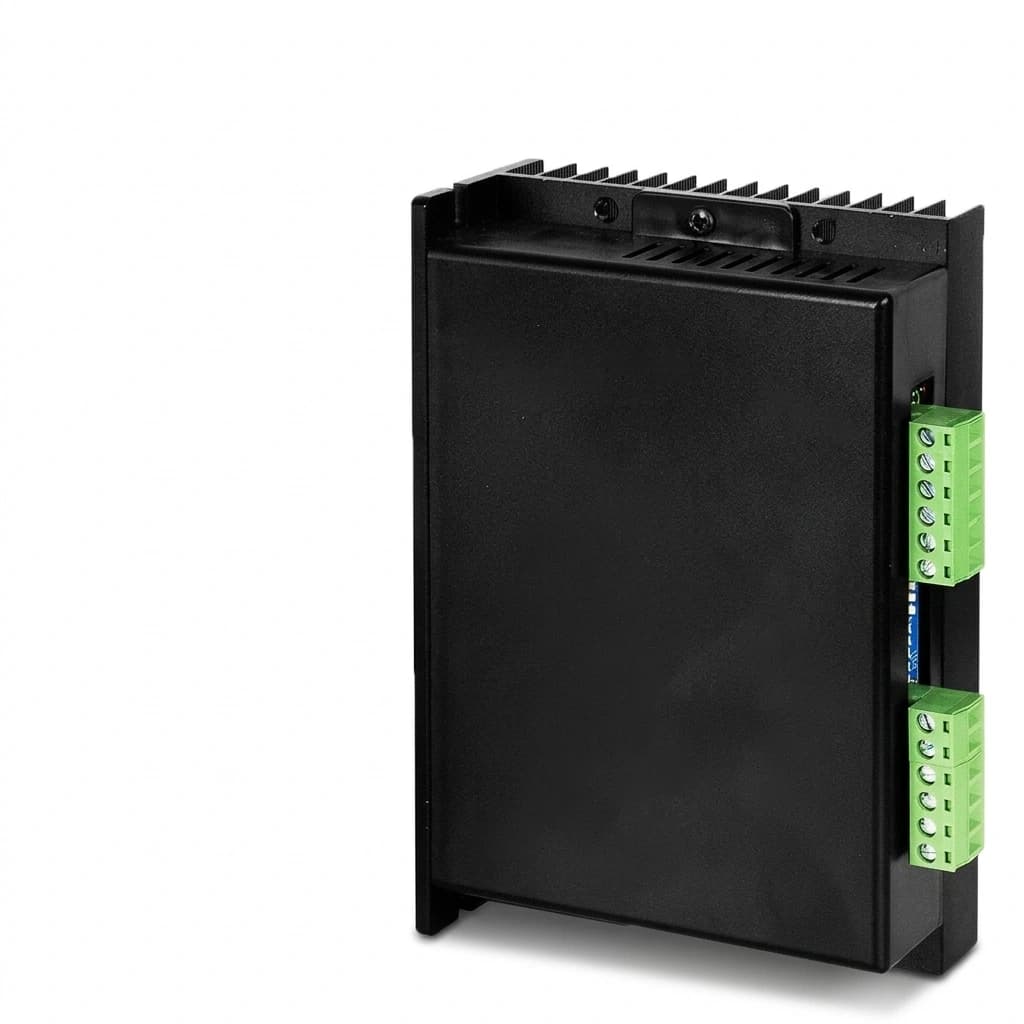
12V 1A stepper motor driver module and motor supply screening reference
Visual reference for separating 12 V supply limits, driver current limits, and motor winding requirements before purchase.

Visible engineering boundary

This page is early sizing and procurement support. It does not certify a driver, replace current-limit setup, or remove the need for thermal, voltage-sag, and machine-level validation.

Source refresh timestamp

SERP pattern and source evidence were reviewed on 2026-06-16. Recheck exact driver modules before purchase order release.

Core Conclusions and Key Numbers

The direct answer is conditional: a 12 V 1 A supply can work for small low-current builds, but it is a narrow envelope, not a universal stepper-driver rating.

12 W nameplate, derate before sizing

12V 1A is a supply limit, not a phase-current promise

The page screens whether the supply, driver class, motor current, and winding resistance can coexist. It does not treat a 1 A adapter as 1 A available in every motor phase.

8-35 V and about 1 A/phase carrier baseline

A4988 is plausible only near low-current boundaries

Public carrier data makes A4988 a defensible first check for low-current bipolar prototypes. For recent Pololu carriers, a 1 A current limit corresponds to about 0.54 V VREF, but clone boards require sense-resistor confirmation.

8.2-45 V, 1/32 microstepping class

DRV8825 adds current and 1/32 headroom

DRV8825-class boards are a better fit when the motor needs more than A4988 comfort margin or direct 1/32 microstepping. A 1 A setting on the Pololu carrier is about 0.50 V VREF, but the 12 V 1 A supply can still be the limiting part.

more pulses, smoother motion, same sizing problem

Microstepping is not a torque upgrade

Oriental Motor describes speed-torque performance as a motor-and-driver characteristic. Higher microstep settings can reduce vibration, but they do not remove the need for bus-voltage, current-limit, acceleration, and load validation.

500 mA single-output class

ULN2003 is a unipolar small-motor path

ULN2003 search results belong to small unipolar projects. They should not be merged with bipolar NEMA driver advice.

I = V / R for non-regulated paths

Low resistance makes direct 12V risky

If there is no current regulation, coil resistance directly controls current. This is why the checker asks for resistance instead of only motor frame size.

12V 1A supply meaning versus phase current meaning12 V x 1 AAdapter input budgetDerate before sizingDriver limitPhase current settingThermal envelopeMotor windingResistance + currentTwo-phase loadValidationThermal soakVoltage sagDo not read a 1 A adapter label as 1 A per phase. The checker keepspower budget, driver current, and winding current separate.
MetricPreferred BandWarning BandDecision Meaning
Supply power12 V x 1 A with <=75% continuous planning loadAdapter planned at 100% or unknown deratingSmall adapters heat and sag. Derating prevents a borderline prototype from looking production-safe.
Motor phase current0.3-0.8 A/phase for easy 12V 1A prototypes>=1.0 A/phase without cooling and supply marginDriver thermal margin and supply headroom collapse when phase current approaches the low-cost carrier limit.
Coil resistanceEnough resistance or chopper current limit to control currentLow-ohm winding on non-regulated driverULN2003 and simple H-bridge paths do not solve winding current by themselves.
Driver classCurrent-regulated A4988/DRV8825 for bipolar motorsULN2003 or brushed-DC H-bridge for 1A bipolar NEMA motorsSearch results mix driver families; wiring and current regulation decide the correct path.
Current limit setupKnown VREF formula or coil-current measurementListing says 1A but omits sense resistor and setup methodA4988/DRV8825 carrier formulas depend on the actual sense resistor. Unknown clone boards should remain publicly unverified before purchase.
Microstep demandController pulse rate and torque-speed curve verified1/32 selected only because it sounds more accurateHigher microstep resolution increases pulse frequency and smoothness requirements; it does not guarantee more torque.
Supply transient protectionShort VMOT leads plus >=47 uF bulk capacitance near boardLong motor-power leads with only tiny ceramic capacitorsPololu warns that LC voltage spikes can damage carrier boards even when the nominal motor supply is only 12 V.
Validation gateThermal soak + acceleration test + voltage sag checkBench spin only, no current-limit or heat measurementStepper systems often fail under hold torque, acceleration, or enclosure heat rather than at first spin.

SERP Intent and Anti-Duplication Angle

This page stays distinct from generic 12V motor pages by focusing on the ambiguous driver-and-supply fit question behind the exact query.

SERP intent pattern for 12V 1A stepper motor driverProductsModules + listingsForumsSupply confusionTutorialsWiring examplesBuyerNeed fit answerHybrid response: run a compatibility tool first, then explain evidence,boundaries, alternatives, and RFQ risks on the same URL.
SERP PatternExamplesPage Response
Product/module resultA4988, DRV8825, ULN2003, TB6600, 3D-printer carrier listingsSearchers need a fast compatibility answer, not only a conceptual driver article.
Troubleshooting/forum resultArduino/Pololu discussions about supply current and motor lock-upThe page must explain why adapters, current limits, coil resistance, and driver heat are different constraints.
Tutorial/video resultDRV8825 and A4988 how-to contentA structured tool and report can win by adding deterministic checks and source-backed boundaries.
Ambiguous buyer query12V 1A may describe the power supply, driver rating, or motor labelSingle URL should resolve the ambiguity instead of splitting into competing supply, driver, and motor pages.

Methodology and Evidence Layer

The tool uses deterministic screening math and source-backed driver envelopes. The report marks supplier-specific claims as requiring confirmation before purchase.

12V 1A checker method flowIdentify labelsSupply vs phase currentDriver envelopeVoltage, wiring, microstepPower headroomDerated supply vs loadCurrent limitVREF or coil currentValidation gateHeat, sag, accelerationThe output is a screening action, not a certification claim.
StepInputOutput
1. Identify what 1A meansSupply current, driver phase current, motor rated currentPrevent label mismatch before comparing drivers or power adapters.
2. Check driver envelopeVoltage, current, wiring, microstep modeReject impossible A4988/DRV8825/ULN2003 combinations early.
3. Estimate power headroomV x A x derate vs two-phase winding load and dutyFlag adapters that can spin unloaded but sag under real hold/accel load.
4. Set current limitVREF formula, current-sense resistor, or coil measurementAvoid using adapter input current as the motor phase-current setting.
5. Close validation loopThermal soak, acceleration test, voltage sag, supplier reviewTurn a calculator result into a purchase or redesign action.
Evidence chain for 12V 1A driver decisionSERPIntent ambiguityVendor dataCarrier envelopesTool mathPower + currentRFQSupplier proofMarketplace claims remain unconfirmed until the exact module datasheetand thermal/current-limit instructions are received.
Current limit setup boundary for A4988 and DRV8825 carriersA4988VREF = 8 x I x RCS1 A to 0.54 V*DRV8825Current limit = VREF x 21 A to 0.50 V*Clone boardSense resistor unknownMark unverified*Examples apply to documented Pololu carrier assumptions. Exact boardsneed measured VREF, sense resistor confirmation, and thermal testing.
ItemPublic MethodExamplePurchase Action
A4988 Pololu carrier, post-2017VREF = 8 x current limit x 0.068 ohm1.0 A current limit -> about 0.54 V VREFUse this only when the board has the same 0.068 ohm sense resistor. Follow the documented VREF or full-step coil-current procedure for the exact board.
DRV8825 Pololu carrierCurrent limit = VREF x 21.0 A current limit -> about 0.50 V VREFUse this for the documented Pololu carrier. Clone modules can differ, so request the exact schematic or sense-resistor value.
ULN2003A Darlington arrayNo chopper VREF current regulationCurrent depends on winding, supply, saturation loss, and dutyUse for small unipolar loads within the 500 mA single-output class, not as a 1 A bipolar driver.
Marketplace clone moduleNo reliable universal public dataSense resistor, thermal limit, and IC source may be unknownTreat as publicly unverified until the supplier provides board revision, current-limit map, thermal conditions, and substitution rules.
Evidence TopicUsable FindingSourceChecked Date
SERP intent patternSearch results on 2026-06-16 mixed Arduino/forum troubleshooting, A4988/DRV8825 comparisons, marketplace modules, and tutorial videos.Live SERP review via Tavily search2026-06-16
A4988 carrier envelopePololu states the A4988 carrier operates from 8 V to 35 V, can deliver about 1 A per phase without heat sink or forced airflow, uses current limiting, and for post-2017 boards maps 1 A current limit to about 0.54 V VREF.Pololu A4988 Stepper Motor Driver Carrier2026-06-16
DRV8825 carrier envelopePololu states the DRV8825 carrier operates from 8.2 V to 45 V, can deliver about 1.5 A per phase without heat sink or forced airflow, and uses current limit = VREF x 2.Pololu DRV8825 Stepper Motor Driver Carrier2026-06-16
DRV8825 IC capabilityTI describes DRV8825 as a 45 V, 2.5 A bipolar stepper motor driver with current regulation and 1/32 microstepping.Texas Instruments DRV8825 product page2026-06-16
ULN2003A limitTI ULN2003A public product details list 500 mA-rated collector current for a single output and 50 V high-voltage outputs.Texas Instruments ULN2003A product details2026-06-16
Current regulation principleTI explains that current regulation monitors motor winding current through a sense resistor, and that controlling current magnitude across an inductive load controls application torque.TI Methods to Configure Current Regulation for Brushed and Stepper Motors2026-06-16
Torque-speed boundaryOriental Motor states that speed-torque characteristics are determined by the motor and driver and are greatly affected by driver type; constant-current drives improve high-speed torque behavior by forcing rated current rise.Oriental Motor Stepper Motor Overview2026-06-16
Known public data gapPublic search did not find reliable universal data for clone-module sense resistors, PCB thermal impedance, or true continuous current. These remain unverified until exact supplier documents are provided.Research-source gap review2026-06-16

Evidence Gaps and Confirmation Rules

These are the claims that should stay marked as publicly unverified until the exact module, motor, supply, and thermal condition are verified. The page intentionally does not turn marketplace shorthand into universal engineering facts.

Evidence gap workflow for marketplace 12V 1A stepper driver claimsClaimListing says 1AEvidenceDatasheet + VREFTestHeat + sagReleasePO or redesignIf any evidence step is missing, keep the decision unverified ratherthan treating generic module labels as verified engineering limits.
ClaimStatusWhy It MattersMinimum Proof
All A4988 modules safely deliver 1 A continuouslyNot proven as a universal claimCarrier PCB copper, airflow, sense resistor, IC source, enclosure temperature, and current-limit calibration change the real continuous current.Exact board datasheet, sense-resistor value, thermal condition, and 30-minute measured case temperature under target duty.
A 12V 1A adapter can run any 1A/phase motorFalse as a sizing ruleInput supply current is not phase current, and the adapter must cover driver losses, duty, acceleration, and voltage sag.Measured input voltage/current under worst-case acceleration and holding load, plus acceptable thermal rise.
1/32 microstepping means higher positioning strengthMisleading without torque-speed dataMicrostepping can smooth motion but does not create extra torque and increases pulse-rate demand at the same RPM.Torque-speed curve or load test at the chosen microstep, acceleration profile, and controller STEP frequency.
Long power leads are harmless at only 12 VNot safe for carrier boardsPololu warns that low-ESR ceramic capacitors and longer leads can create LC voltage spikes that damage A4988/DRV8825 carriers.Short VMOT wiring, local bulk capacitance, and oscilloscope check if wiring length or supply transients are material.

Driver-Class Comparison

Compare options by voltage envelope, current behavior, wiring fit, and when they stop being appropriate for the exact 12 V 1 A intent.

Driver envelopes for 12V 1A stepper motor driver decisionsA4988DRV8825ULN2003Industrial chopper drive5 V12 V24 V48 V12 V sits inside A4988 and DRV8825 voltage envelopes but does not proveenough current or cooling for the motor.
Driver ClassVoltageCurrentMotor FitUse WhenAvoid When
A4988 carrier class8-35 Vabout 1 A/phase continuous planning on common carriersBipolar 4-wire/6-wire/8-wire when wired as bipolarLow-cost 12V prototype, moderate duty, current set below thermal limit; post-2017 Pololu 1 A VREF is about 0.54 VNeed 1/32 microstep, hot enclosure, or motor wants sustained >1 A/phase
DRV8825 carrier class8.2-45 Vabout 1.5 A/phase carrier baseline; IC class up to 2.5 A with proper heat sinkingBipolar motors, direct 1/32 microsteppingNeed more current or resolution headroom than A4988 while staying in low-voltage architecture; Pololu 1 A VREF is about 0.50 VSupply is still only 12V 1A and motor/load demands exceed power budget
ULN2003 Darlington arrayup to 50 V output class500 mA single-output classSmall unipolar motors28BYJ-style small-motor projects and simple low-current loadsBipolar NEMA motors, microstepping, or any design needing current regulation
Industrial chopper driveoften 18-50 V or higher class2 A+ class depending on modelLarger NEMA 17/23/24 systemsTorque, duty, and cooling exceed small carrier-board comfort zoneThe requirement is truly limited to one 12V 1A adapter and a small prototype motor

Scenario Examples and Boundaries

Use these cases to decide whether the result should become a quick prototype, a cautious RFQ, or a redesign.

Scenario map for 12V 1A stepper motor driverLikely prototypeSmall motor, one axisCurrent below limitCaution zone1 A phase currentWarm board, high dutyRedesign pathMulti-axis or NEMA 23Larger supply neededThe same 12 V label can land in different zones once duty, current,wiring, and cooling are included.
ScenarioAssumptionsOutcome
Arduino 28BYJ-style demoUnipolar motor, <=500 mA coil current, low dutyULN2003 can be reasonable if coil current stays within limit and no microstepping is expected.
Small bipolar NEMA 17 prototype12V 1A adapter, 0.6-0.8 A/phase current limit, one axisA4988/DRV8825 can be tested, but current-limit setup and board temperature are mandatory gates.
1 A/phase motor with aggressive acceleration12V 1A supply, high duty, 1.8 degree motor, 1/16 microstepLikely caution or fail. Upgrade supply and cooling before treating the design as stable.
Clone A4988/DRV8825 listingMarketplace board says 1A but omits sense resistor and VREF mapPublicly unverified. Request exact schematic, sense-resistor value, and current-limit procedure before copying Pololu formulas.
Two-axis camera sliderTwo motors share one 12V 1A adapter, intermittent dutyOften supply-limited. Use measured duty and voltage sag before committing to a shared adapter.
NEMA 23 machine axisMotor wants >2 A/phase or higher-speed torqueOutside 12V 1A intent. Use an industrial driver and larger DC supply with supplier validation.

Risk Matrix and Mitigations

The main risks are practical integration failures: wrong current meaning, heat, wrong wiring family, and insufficient evidence.

Risk matrix for 12V 1A stepper motor driverLow impactMedium impactHigh impactWrong current labelDriver overheatsSupply sagThin listingHigh-impact items must be closed with measurement or supplier evidence,not just a bench spin.
RiskSeverityMitigation
Mistaking adapter current for phase currentHighUse the checker and RFQ to separate supply input current, driver current setting, and motor rated current.
Driver overheats on carrier boardHighSet current limit below the continuous planning limit and run a 30-minute thermal soak.
Wrong VREF formula copied to a clone boardHighConfirm current-sense resistor value and board revision before setting A4988 or DRV8825 current limits.
LC voltage spike damages VMOT inputHighKeep motor-power leads short and add at least 47 uF electrolytic capacitance close to VMOT/GND on carrier boards.
Wrong wiring familyHighUse ULN2003 for unipolar small motors; use current-regulated drivers for bipolar motors.
Supply sag during accelerationMediumMeasure adapter voltage under worst-case acceleration and add supply margin if it dips.
Thin marketplace listingMediumRequest datasheet, current-limit procedure, thermal notes, and substitution rules before purchase.

Research Update Log

This log shows what the latest research pass added to connect the checker output, source evidence, and supplier-confirmation path.

Research update closure for 12V 1A driver pageGapAmbiguous labelsEnhanceTool + sourcesGateNo blocker/highThe research update added evidence and boundaries after auditingtool/report gaps.
Gap FoundEnhancement
Keyword could be interpreted as supply, driver, or motor labelTool inputs and summary copy explicitly separate supply current, driver phase current, motor rated current, and coil resistance.
SERP contains incompatible driver familiesReport splits A4988/DRV8825 current-regulated bipolar paths from ULN2003 unipolar small-motor paths.
A 12V 1A answer can become unsafe if it ignores heatPower derating, continuous current planning limits, thermal soak, and voltage sag checks are visible in tool and risk sections.
Current-limit setup was not actionable enoughAdded VREF formulas for documented Pololu A4988 and DRV8825 carriers plus a clear warning that clone-module sense resistors remain supplier-confirmed items.
Microstepping was easy to misread as a torque solutionAdded torque-speed and pulse-frequency boundaries so 1/32 microstepping is treated as a motion-smoothness choice, not a power upgrade.
LC voltage-spike risk was missing from the 12V supply storyAdded the carrier-board warning that destructive VMOT spikes can occur even with a nominal 12 V supply and included a local bulk-capacitance action.
Public sources do not prove every marketplace module claimSource rows use manufacturer/vendor pages and mark marketplace details as needing supplier confirmation.

FAQ

Adjacent Engineering Pages

These pages cover nearby decisions without splitting the exact 12 V 1 A driver intent into competing URLs.

1/32 driver pulse and torque fitStepper motor control method selector120V supplier RFQ checker110V driver distributor path checker1 RPM stepper motor calculatorIndustrial driver selection guide

Publication Quality Gate

This quality gate keeps the single URL focused on tool-first decision support, source-backed explanation, and practical next actions.

Hybrid page review self-heal gateBlocker0 openHigh0 openMediumTrackedPassReadyTool-first screen, source-backed report, risk disclosure, and CTAs arepresent on one canonical URL.
SeverityFindingActionStatus
blockerTool-first promise missing from first screenHero CTA anchors to the checker and the next section is the executable tool with empty/loading/error/boundary states.Closed
highPotentially unsafe 12V 1A simplificationAdded visible boundary disclosure, derated power model, no-regulation current check, and validation gates.Closed
highDriver-family ambiguity could create wrong adviceSeparated bipolar chopper drivers from ULN2003 unipolar path and added wiring validation in the tool.Closed
mediumEvidence could look stale or unverifiableAdded checked dates, source links, and uncertainty notes for supplier-specific details.Closed

Need a Supplier-Checked Driver Stack?

Send the checker result with motor winding data, duty cycle, and target speed. We can validate whether the design stays in the 12 V 1 A prototype envelope or needs a larger driver and supply.

Inquiry Email

[email protected]

Email app

Instant Chat

+8618857971991

Chat on WhatsApp

Direct response from our engineering team.